








 Lookonchain
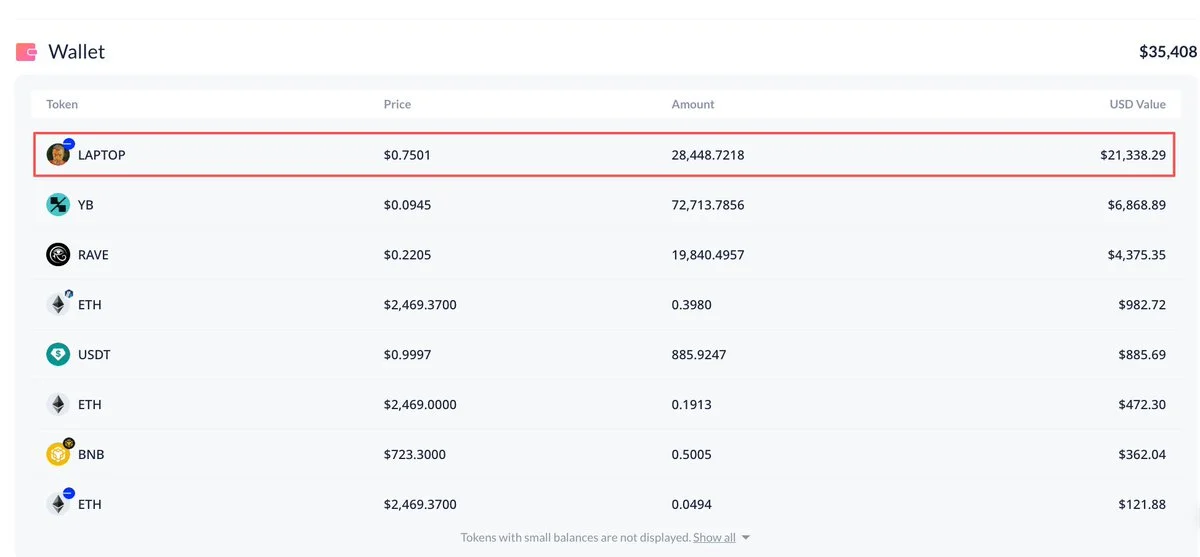
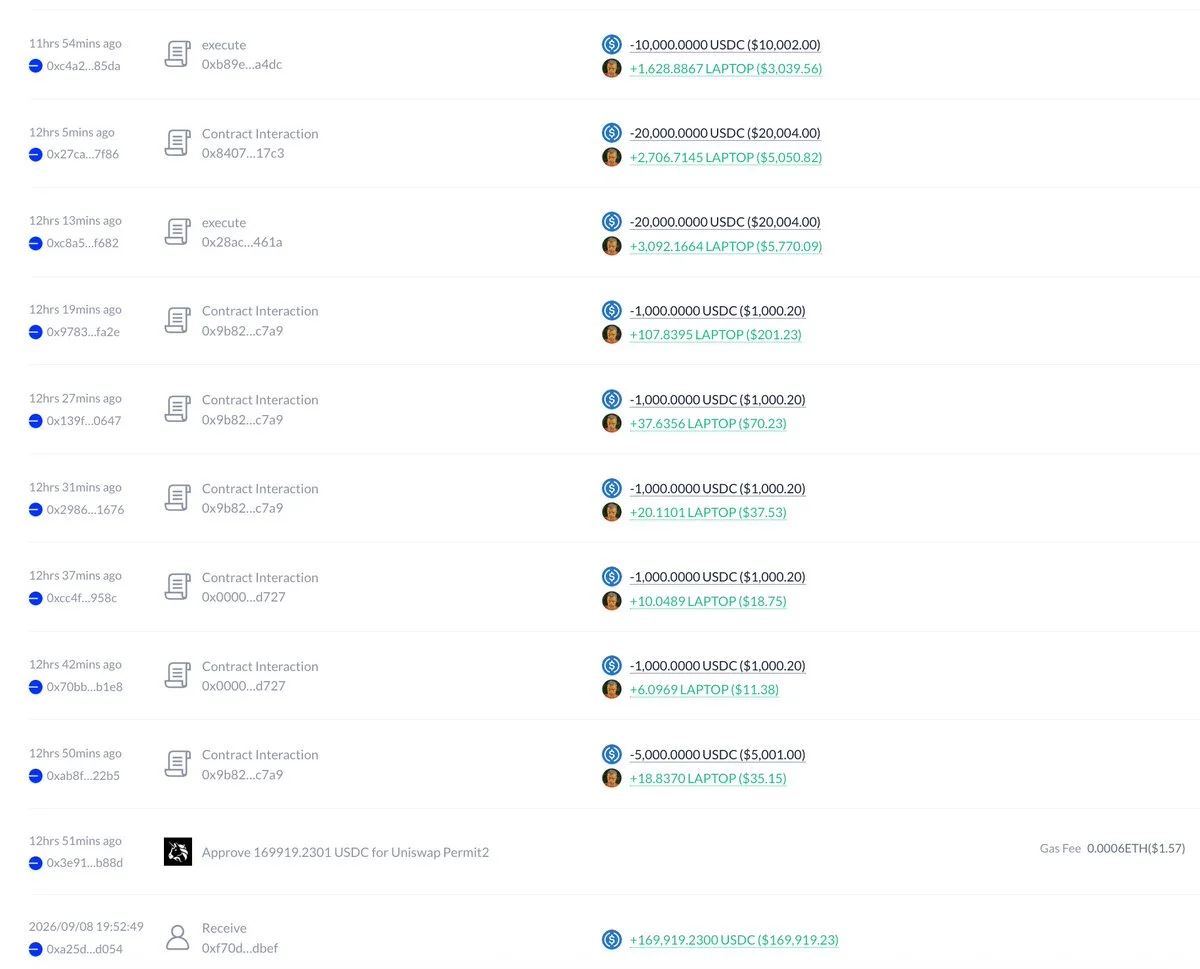
A trader spent roughly $170,000 buying 28,448.72 $LAPTOP at $5.97 each, attempting to catch the bottom after the memecoin had already lost 98% of its value. The position is now worth about $21,000, down another 87% from entry.
The on-chain wallet record shows the bag still sitting there, fully unrealized. It's a familiar pattern from memecoin cycles: a heavily-promoted small-cap collapses, a single wallet steps in with a five-figure bid, and the price grinds lower regardless.
Liquidity at this size is too thin to support a reversal, and the narrative is already broken. The next seller is the next seller.
Source: [DeBank | Your go-to portfolio tracker for Ethereum and EVM](https://debank.com/profile/0x4f9f0a0b6597435e7b6d8e24296dfed54b2763f5)
Frequently asked questions
-
How much did the trader spend trying to buy the $LAPTOP dip?
Roughly $170,000, purchasing 28,448.72 $LAPTOP tokens at $5.97 each after the token had already crashed 98% from prior highs.
-
How much is that $LAPTOP position worth now?
About $21,000, which is another 87% drop from the entry price.
-
Did the trader sell after the further drop?
The on-chain record shows the wallet still holding the full position, fully unrealized.
-
Why do memecoins keep falling after a 98% crash?
Liquidity in micro-cap tokens is thin and conviction typically evaporates after the initial collapse, so even a large single buy rarely reverses the trajectory.
-
What does asymmetric downside mean in this context?
It refers to the pattern where a token can lose the vast majority of its value and still drop further, because there is no floor when no new buyers are stepping in at scale.
 CoinDesk
 CryptoSlate
 WuBlockchain
 WatcherGuru
 CoinTelegraph
 CZ Binance
 Crypto News