








 Glassnode
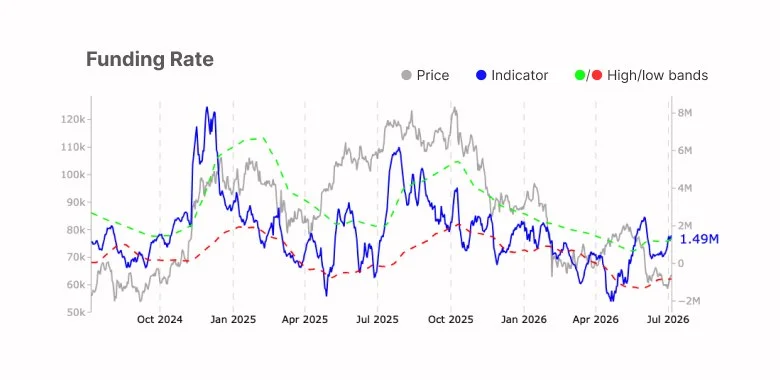
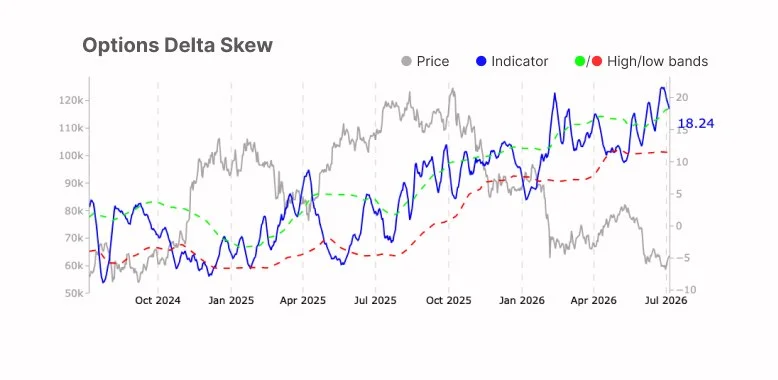
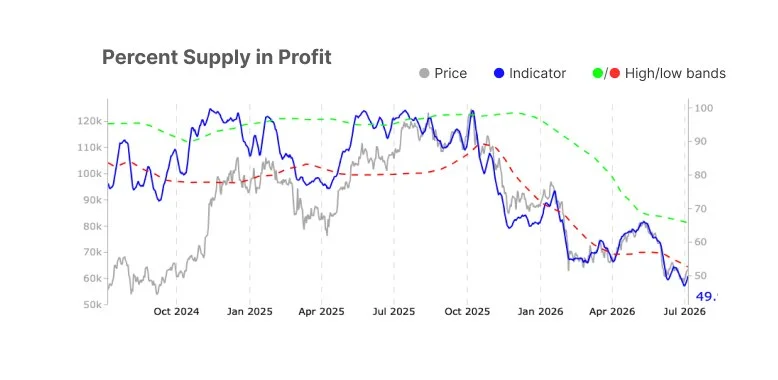
Bitcoin is settling into a consolidation regime after weeks of distribution, according to Glassnode's Week 28 Market Pulse. Spot selling pressure has eased meaningfully, ETF outflows are contracting, and the average US spot ETF investor has returned to a profitable position. At the same time, futures open interest is climbing and long-side funding has blown past historical norms, with options traders pulling back on the downside hedges they piled into earlier.
Why it matters
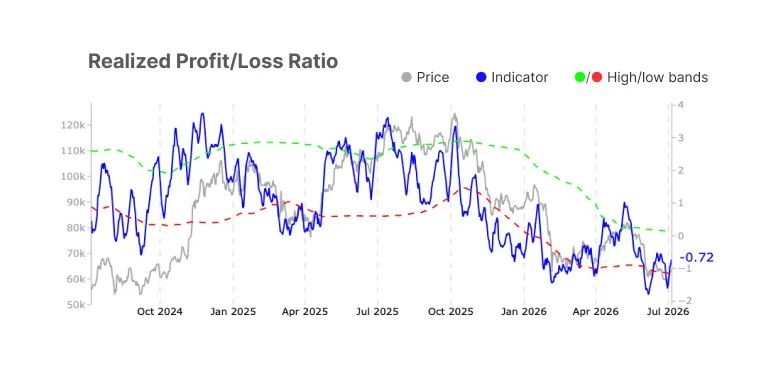
Derivatives positioning is the cleanest signal in the report. Futures longs are reloading aggressively, and the 25-delta skew has moderated, meaning the urgency to pay for put protection is fading. Realized volatility is starting to outpace implied, a setup Glassnode flags as a likely regime shift rather than a routine quiet patch. On-chain, active addresses and transfer volumes are climbing, while the pace of profit and loss realization has decelerated, suggesting long-term holders are no longer in distribution mode.
Market impact
The bullish case rests on a structural floor. Outflow exhaustion at US spot ETFs, combined with profitability metrics improving for both unrealized and realized gains, points to conviction-led holding rather than forced selling. Offsetting that is a rising share of hot capital, the short-term, price-sensitive money that historically turns consolidation choppy. The market is balanced between underlying strength and a volatility catalyst waiting in the wings.
Source: [BTC Market Pulse: Week 28 — Glassnode Research – Digital Asset Market Intelligence](https://research.glassnode.com/btc-market-pulse-week-28-2026/)

Frequently asked questions
-
What is Glassnode's Week 28 BTC Market Pulse saying about the market?
Glassnode's Week 28 report frames Bitcoin as being in a consolidation regime. Spot selling pressure has eased, ETF outflows are contracting, futures open interest is rising, and long-side funding has moved past historical norms.
-
Why are futures longs piling back into Bitcoin?
Futures open interest has risen alongside a surge in long-side funding payments that have surpassed historical norms. Glassnode reads this as renewed, aggressive interest from bullish takers rather than routine repositioning.
-
What does the 25-delta skew tell us about Bitcoin options?
The 25-delta skew has moderated, meaning the urgency for downside protection is waning. Options traders are no longer as spooked about further losses, even as realized volatility starts to outpace implied levels.
-
Are US spot Bitcoin ETF outflows still a problem?
The magnitude of net outflows has contracted and the average ETF investor has returned to a profitable position. Glassnode frames this as a potential exhaustion of the recent divestment trend.
-
What is the main risk to Bitcoin's consolidation setup?
Hot capital, the short-term, price-sensitive money, is taking a larger share of the supply. Historically that cohort turns consolidation choppy, and Glassnode flags it as the most likely source of a volatility break.
 Lookonchain
 CryptoSlate
 Crypto Rank News
 WatcherGuru
 CoinTelegraph
 Whale Alert