








 CoinDesk
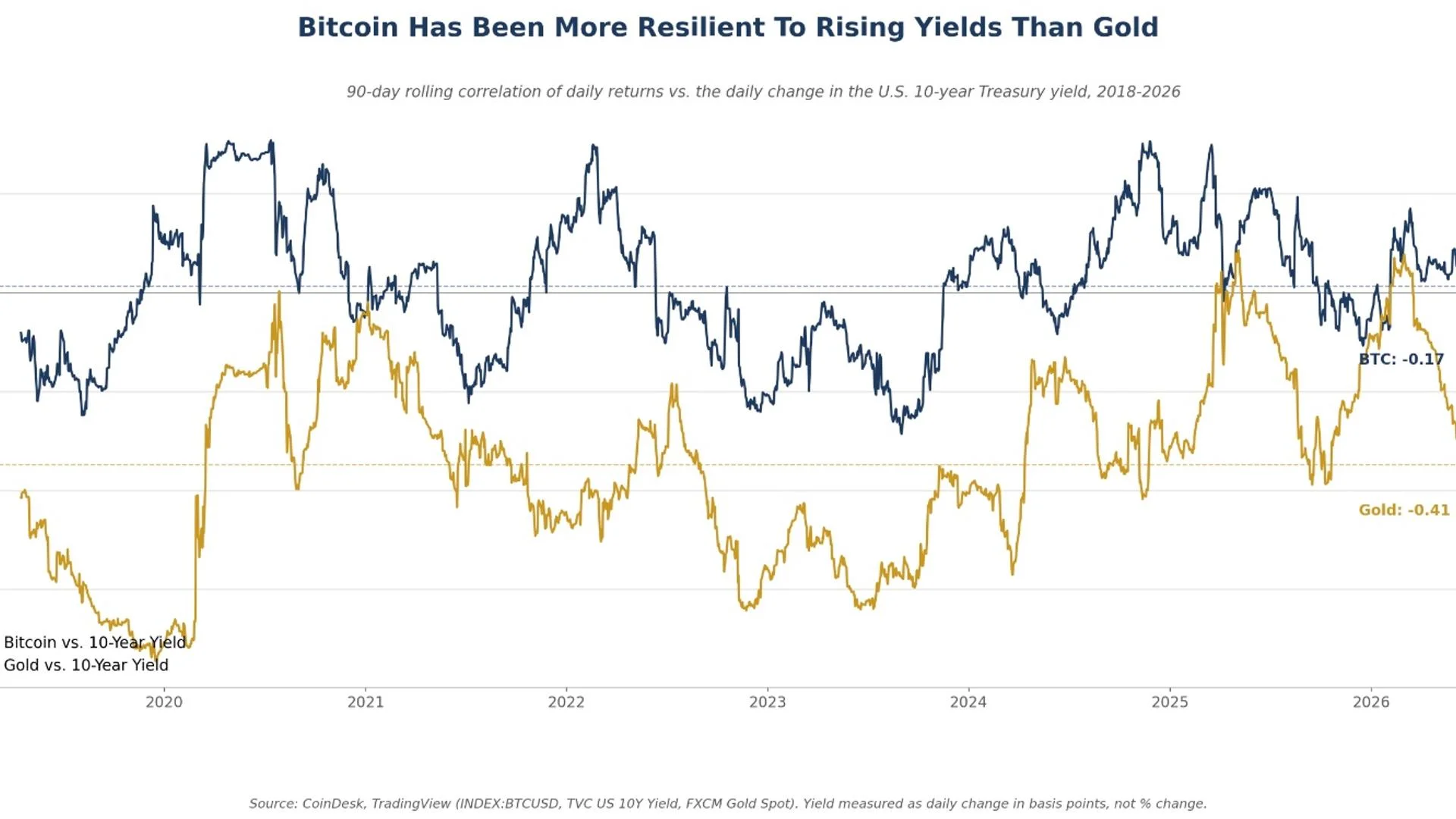


Treasury yields keep climbing on fiscal-stress concerns, and gold is taking the hit while Bitcoin is barely blinking. The 90-day correlation between BTC and gold daily returns now sits at 0.59, the highest since 2020, even though their respective ties to the 10-year yield could not be more different.
Bitcoin's correlation with the benchmark U.S. Treasury has drifted to a near-flat -0.17 over the past 90 days, while gold sits at -0.41, per TradingView and CoinDesk data. That gap is the widest in years and is reshaping how allocators frame both assets as inflation and financial-repression hedges.
Why it matters
The numbers quantify a decoupling thesis that BTC advocates have been pricing in all year. When benchmark borrowing costs climb, gold tends to absorb the pressure first. Bitcoin's bond-yield tie has hovered near zero for the full 90-day window, meaning daily moves in the 10-year barely register on its tape.
Both assets are widely framed as hedges against fiscal repression and central-bank liquidity drain. The 0.59 reading on their daily-return correlation is the highest since pandemic-era money printing, evidence that markets are currently treating them as substitutes in a stress regime. Yet the yield-sensitivity split shows they are not interchangeable. A macro regime in which yields stay elevated is expected to weigh on gold more than on BTC.
Market impact
Bitcoin traded near $83,000 as the data landed, capped by a sell wall that whale cohorts have been distributing into since early June. Fed funds futures still price a 58% chance of a 25 bp hike, suggesting the bond-market headwind is unlikely to fade soon. If BTC continues to shrug off yield moves while gold absorbs them, allocators rebalancing inflation-hedge exposure may tilt toward Bitcoin's relative resilience.

Frequently asked questions
-
What does BTC's -0.17 correlation with the 10-year yield mean in practice?
It means daily changes in the benchmark U.S. 10-year Treasury yield have had almost no consistent directional impact on BTC over the trailing 90 days. Move the yield, BTC barely flinches.
-
Why is gold's correlation with yields more negative than Bitcoin's right now?
Gold's more established role as a long-duration inflation hedge means it trades more reactively to changes in real borrowing costs. Bitcoin shares the hard-asset framing but its pricing has been less tethered to Treasury dynamics in this window.
-
When was the last time BTC and gold were this correlated with each other?
The 0.59 reading between BTC and gold daily returns over the past 90 days is the highest since 2020, when central banks and governments were running pandemic-era stimulus at full tilt.
-
Where is Bitcoin trading as this correlation data was published?
BTC was hovering near $83,000 against a thick sell wall, with whale cohorts net-distributing for the first time since early June, per CoinDesk reporting.
-
What does the Bitcoin-gold yield spread mean for portfolio allocators?
If yields stay elevated and BTC continues to shrug off rate moves while gold absorbs the pressure, allocators rebalancing inflation-hedge exposure may tilt toward Bitcoin's relative resilience over gold.
 Whale Alert
 Crypto Rank News
 TheBlock