








 CoinDesk
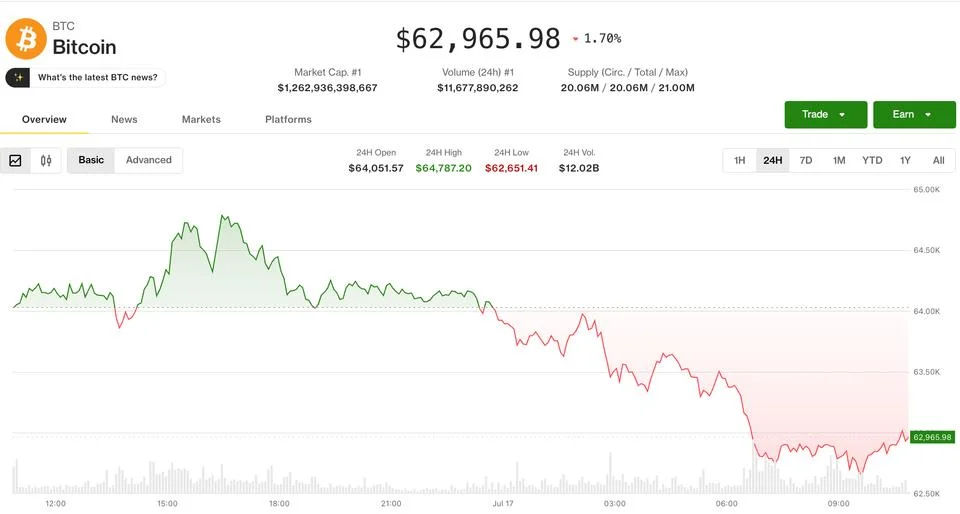



Bitcoin dropped below $63,000 on Friday, sliding about 1.2% as a coordinated selloff in semiconductor stocks from Asia to North America and renewed Middle East tensions drove a broad risk-off rotation across crypto and traditional markets. Ether fell 1.74%, while Nasdaq 100 futures dropped 1.91% and S&P 500 futures slipped 0.96%; Japan's Nikkei 225 shed 4% and South Korea's Kospi was closed for Constitution Day. The Dollar Index climbed to 100.75 and gold pushed back above $4,000, with Patrick Munnelly at Tickmill Group framing the session as ending the week with 'two bruises: AI fatigue and Hormuz heat.'
Why it matters
A coordinated move of this shape across equities, FX, metals, and crypto is rarely a sector-specific story; it points to a macro repricing rather than any single catalyst inside digital assets. The semiconductor leg has reportedly shifted from profit-taking to position-clearing, dragging Asia toward its worst levels in months, and the geopolitical layer adds a tail-risk premium that tends to compress risk budgets across funds simultaneously. That said, the average relative strength index across crypto pairs has dipped to 42.23, approaching the oversold zone that triggered July's relief bounce, giving bulls a potential foothold heading into the weekend.
Market impact
Derivatives positioning is consistent with an orderly unwind rather than forced selling. The taker long-short ratio has slipped to 0.94, the lowest since June 2, while overall volume cooled 4% to $163 billion and total open interest held near $111 billion; BTC OI pulled back modestly to 747K BTC from 755K BTC, with ETH, XRP, and SOL futures showing a similar pattern. Implied volatility on BTC and ETH remains near recent lows, meaning options markets have not yet seen panic hedging, though the $62,500 BTC put has emerged as the most-traded strike and three of the top five ETH contracts are now puts.





Frequently asked questions
-
Why is bitcoin dropping with AI stocks?
A coordinated selloff in semiconductor names from Asia to North America, combined with renewed Middle East tensions, drove a broad risk-off move that pulled crypto lower alongside the Nasdaq 100 and Nikkei 225, suggesting macro forces rather than crypto-specific catalysts are driving the slide.
-
Is the crypto drop an orderly unwind or panic selling?
Derivatives point to an orderly unwind: taker long-short ratio slipped to 0.94 (lowest since June 2), open interest held near $111B, and implied volatility on BTC and ETH stayed near recent lows, with no surge in panic-driven options hedging.
-
Are there any oversold signals in crypto right now?
The average relative strength index across crypto pairs dipped to 42.23, approaching the oversold zone that triggered July's relief bounce, which some analysts see as a potential foothold for bulls heading into the weekend.
-
Which coins are holding up during the selloff?
Privacy coins ZEC and DASH both advanced, while AI tokens FET and TAO posted small gains despite the sector struggling to sustain momentum since mid-June; HYPE was the notable laggard with an 8% spot drop and a near 2% OI rise.
-
What are traders hedging against in BTC options?
The $62,500 BTC put has emerged as the most-traded strike and three of the top five most-traded ETH contracts are now puts, signaling growing demand for downside protection even as 30-day implied volatility remains near recent lows.
 Crypto Rank News
 CoinTelegraph
 TheBlock
 Crypto Capital Venture
 Benjamin Cowen
 WatcherGuru
 CryptoSlate
 WuBlockchain
 Glassnode