








 CoinDesk
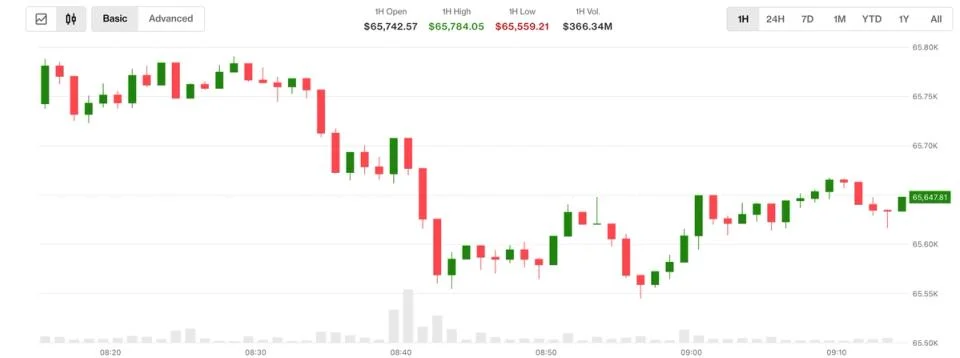



Bitcoin traded near $65,500, down roughly 0.7% since midnight UTC, after a one-two-three punch from oil, Treasury yields and a setback for U.S. market-structure legislation. The pullback extended a slide from a Wednesday high near $66,700, with ether, solana and XRP also trading lower.
West Texas Intermediate futures climbed to $88.60 a barrel on NYMEX, the highest level since June 11, extending a steep rebound from sub-$70 lows and raising the prospect of a fresh inflationary impulse. Bond markets moved in tandem: the two-year U.S. Treasury yield jumped to 4.31%, its highest since February 2025, while the 10-year hit 4.66%, the highest since May.
Why it matters
Higher yields raise the opportunity cost of holding non-yielding assets, pushing investors to rotate from bitcoin and gold into fixed income. An oil-driven inflation print would also complicate any dovish pivot at the Federal Reserve, keeping rate-cut expectations suppressed. Geopolitics compounded the pressure after Axios reported the U.S. deployed a B-1 long-range bomber to strike targets linked to Iran's Islamic Revolutionary Guard Corps, a clear escalation in the scale of operations.
Meanwhile, a group of key Senate Democrats said the newest draft of the Digital Asset Market Clarity Act "falls short" on ethics and other critical provisions. That dragged the implied odds of the bill passing on Polymarket from 46% to 38% in a single session, even as Senate Republicans released an updated draft and Senator Bernie Moreno called its ethics language "the most powerful ethics language in U.S. history."
Market impact
Risk assets are repricing the macro stack all at once: energy, rates and a delayed regulatory clarity timeline. Traders will watch Friday's inflation data and any further escalation in the Iran file for confirmation that the rotation out of bitcoin into Treasuries has further to run. With the Clarity Act now seen as a coin-flip rather than a near-term catalyst, the legislative tailwind that bulls were banking on for Q4 has been pushed back into 2026.




Frequently asked questions
-
Why did Bitcoin drop to around $65,500?
Bitcoin fell to about $65,500 after rising oil prices, higher Treasury yields and a setback for the Digital Asset Market Clarity Act weighed on risk assets. The 10-year U.S. yield hit 4.66%, the highest since May, lifting the opportunity cost of holding non-yielding assets like BTC.
-
How high did oil and Treasury yields climb?
West Texas Intermediate futures on NYMEX reached $88.60 a barrel, the highest since June 11. The 10-year U.S. Treasury yield hit 4.66%, and the 2-year hit 4.31%, its highest since February 2025.
-
What happened with the Clarity Act?
Key Senate Democrats said the latest draft of the Digital Asset Market Clarity Act "falls short" on ethics and other provisions. Implied odds of the bill passing on Polymarket tumbled from 46% to 38% in a single session.
-
What is the geopolitical backdrop behind the move?
Axios reported the U.S. military deployed a B-1 long-range bomber to strike targets linked to Iran's Islamic Revolutionary Guard Corps, an escalation from the more limited strikes of recent days.
-
What should traders watch next?
Friday's U.S. inflation print and any further escalation around Iran are the next key catalysts. A hot CPI would entrench the higher-yield backdrop and keep pressure on bitcoin and other risk assets.
 WatcherGuru
 CoinTelegraph
 WuBlockchain
 CryptoSlate
 Crypto News
 TheBlock