








 CoinDesk
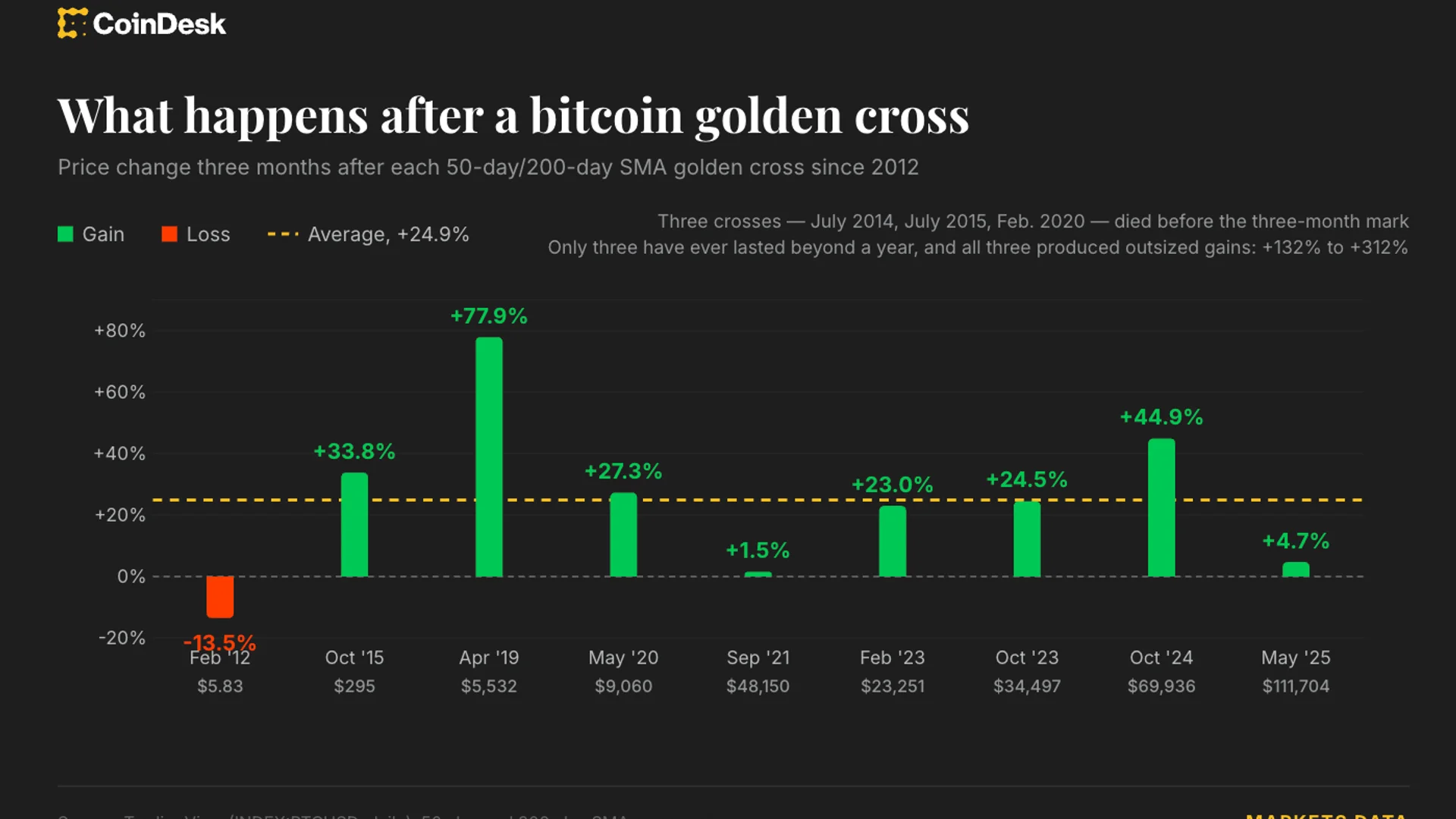


Bitcoin is approaching a golden cross, the technical setup in which its 50-day moving average rises above the 200-day average and has historically marked long-term trend shifts. The signal itself has a mixed record: since 2012, BTC has produced 12 such crosses, with an average three-month gain of 24.9% across the nine where a return could actually be measured, but only three held up for a full year without being broken by a death cross. What makes the current setup different, traders say, is a potential death cross in USDT dominance, the stablecoin's share of the overall crypto market, often read as capital rotating out of tether and back into risk assets.
Why it matters
USDT dominance measures tether's share of the total crypto market. A falling rate is generally interpreted two ways: capital leaving the stablecoin to chase bitcoin and other tokens, or risk assets simply rallying faster than stablecoin supply expands. Either reading is risk-on, and the chart is now approaching its own 50/200-day death cross, with TradingView data showing the 50-day set to fall below the 200-day. That cross matters because the inverse setup, USDT dominance itself forming a golden cross in November, preceded BTC's slide through late 2024 and into 2025, putting stablecoin rotation back on the side of the bulls.
Market impact
The 24.9% three-month average following prior BTC golden crosses is a useful benchmark, but it sits on top of a hard historical caveat: two-thirds of the signals were wiped out by opposing death crosses before a year was up. The combination of momentum confirming in BTC and stablecoin dominance rolling over is a more meaningful alignment than the moving average signal alone. The May 2020 cross rode BTC to a 312% gain over the following year, the kind of payoff that comes from crosses that survive. Whether this one makes it that far is anyone's guess, but the dual moving-average alignment is the strongest risk-on read the market has produced in months.


Frequently asked questions
-
What is a Bitcoin golden cross?
A golden cross happens when Bitcoin's 50-day moving average rises above its 200-day moving average, a setup that has historically marked longer-term bullish trend shifts in BTC.
-
How reliable has BTC's golden cross been historically?
Since 2012, BTC has produced 12 golden crosses. Across the nine where a three-month return could be measured, the average gain was 24.9%, but only three of the twelve signals survived a full year before being broken by a death cross.
-
What does a USDT dominance death cross signal?
A death cross in USDT dominance, with its 50-day average falling below the 200-day, is generally read as a risk-on signal: the stablecoin is accounting for a smaller share of total crypto market value as capital rotates into BTC and other tokens.
-
Why is the USDT dominance signal important this time?
The inverse setup, USDT dominance forming a golden cross in November, preceded BTC's slide through late 2024 and into 2025. A flip back to a USDT dominance death cross now would put stablecoin rotation back on the side of the bulls.
-
What should traders watch next?
Whether the BTC golden cross holds without being invalidated by an opposing death cross within the first few months, and whether USDT dominance confirms the death cross to lock in the dual risk-on alignment.
 Whale Alert
 WuBlockchain
 Glassnode
 Lookonchain
 CoinTelegraph