








 CoinDesk

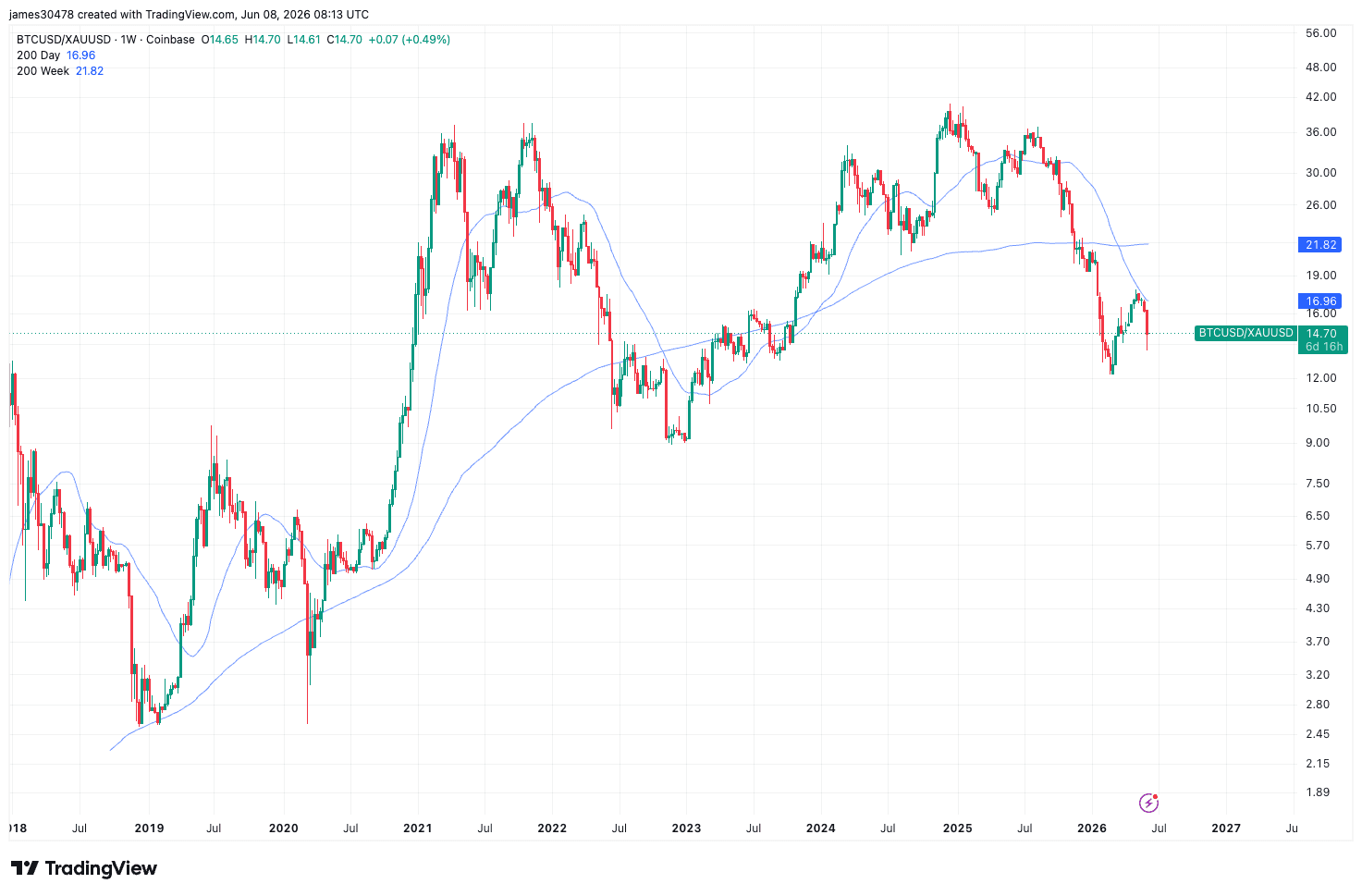


Bitcoin is holding above $63,000 after a 4% Sunday rally triggered by Strategy Executive Chairman Michael Saylor hinting at further purchases of the largest cryptocurrency. The price is now hovering near the 200-week simple moving average, a level that has historically acted as long-term support at major cycle turning points. Stability above $63,000 follows a brutal week that took futures open interest from a record 901,000 BTC down to 716,000 BTC in just four days.
Why it matters
FxPro chief market analyst Alex Kuptsikevich drew a direct parallel to mid-2022 in an email: the sentiment index has fallen back to 8, single-digit territory the market hadn't seen in two months, and the price is parked at the 200-week moving average. "Under similar conditions at that time, the downward momentum weakened, but a full-fledged reversal did not occur until many months later," he wrote. Saylor's buy signal carries weight given Strategy's track record of aggressive accumulation, but a single weekend bounce against a one-week leverage wipeout is not a regime change.
Market impact
The stress is easing but not gone. The 30-day annualized implied volatility index BVIV has retreated to 50% from a near-59% peak on Friday, and Ether's IV pulled back to 75% from 69%. The five most actively traded instruments on Deribit in the past 24 hours are all calls, including a $170,000 strike expiring December 25 — deep out-of-the-money bets that function as cheap lottery tickets rather than directional conviction. One risk factor remains intact: the dealer gamma profile around $60,000 points to a setup where market makers may be forced to amplify moves in either direction. On the altcoin tape, BCH open interest has surged 13% in 24 hours to 1.64 million BCH — its highest since July 2023 — even as the price slid 8.3%, a textbook short-accumulation signature. Zcash's ZEC has rebounded 45% from last week's low after developers proposed a fix for a counterfeiting bug in its Orchard privacy pool, and Tether's USDT briefly overtook Ether in market capitalization over the weekend before ETH reclaimed the spot above $1,500.




Frequently asked questions
-
Why is the 200-week moving average so important for Bitcoin?
The 200-week SMA has historically acted as long-term support at major cycle turning points. Holding above it has marked the floor in past bear markets, and losing it has preceded deeper drawdowns — which is why every retest is treated as a structural battleground by bulls and bears alike.
-
What did FxPro's Alex Kuptsikevich mean by comparing today to mid-2022?
He pointed to two data points: the sentiment index at 8 (back in single digits after a two-month absence) and price sitting at the 200-week MA. In mid-2022 the same setup produced a multi-month grind before any genuine reversal — a caution that Sunday's bounce isn't a regime change.
-
How much leverage did last week's crash actually wipe out?
Bitcoin futures open interest collapsed from a record 901,000 BTC to 716,000 BTC in just four days. The decline was driven by forced long liquidations rather than fresh short selling, meaning traders didn't aggressively pile into bearish bets during the selloff.
-
Why are BCH shorts a warning sign for the broader market?
BCH open interest jumped 13% in 24 hours to 1.64 million BCH — its highest since July 2023 — while price fell 8.3% and the cumulative volume delta stayed negative. Rising OI against falling price is textbook short accumulation, suggesting bearish conviction where leverage is still being added.
-
Could USDT actually overtake ETH in market cap again?
It already did briefly over the weekend. Ether slid from $2,000 to roughly $1,500 between Friday and Sunday, putting its market cap near $183B versus USDT's $186B. ETH has since recovered above USDT, but the brief flip highlighted how thin the cushion has become during stress events.
 CoinTelegraph
 Lookonchain
 Crypto News
 Crypto Rank News
 Glassnode
 WuBlockchain