








 CoinDesk
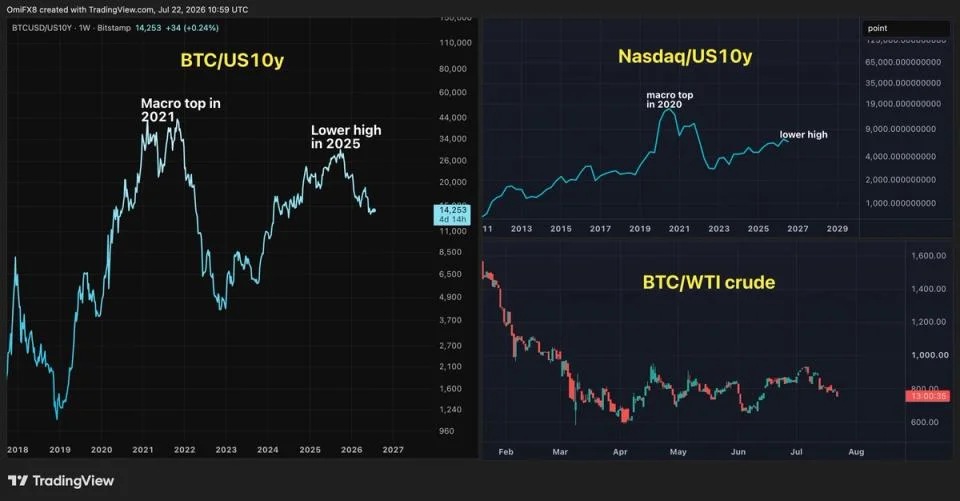



The U.S. 10-year yield is doing more work than the price tape suggests. Both the BTC/US10Y and Nasdaq/US10Y ratios have failed to eclipse their 2020-2021 peaks over the past 12 months, even as dollar-denominated prices for bitcoin and broader tech set fresh record highs. The gap between nominal highs and yield-adjusted ceilings is the signal: the structural macro tops for both assets likely occurred in 2020-21, and the current cycle is running on thinner air than the chart appears to admit.
Why it matters
That divergence can only resolve in one of two ways. Either interest rates collapse and shrink the denominator, propelling both ratios toward a fresh breakout, or nominal prices fall back to realign with the structural weakness the ratios already reveal. The second path looks more likely: Fed rhetoric has stayed decidedly hawkish, with some officials floating the possibility of rate increases rather than cuts. Complicating the picture is a fresh resurgence in energy prices, with WTI crude jumping 4% after Secretary of State Marco Rubio said Iran was "not serious" about peace talks and the Strait of Hormuz remained a sticking point.
Market impact
Bitcoin's bounce from $58,000 to $66,000 is respectable on the surface, yet the BTC/WTI ratio has declined over the same stretch, a quiet confirmation that oil is outperforming even the most aggressive risk assets. Cost-push inflation is loading back into the system. If energy keeps climbing, the analysis warns, the snap adjustment could be sharp: nominal prices falling fast to meet their yield-adjusted valuations. Engineering a sustained bull run looks far more difficult from here than positioning suggests.

Frequently asked questions
-
What does the BTC/US10Y ratio measure?
It divides bitcoin's price by the U.S. 10-year Treasury yield, isolating how much of BTC's nominal move is explained by the cost of capital rather than organic demand.
-
Why is the ratio failing to break its 2020-21 peak?
Even though bitcoin's dollar price has set fresh record highs over the past 12 months, rising yields and tighter financial conditions have kept the yield-adjusted valuation below its prior cycle top.
-
How could the divergence between nominal price and yield-adjusted ratio resolve?
Either the 10-year yield falls, shrinking the denominator and lifting the ratio to a new high, or bitcoin's nominal price drops to realign with the structural ceiling the ratio already implies.
-
Why are rising oil prices relevant for bitcoin's outlook?
Oil's 4% jump on Iran tensions signals a fresh cost-push inflation wave, which can keep rates higher for longer and weigh on risk assets like BTC even as their dollar prices rise.
-
What would invalidate the bearish macro read?
A decisive drop in the 10-year yield, a dovish Fed pivot toward cuts, or a sustained rollback in energy prices would each reopen the path for the ratios to break out and ease the structural ceiling.
 WatcherGuru
 CoinTelegraph
 WuBlockchain
 CryptoSlate
 Crypto News
 TheBlock