








 CoinDesk



Bitcoin options show traders are paying relatively more for downside puts than upside calls, but the shift does not yet point to panic. BTC’s seven-day skew moved 1.98 volatility points week over week to -0.45, a reading at the 92nd percentile of its 52-week range, compared with a median of -4.41.
Why it matters
Calls have lost some of their premium from a week ago, signaling that bullish sentiment has cooled. But the skew reading still indicates downside protection is relatively cheap compared with its typical level. Laeviats describes the move as skew reversion rather than a strong put bid.
Ether options show a similar cooling in bullish appetite: calls remain more expensive than puts, but their premium has narrowed. 10x Research also reported increased put demand, while raising the question of whether it reflects short-term hedging or a broader shift in positioning.
Market impact
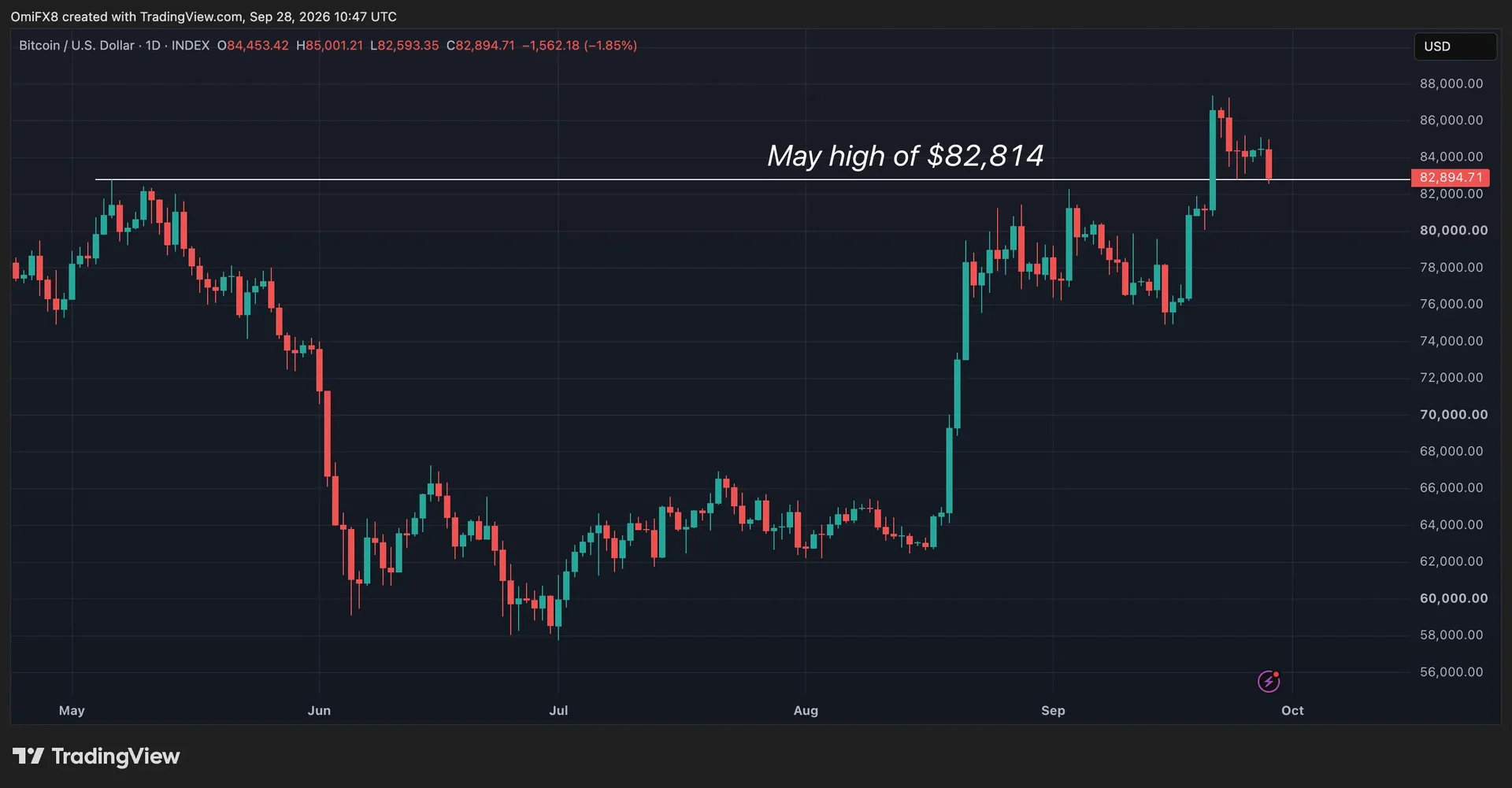
Bitcoin’s price has pulled back below $83,000 and is retesting $82,813, a level that acted as resistance before BTC moved above it on Sept. 21. If the level holds, it could serve as support; a break could open the way to a deeper pullback.
Options pricing points to another caution: implied volatility is near cycle lows even as realized volatility runs 12 points higher. Some BTC options are priced at 30 volatility against a market moving at 42. The combination suggests options remain relatively cheap, even as traders grow less bullish.



Frequently asked questions
-
What does Bitcoin’s seven-day skew say about demand for downside protection?
Skew moved to -0.45, but its 52-week median is -4.41. The reading indicates downside protection remains relatively cheap compared with its typical level.
-
Why does Laeviats describe the skew move as reversion rather than a put bid?
Calls have lost some of their premium, but the skew reading remains far from its 52-week median. Laeviats characterizes the move as skew reversion, not a strong surge in put demand.
-
What is happening to Ether options pricing?
Calls remain more expensive than puts, but the call premium has narrowed from a week earlier, pointing to cooler bullish sentiment.
-
Which Bitcoin price level is traders watching?
BTC is testing $82,813 after falling below $83,000. The level previously acted as resistance and turned into support after Bitcoin moved above it on Sept. 21.
-
How do Bitcoin implied and realized volatility compare?
Implied volatility is near cycle lows while realized volatility is 12 points higher. Some Bitcoin options are priced at 30 volatility against a market moving at 42.
 Crypto News
 Lookonchain
 CryptoSlate
 Crypto Rank News
 TheBlock