








 CoinDesk
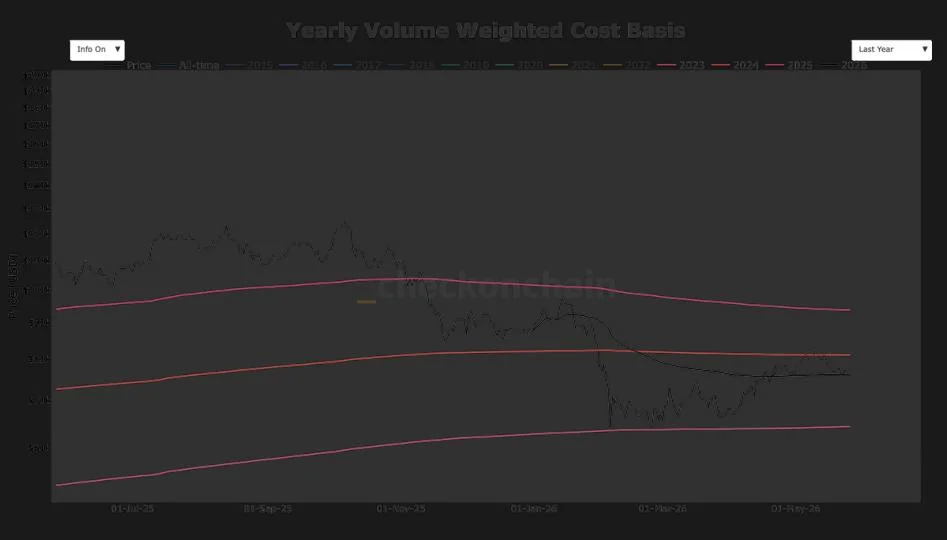
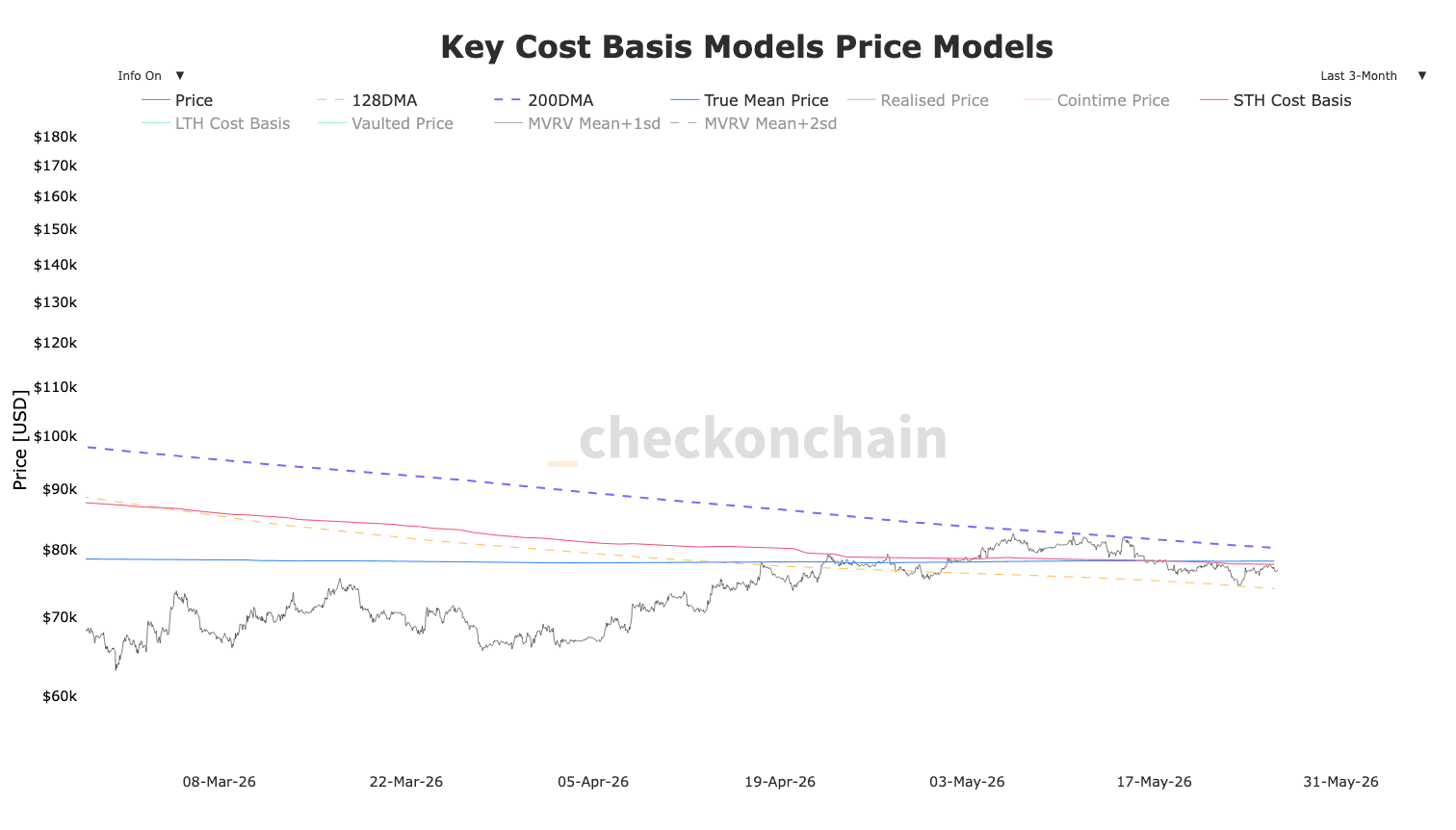

Bitcoin is trading just below a cluster of onchain resistance levels around $77,000 — the true market mean and the short-term holder cost basis — after rebounding from its 128-day moving average near $74,500 over the weekend. The setup matters because two converging forces are now shaping the tape: heavy supply concentration and a large options expiry on Deribit on May 29 carrying roughly $6.6 billion in open interest.
Why it matters
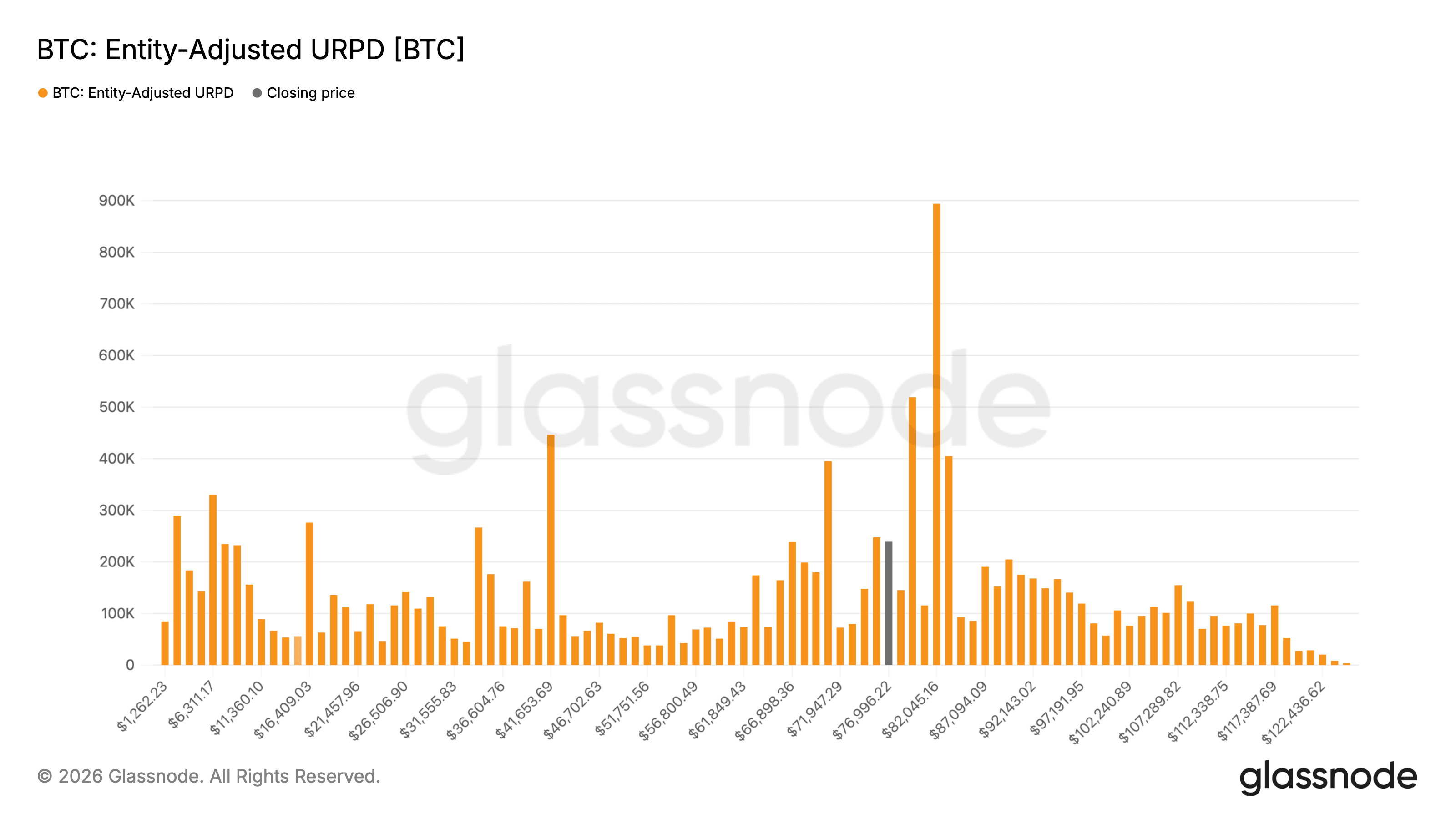
The expiry's largest call strike sits at $80,000 with about $600 million in open interest, while the heaviest put positioning is clustered at $75,000 with around $377 million. That asymmetry gives market makers a clear incentive to keep spot pinned between the two strikes into settlement — a dynamic that compresses realized volatility and flattens directional flow. Glassnode data underscores how crowded the range has become: more than 15% of circulating BTC supply was acquired between $74,000 and $83,000, meaning the average cost basis of a large slice of holders now sits inside the same band where derivatives positioning is concentrated.
Market impact
The 128-day moving average has functioned as a near-term floor, mirroring the role the 2023 realized price played during the February flush to nearly $60,000. Until price reclaims the $77,000 cluster, the bias is for rangebound chop rather than a directional break. A clean push through $77,000 — and especially the $80,000 call wall — would force market makers to chase delta into expiry, while a slip below $75,000 risks a faster unwind through the put strike and a test of deeper onchain support.

Frequently asked questions
-
What is the May 29 Deribit options expiry and why does it matter?
Roughly $6.6 billion in BTC options open interest is set to expire on Deribit on May 29. The largest call strike ($80K) and put strike ($75K) give market makers a clear incentive to pin spot between them into settlement, compressing volatility.
-
What onchain resistance levels is Bitcoin trading below?
Bitcoin is trading below the true market mean and the short-term holder cost basis, both clustered near $77,000. These cohort cost-basis levels are widely watched as broader market-structure indicators.
-
Where did Bitcoin find its recent support?
Bitcoin rebounded from its 128-day moving average near $74,500 over the weekend, a technical floor that has held so far.
-
How much BTC supply is concentrated in the current range?
According to Glassnode, more than 15% of circulating BTC supply was acquired between $74,000 and $83,000, highlighting how compressed the trading range has become.
-
What would break the current rangebound setup?
A clean push through $77,000 — and especially the $80,000 call wall — would force market makers to chase delta into expiry. A slip below $75,000 risks a faster unwind through the put strike and a test of deeper onchain support.
 WatcherGuru
 Crypto News
 Glassnode
 Lookonchain
 TheBlock
 Altcoin Daily