








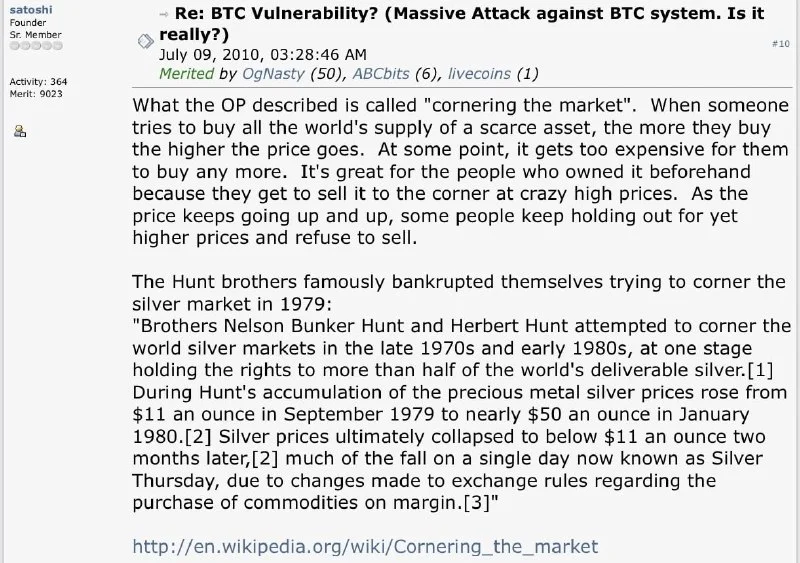
A 2009 forum post from Satoshi Nakamoto explaining Bitcoin's scarcity model is recirculating on the sixteenth anniversary of the message. The core point: as more buyers compete for the same fixed supply, the price has to rise.
Why it matters
The post is one of the earliest articulations of how Bitcoin's 21 million coin cap interacts with demand. Satoshi framed scarcity not as a static property of the supply schedule, but as a dynamic tension between a hard ceiling and a growing pool of buyers. That framing is what most modern holders repeat when they describe the asset's investment thesis.
Market impact
Bitcoin's fixed supply is set by the protocol's halving cycle, with the most recent halving in April 2024 cutting the block reward to 3.125 BTC. The argument Satoshi laid out in 2009 is the same one institutions now cite when framing BTC as a treasury reserve asset. The post's continued recirculation is a reminder that the scarcity thesis predates any of today's ETF flows, exchange-traded products, or corporate balance sheet allocations.

Frequently asked questions
-
What did Satoshi actually say about Bitcoin scarcity in 2009?
Satoshi explained that as more buyers compete for the same fixed supply of Bitcoin, the price has to rise, framing scarcity as a function of demand against a hard cap rather than a static feature of issuance.
-
Why is this Satoshi post recirculating now?
The 2009 forum post has resurfaced on its sixteenth anniversary, a recurring moment in the Bitcoin community that revisits the earliest articulations of the asset's investment thesis.
-
How does the 21 million cap actually work?
Bitcoin's protocol enforces a hard ceiling of 21 million coins through the halving cycle. The most recent halving in April 2024 cut the block reward to 3.125 BTC, continuing the supply schedule Satoshi set in 2009.
-
Is the scarcity argument the same one institutions use today?
Yes. The same logic Satoshi laid out in 2009, that fixed supply meeting rising demand forces price appreciation, is the framing most institutional buyers now cite when they describe Bitcoin as a treasury reserve asset.
-
How old is the Bitcoin network in 2025?
Bitcoin's genesis block was mined in January 2009, and the network has been running continuously for over sixteen years. The circulating Satoshi post dates from the network's first year of operation.

 CryptoSlate
 WatcherGuru
 Glassnode
 Lookonchain
 Altcoin Daily
 Benjamin Cowen
 TheBlock