


 CoinDesk
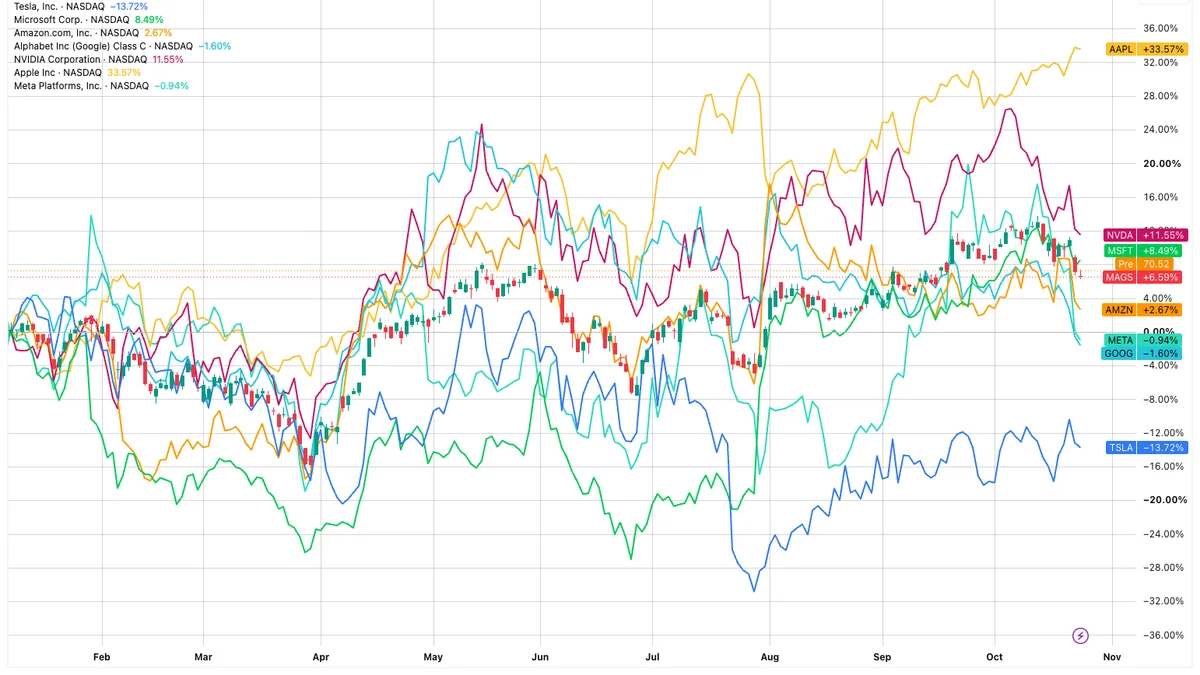



CalPERS reduced its combined direct shareholdings in the Magnificent Seven tech stocks by 26% in the first half of 2026, according to Financial Times calculations based on regulatory filings. The pension fund, which manages more than $600 billion, is shifting toward private equity as investors question stretched technology valuations and the payoff from soaring artificial intelligence spending.
The move puts a major institutional investor on the cautious side of the AI trade. CalPERS Deputy Chief Investment Officer Anton Orlich told the FT that public equity valuations looked expensive and that technology giants could underperform other investments. The fund is seeking broader exposure across companies rather than relying on a small group of market leaders.
Why it matters
The retreat does not represent a full exit from big tech. The Roundhill Magnificent Seven ETF is still up 7% year to date, led by Apple with a 34% gain and Nvidia with a 12% rise. Meta, Alphabet and Tesla are down for the year, showing how uneven the trade has become beneath the headline index performance.
CalPERS is also increasing its private-equity exposure, making the decision a portfolio-allocation shift rather than a simple rejection of technology. Still, its scale gives the move weight as other investors debate whether AI investment can deliver returns commensurate with the capital being deployed.
Market impact
The pressure is already reaching the neocloud sector. CoreWeave, Cipher Digital and IREN fell in Monday pre-market trading after Elon Musk warned that financing was tightening for AI data-center companies. Those businesses depend heavily on access to capital, so higher financing pressure can expose the gap between aggressive infrastructure spending and near-term cash generation.
The key market question is whether the CalPERS move remains an isolated rebalance or becomes a broader rotation away from concentrated big-tech exposure. Continued weakness in AI infrastructure shares, alongside further institutional shifts into private equity, would reinforce the bearish read on crowded AI valuations.
Frequently asked questions
-
How much did CalPERS reduce its direct Magnificent Seven holdings?
CalPERS reduced its combined direct shareholdings in the Magnificent Seven by 26% during the first half of 2026.
-
Why is CalPERS increasing its private-equity exposure?
CalPERS is seeking broader exposure across companies and less dependence on a small group of market-leading technology stocks.
-
What did CalPERS say about public-equity valuations?
Deputy CIO Anton Orlich said public-equity valuations looked expensive and that technology giants could underperform other investments.
-
How have the Magnificent Seven performed this year?
The Roundhill Magnificent Seven ETF is up 7% year to date. Apple is up 34% and Nvidia 12%, while Meta, Alphabet and Tesla are down.
-
Why did CoreWeave, Cipher Digital and IREN come under pressure?
The neocloud companies fell in pre-market trading after Elon Musk warned that financing was tightening for AI data-center companies.
 CryptoSlate
 WuBlockchain
 Whale Alert
 TheBlock
 Benjamin Cowen
 Crypto Rank News
 Crypto Capital Venture