








 WuBlockchain
CFTC Chair Michael Selig outlined details of the proposed Regulation CTX and Regulation CAM framework, including rules for covered retail crypto transactions and a 28-day standard for delivery to external, non-custodial wallets.
Why it matters
Covered retail transactions would generally need to pass through futures commission merchants. The proposed rules would also address customer asset segregation, capital, anti-money laundering and proof of reserves. For onchain transactions, delivery to a user's external wallet within 28 days would generally satisfy the “actual delivery” exception.
Market impact
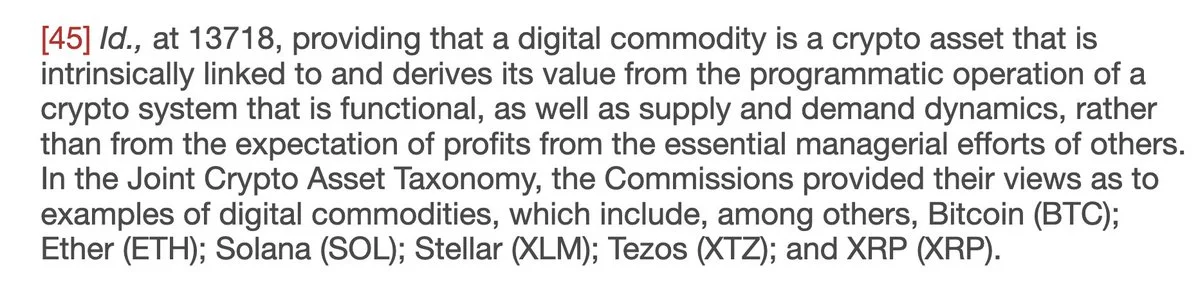
Selig said the CFTC is exploring durable policy for developers who publish software without soliciting or taking orders, controlling execution or holding customer assets. He also pointed to the CFTC and SEC's joint taxonomy, which lists BTC, ETH, SOL, XLM, XTZ and XRP as examples of digital commodities. The proposed framework could shape how intermediaries, developers and users navigate US crypto rules.





Frequently asked questions
-
What would the proposed CFTC framework require for covered retail crypto transactions?
They would generally need to be intermediated by futures commission merchants, with requirements covering customer asset segregation, capital, anti-money laundering and proof of reserves.
-
When would a crypto transfer to a non-custodial wallet qualify as actual delivery?
Under the proposal, delivery to a user's external, non-custodial wallet within 28 days would generally satisfy the actual-delivery exception.
-
Which crypto assets does the joint CFTC-SEC taxonomy list as digital commodities?
It lists BTC, ETH, SOL, XLM, XTZ and XRP as examples of digital commodities.
-
What kind of software developers is the CFTC exploring policy for?
The agency is exploring durable policy for developers who only publish software and do not solicit or take orders, control execution or hold customer assets.
-
What areas would the proposed rules address beyond transaction intermediaries?
The framework would address customer asset segregation, capital requirements, anti-money-laundering controls and proof of reserves.
 CoinTelegraph
 TheBlock
 CryptoSlate
 CoinDesk