








 CoinDesk
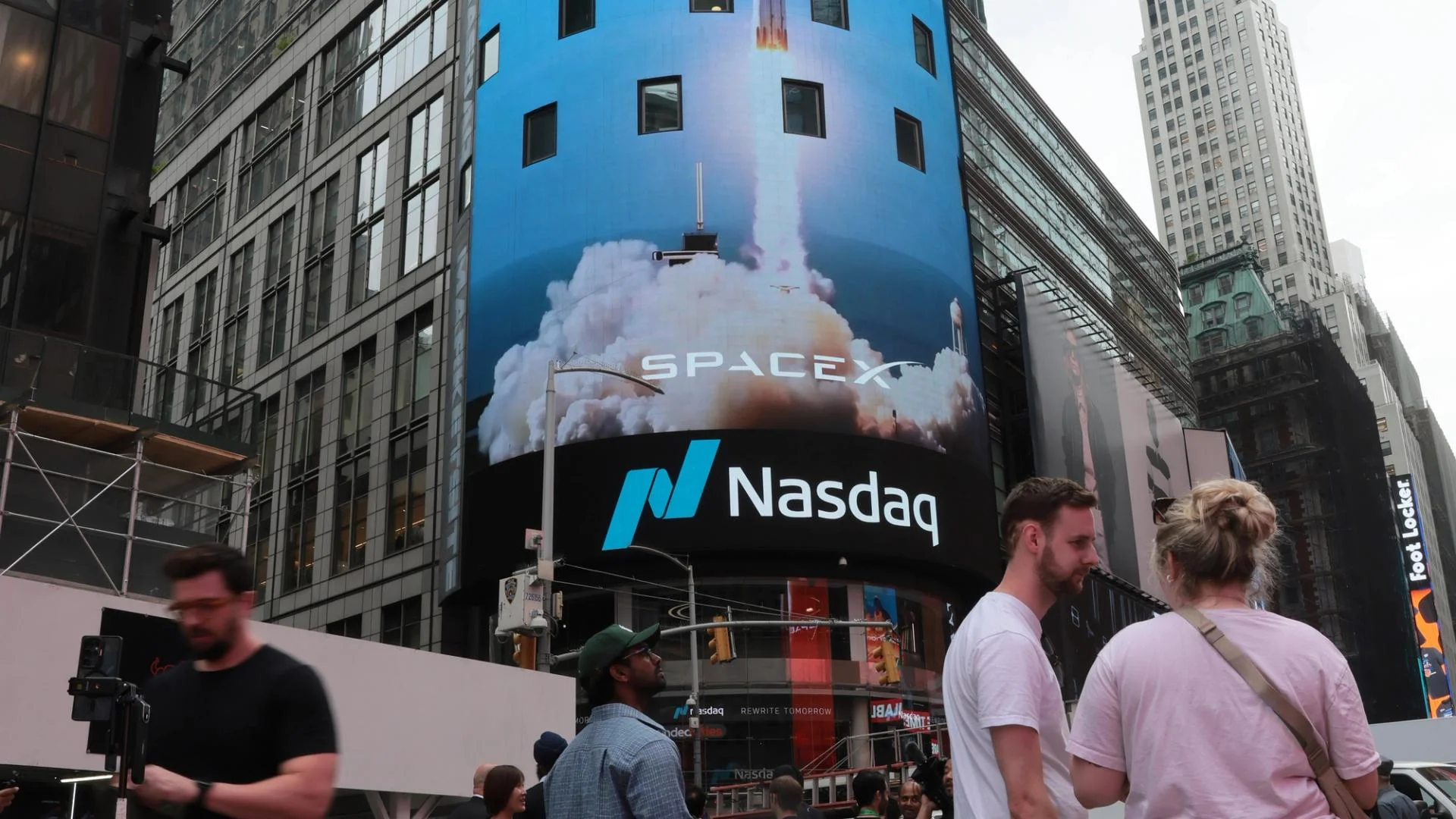
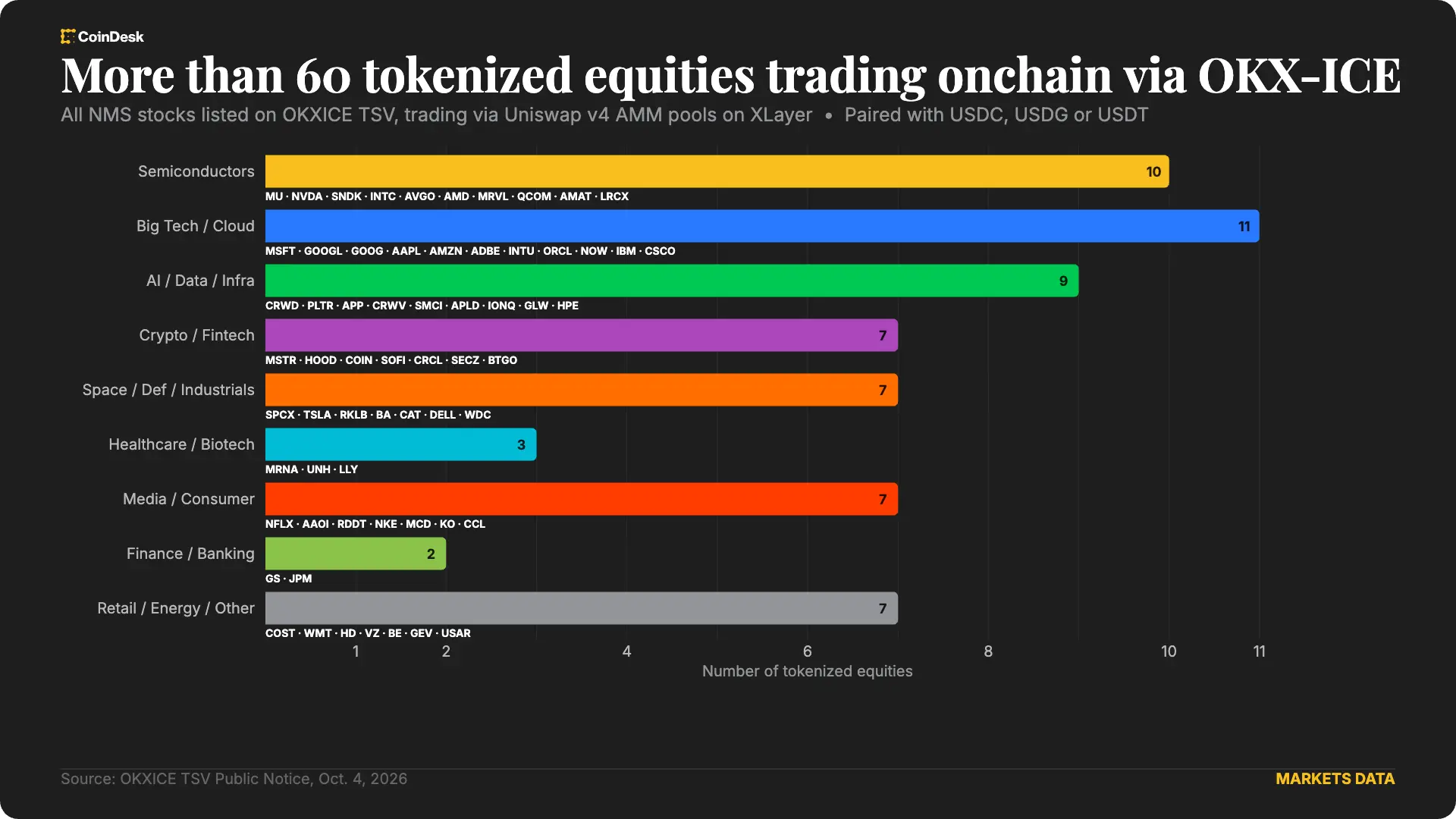


OKX and Intercontinental Exchange, the owner of the New York Stock Exchange, plan to build a 24/7 blockchain market for more than 60 tokenized U.S. stocks, including Nvidia, Tesla, Apple and Microsoft. A filing from their joint venture, OKXICE, says each token would be backed one-for-one by an underlying share held by a registered broker-dealer, with holders entitled to economic and shareholder rights such as dividends and voting.
Why it matters
The planned venue would replace the traditional order book with blockchain-based liquidity pools. Investors would trade stock tokens against USDC, USDT or USDG, and prices would move as buyers and sellers add or remove tokens and stablecoins from the pools. The trades would run on OKX's XLayer blockchain using technology from decentralized exchange Uniswap.
Around-the-clock trading is a notable change: investors could trade when U.S. exchanges are closed, including nights and weekends. But prices during those hours would be set by activity in the venue's own pools, rather than simply tracking the latest Nasdaq price. Traders would also need to complete identity and anti-money-laundering checks.
Market impact
The filing lists more than 60 securities, but inclusion does not guarantee a stock will be offered. Companies have a 30-day window to object, and Cerebras has already objected to its inclusion. TD Securities sees limited near-term relevance for institutional investors, citing efficient access to listed U.S. stocks, weak corporate interest and uncertainty around the regulatory framework.
The SEC relief described in the report lasts five years, a limited horizon that could make large financial firms cautious about investing in connections to the venue. The key test will be whether enough investors and trading firms participate to keep token prices aligned with underlying shares, especially overnight and on weekends. The project could offer an early test of which tokenization model can scale U.S. equities onchain.

Frequently asked questions
-
How would OKXICE's tokenized stocks be backed?
Each stock token would be backed one-for-one by an underlying share held by a registered broker-dealer. Token holders would be entitled to rights including dividends and voting.
-
How would investors buy and sell the stock tokens?
Investors would trade against blockchain-based liquidity pools using USDC, USDT or USDG, rather than matching orders through a traditional order book.
-
Why could tokenized stocks trade on weekends?
OKXICE plans to operate around the clock. When U.S. exchanges are closed, prices would be set by buying and selling in the venue's own liquidity pools.
-
Are all 60-plus stocks guaranteed to appear on the platform?
No. Companies can object to their inclusion during a 30-day window, and Cerebras has already objected to its stock's inclusion.
-
What could limit institutional adoption of the venue?
TD Securities cited efficient existing access to U.S. stocks, weak corporate interest and regulatory uncertainty. The reported SEC relief lasts five years, and the venue must attract enough trading activity to support liquidity.
 Crypto News
 WuBlockchain
 TheBlock
 CryptoSlate
 CoinTelegraph
 Crypto Rank News