








 WuBlockchain

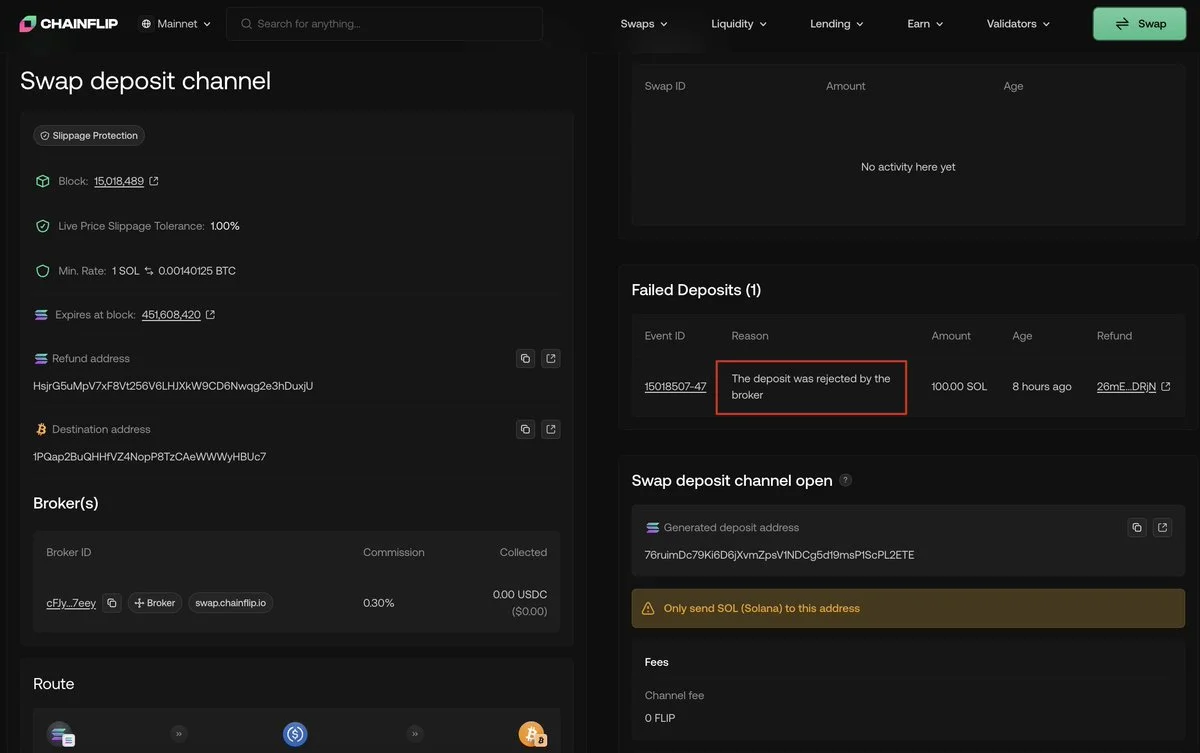
MistTrack, SlowMist's on-chain tracking arm, said the Bitget exploiter attempted to route stolen funds through Chainflip. The broker interface rejected the deposit, and the protocol refunded it directly to the sender.
Why it matters
The rejection prevented the attacker from routing the proceeds through Chainflip in this attempt. But the funds were not frozen, so the incident does not establish that they were recovered or that the attacker lost access to them.
Market impact
The episode highlights how broker-level controls can interrupt a cross-chain transfer, while a refund can leave stolen funds under the sender's control. The update concerns a blocked route, not a confirmed recovery.
Frequently asked questions
-
What happened when the Bitget exploiter tried to use Chainflip?
The broker interface rejected the deposit. Chainflip refunded it directly to the sender.
-
Did Chainflip freeze the stolen funds?
No. The deposit was refunded to the sender rather than frozen.
-
Were the funds recovered?
The update does not confirm a recovery. It says the rejected deposit was returned to the sender.
-
Who reported the attempted transfer?
MistTrack, SlowMist's on-chain tracking arm, reported that the Bitget exploiter tried to route the funds through Chainflip.
-
What did Chainflip's rejection prevent?
It prevented the attacker from routing the proceeds through Chainflip in that attempt, but did not establish that the attacker lost access to the funds.
 CoinDesk
 CoinTelegraph
 CryptoSlate
 TheBlock