








 CoinDesk
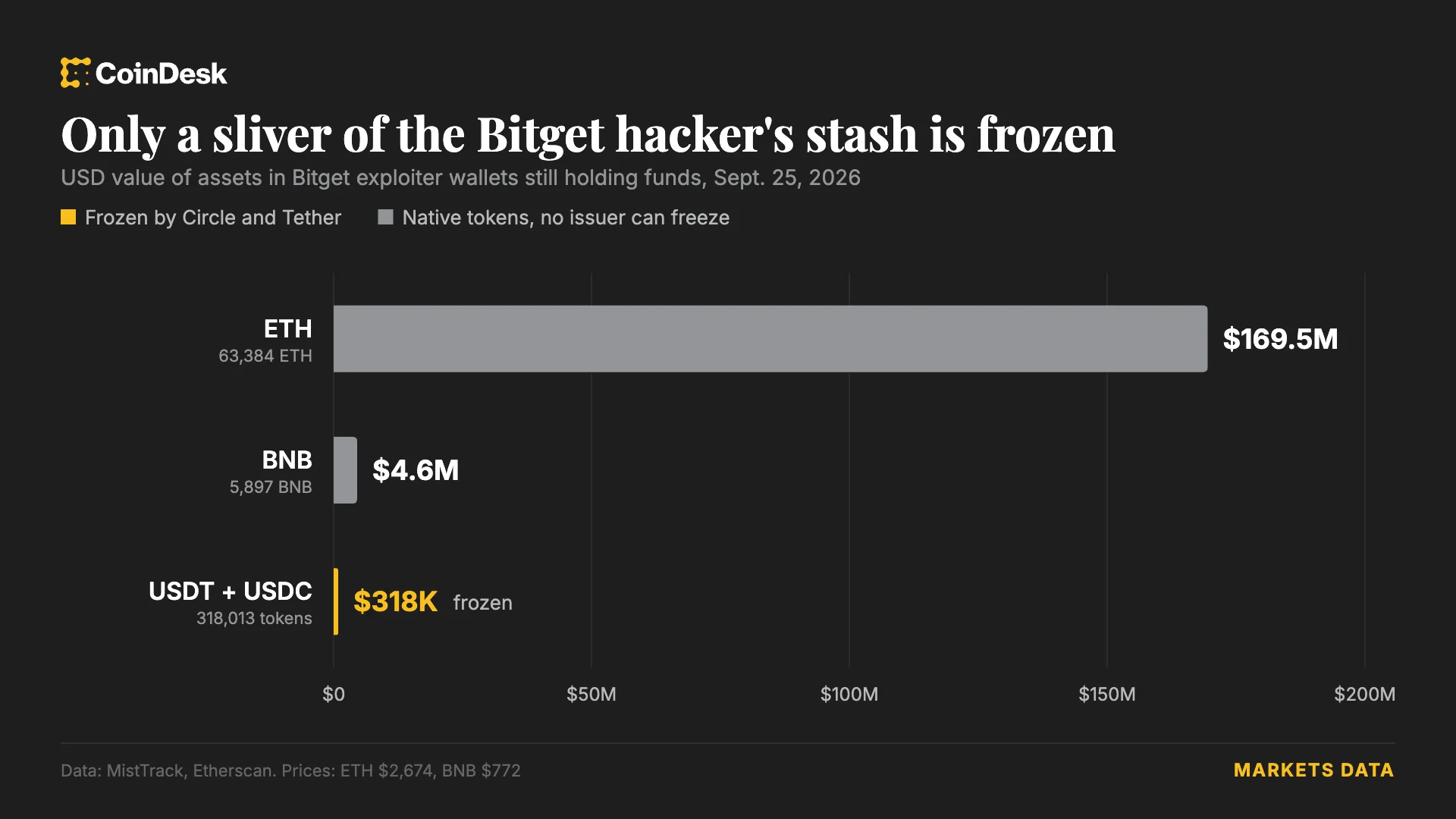



Circle and Tether froze a wallet holding about $318,000 in USDT and USDC linked to Thursday’s $351.6 million Bitget hack. Circle blacklisted the address, labeled “Bitget Exploiter 8” by Etherscan, at 05:00 UTC Friday; blockchain security firm MistTrack said Tether has also banned it.
The wallet also holds about 170.47 ETH, but the freeze affects only its stablecoins. Other exploiter addresses still hold more than 63,000 ETH, which stablecoin issuers cannot freeze. Bitget CEO Gracy Chen said attackers compromised a backend system in the exchange’s wallet infrastructure, spoofed transaction data and triggered authorization to move funds. She ruled out a private-key compromise and said Bitget’s user protection fund, holding more than $464 million, covers the loss.
Why it matters
The response highlights the different control points in a crypto theft. Issuers can blacklist their own centralized stablecoins, but they cannot freeze ETH through the same mechanism. The action also puts Circle’s role in freezing assets back under scrutiny.
Circle moved faster than after April’s $285 million Drift hack, when about $232 million in stolen USDC moved from Solana to Ethereum through Circle’s cross-chain transfer protocol. Critics, including ZachXBT, argued Circle could have blacklisted wallets sooner. Circle said it freezes assets when legally required.
Market impact
The frozen $318,000 is a small portion of the stolen funds, while the remaining ETH identified in exploiter addresses is beyond stablecoin issuers’ control. Bitget says its protection fund covers the loss; the incident also renews questions about exchange wallet security and when stablecoin issuers intervene.



Frequently asked questions
-
How much of the Bitget hack’s proceeds did Circle and Tether freeze?
The frozen wallet held about $318,000 in USDT and USDC, a small fraction of the $351.6 million stolen.
-
Why can stablecoin issuers freeze USDT and USDC but not ETH?
Circle and Tether can blacklist their own stablecoins. The more than 63,000 ETH held in other exploiter addresses cannot be frozen by those issuers.
-
How did attackers move funds from Bitget, according to its CEO?
Gracy Chen said attackers compromised a backend system in Bitget’s wallet infrastructure, spoofed transaction data and triggered the authorization process. She ruled out a private-key compromise.
-
How does Bitget say it will cover the hack’s losses?
Chen said Bitget’s user protection fund, which holds more than $464 million, covers the loss.
-
Why is Circle’s response being compared with the Drift hack?
Circle blacklisted the Bitget-linked wallet faster than after April’s Drift hack, when about $232 million in stolen USDC moved across chains. Critics said Circle could have acted sooner in that case.
 WuBlockchain
 CryptoSlate
 TheBlock
 Lookonchain
 CoinTelegraph
 Crypto News