








 CoinDesk



In this week's Crypto Long & Short newsletter, Lionsoul Global CIO Gregory Mall argues that the primary crypto allocation decision is size, not selection. Spot bitcoin and ether exchange-traded products opened a regulated distribution channel that pulls institutional capital in and lets it leave quickly when sentiment turns, while stablecoin flows now reach into short-term Treasury markets. The point is that crypto sits inside the same macro plumbing as traditional asset classes, so diversification does more work in calm markets than in stressed ones.
Why it matters
In risk-off regimes correlations across tokens rise and the protection investors assumed they held fades, which makes holding more coins a weak substitute for controlling exposure. Mall frames the most expensive mistake as behavioral, not analytical: abandoning a sound strategy at the worst moment, selling into a drawdown the portfolio was never sized to withstand. Decades of evidence on time-series momentum suggest rules-based, trend-following approaches can shrink drawdowns without forecasting the next move, a discipline that earns its place in a reflexive market.
Market impact
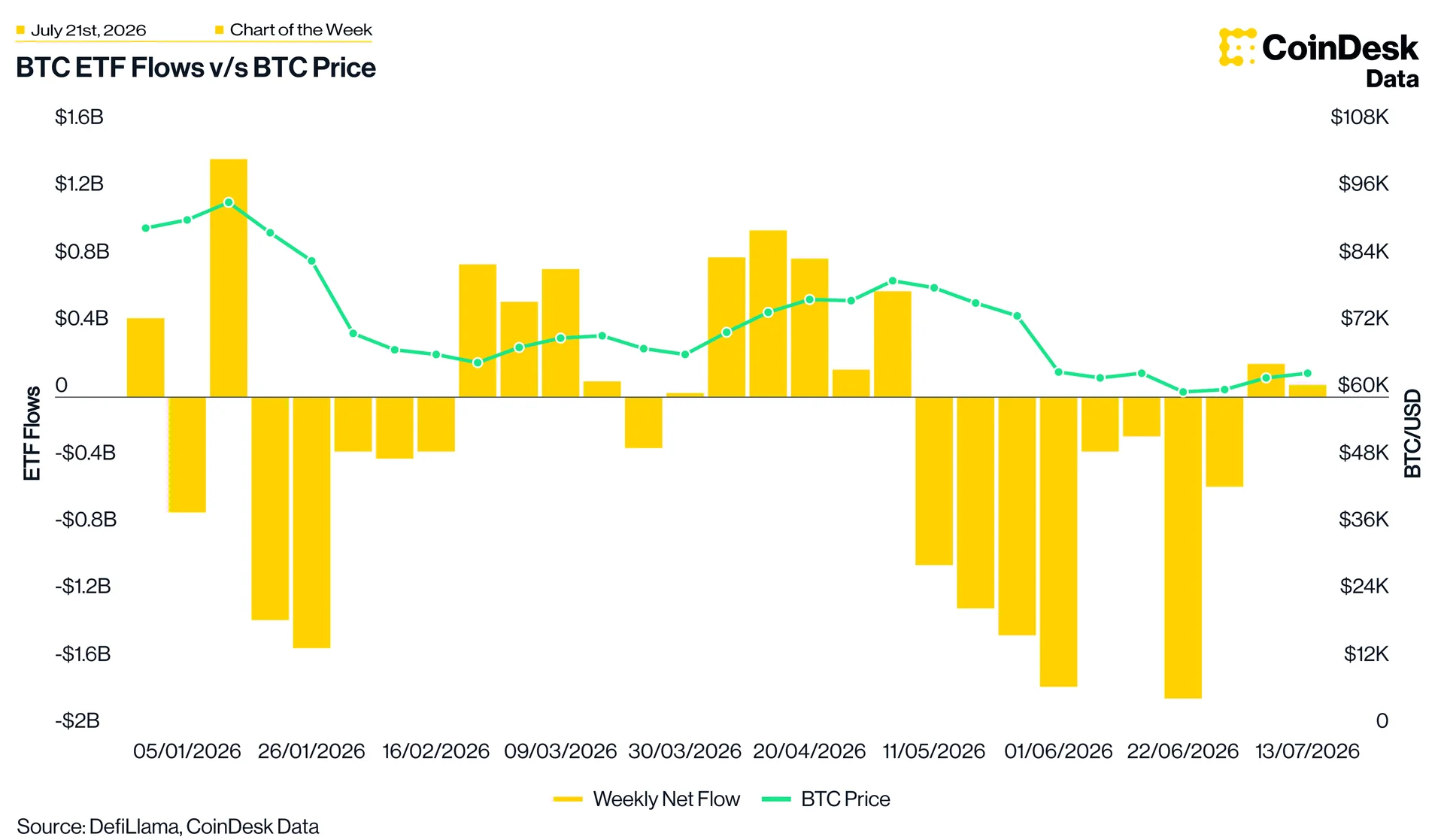
Mall reduces most crypto books to three archetypes: a single-asset bitcoin sleeve for maximum convexity and drawdown, a large-cap basket for partial diversification at higher volatility, and a dynamically managed sleeve of cash and bitcoin rebalanced on signals. None is objectively best; each is a different answer to how much risk an allocator can take and still stay invested. Drawdown dispersion across the three proves more decisive than return dispersion, so a well-sized allocation can absorb volatility and still capture the long-term upside while an oversized one fails even holding the "right" asset. The same issue lines up with this week's flow tape: spot BTC ETFs saw eight straight weeks of net outflows from May 11 through June 29 totaling roughly -$8.25B before flipping to two consecutive net-inflow weeks on July 6 and July 13, with BTC's average weekly price rising from ~$61,300 to ~$64,200 over that window.


Frequently asked questions
-
What is the main argument in this week's Crypto Long & Short?
Lionsoul Global CIO Gregory Mall argues the primary crypto allocation decision is size, not selection: investors should size positions to what they can survive holding through a drawdown rather than chase diversification by adding more tokens.
-
Why does diversification work less well for crypto in stressed markets?
Spot BTC and ETH ETFs plus stablecoin Treasury flows now wire crypto into the same macro plumbing as traditional assets. In risk-off regimes correlations across tokens rise, so the protection investors assumed they held tends to fade.
-
What are the three portfolio archetypes Mall describes?
A single-asset bitcoin sleeve for maximum convexity and drawdown, a large-cap basket for partial diversification at higher volatility, and a dynamically managed cash-and-bitcoin sleeve rebalanced on signals that trades some upside for a smoother ride.
-
How did spot BTC ETF flows behave in the period covered?
Spot BTC ETFs saw eight straight weeks of net outflows from May 11 through June 29, totaling roughly -$8.25B, before flipping to two consecutive net-inflow weeks on July 6 and July 13, with BTC's average weekly price rising from about $61,300 to $64,200.
-
Why does Mall favor rules-based, trend-following sizing?
Decades of evidence on time-series momentum show rules-based approaches can reduce drawdowns without requiring anyone to forecast the next move. In a reflexive market like crypto, that discipline can matter as much as the position itself.
 Whale Alert
 TheBlock
 WatcherGuru
 CoinTelegraph
 CryptoSlate
 Glassnode