








 CoinDesk
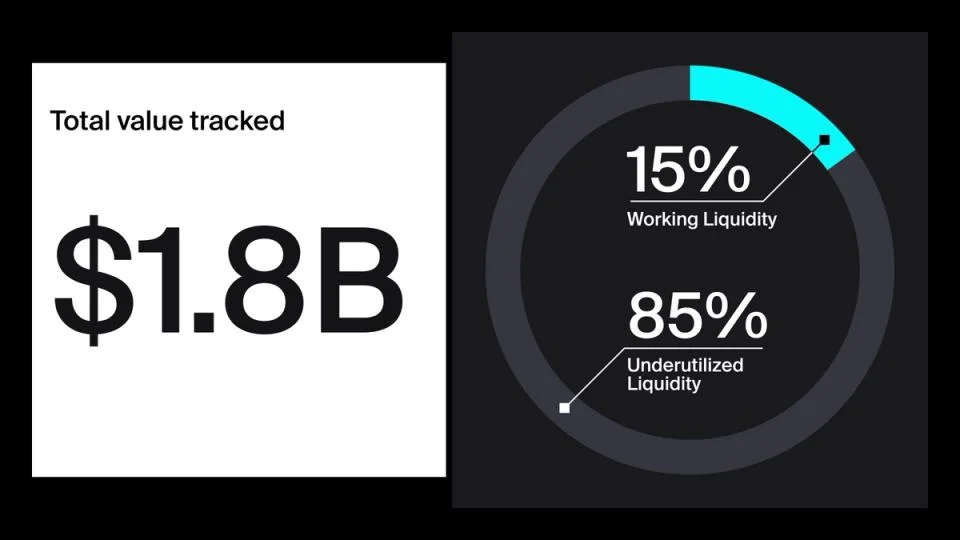


About $1.6 billion deposited across major decentralized exchanges was underutilized during the first half of 2026, Dune research commissioned by 1inch found. That represented 85% of the $1.84 billion tracked in concentrated liquidity pools. An average of $542 million, or 29.5%, sat fully outside active trading ranges each week, earning no fees and providing no usable market depth.
Dune examined Uniswap v3 and v4, PancakeSwap v3 and Aerodrome Slipstream across seven chains using weekly snapshots from Jan. 6 through June 30. The out-of-range share generally stayed between 25% and 35%, peaking near 41% in early February.
Why it matters
Concentrated liquidity lets providers allocate assets within chosen price bands, increasing capital efficiency while the market remains inside that range. Once prices move beyond it, the position stops supporting swaps and collecting fees until the provider resets the range or the market returns.
An ETH/USDC position set between $2,000 and $2,500, for example, becomes inactive when ETH trades outside that band. Dune linked inactive positions more closely to sustained price moves than to volatility itself, since a volatile market can finish the week near where it started.
Individual wallets accounted for 82% to 94% of attributed idle liquidity on Uniswap v3, depending on the chain. Contract-managed positions stayed active more consistently, indicating that liquidity requiring manual adjustments is more likely to be neglected.
Market impact
Dune estimated that out-of-range providers could be missing roughly $150 million in annual fees, based on a blended in-range fee APR of about 35%. The estimate is not guaranteed recoverable income because active management adds transaction costs, execution risk and exposure to unfavorable price movements.
Large positions were less likely to become inactive, but still represented most of the stranded value. Positions above $1 million accounted for 47% of idle capital, or roughly $260 million, even though only 26% of liquidity in that size bracket was out of range.





Frequently asked questions
-
What does it mean for DEX liquidity to be out of range?
A concentrated liquidity position is out of range when the market price moves beyond its chosen price band. It then stops supporting swaps and earning trading fees until it is adjusted or the price returns.
-
How much liquidity was fully inactive each week?
An average of about $542 million, or 29.5% of tracked liquidity, sat fully outside active trading ranges each week during the first half of 2026.
-
Why were individual wallets responsible for most idle liquidity?
Individual wallets accounted for 82% to 94% of attributed idle capital on Uniswap v3. Positions requiring manual adjustments were more likely to go unattended than contract-managed positions.
-
How much fee income could liquidity providers be missing?
Dune estimated roughly $150 million in missed annual fees using a blended in-range fee APR of about 35%. The amount is not guaranteed recoverable income because repositioning carries costs and risks.
-
Why is keeping concentrated liquidity active not a simple fix?
Resetting price ranges can improve fee capture and market depth, but it adds transaction costs, execution risk and exposure to unfavorable price movements. Providers must weigh those costs against potential returns.
 Lookonchain
 Whale Alert
 WuBlockchain
 CryptoSlate
 TheBlock