








 CoinDesk
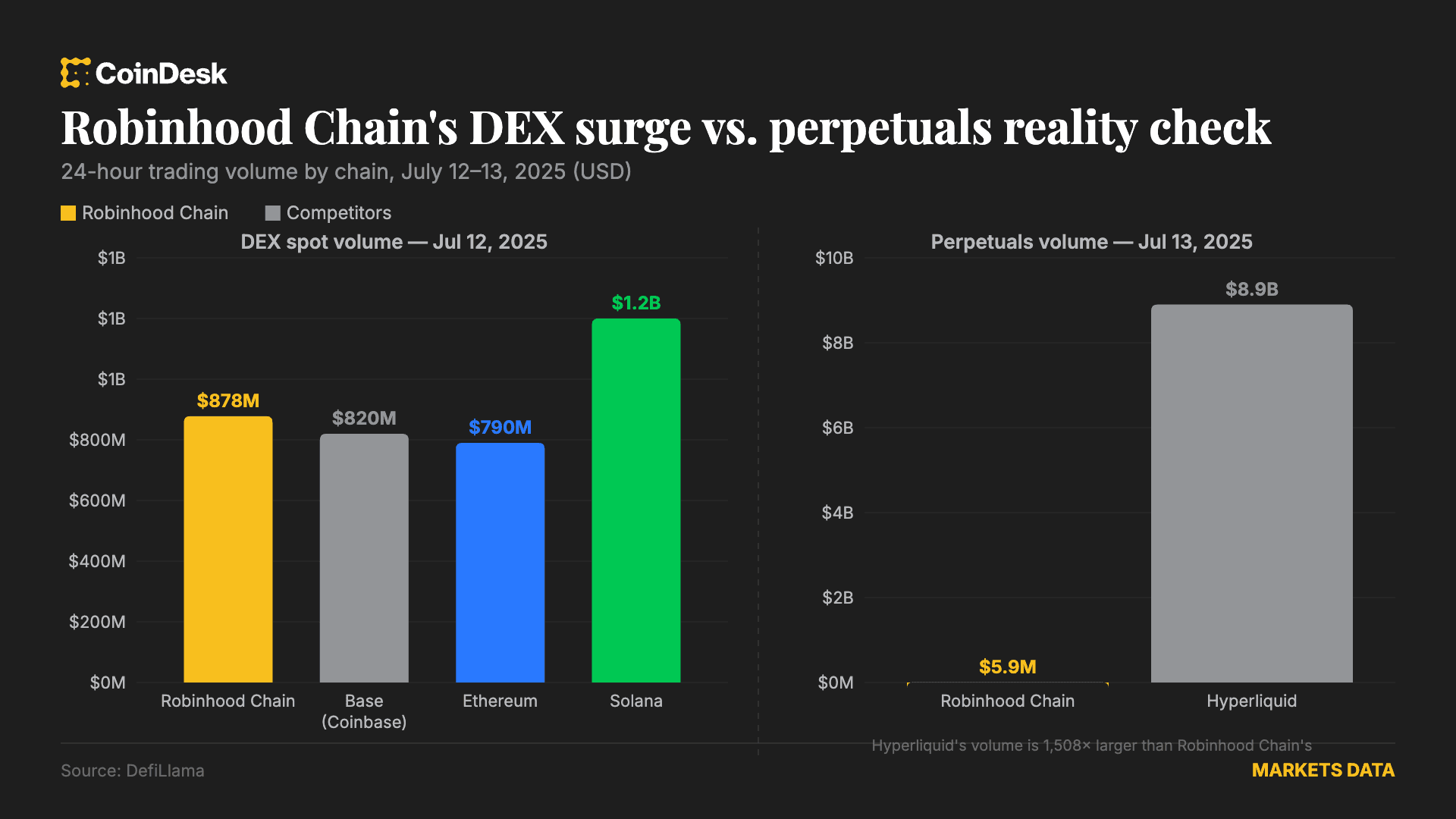

Robinhood Chain generated roughly $878 million in 24-hour DEX volume on July 12, briefly overtaking Coinbase's Base and Ethereum mainnet in DefiLlama's rankings, according to data cited by Robinhood and reported by CoinDesk. The chain's public launch earlier this month and that volume spike have made it the latest viral venue in crypto, but the activity so far looks very different from what Robinhood built it for. Built as an Ethereum layer 2 on Arbitrum, Robinhood Chain was designed to host tokenized stocks, ETFs, and other real-world assets, not memecoin speculation.
Why it matters
Robinhood says the opportunity is distribution, not trading. Head of product Seong Seog Lee told CoinDesk the chain's goal is to bring Robinhood's 10 million active users onchain for the first time, users who have never traded a perpetuals contract because the on-ramps have not existed. The company has wired Lighter-based perpetual access for gold, silver, FX, and crypto directly inside Robinhood Wallet for users in over 120 countries. That distribution is the asset. The risk is whether the onchain activity actually converts into the products Robinhood built the chain to serve.
Market impact
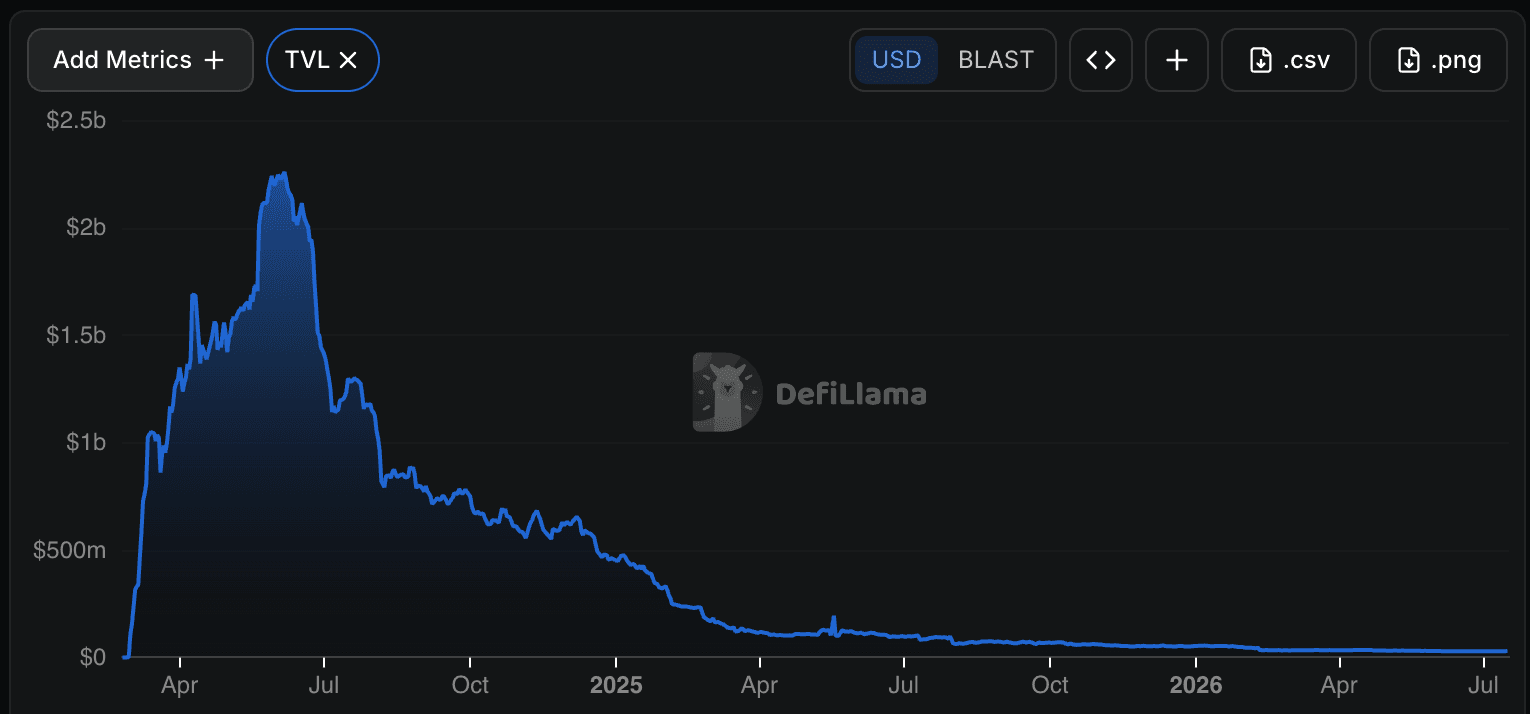
The early data is mixed. Robinhood Chain bridged $734 million in total value but only $211 million is deployed in lending or yield products, meaning most bridged assets are sitting idle in wallets. Tokenized real-world assets on the chain total just $12.66 million in market cap, against a CASHCAT memecoin that peaked at $156 million after rallying more than 2,100% in its first week. The chain processed $5.9 million in perpetual futures on July 13 versus $8.9 billion on Hyperliquid the same day. The shape is familiar: new L2s attract bridged capital and meme flow first, then either mature into broader consumer chains like Base or fade like Blast, which saw TVL collapse from $2.2 billion to $29 million after its points program ended. The open question for Robinhood Chain is which path the speculative flow takes once CASHCAT-style catalysts rotate elsewhere.
Frequently asked questions
-
What is Robinhood Chain and what is it designed to do?
Robinhood Chain is an Ethereum layer 2 built on Arbitrum that launched publicly earlier this month. It was designed primarily to host tokenized real-world assets such as stocks and ETFs, rather than memecoin trading.
-
Why did Robinhood Chain briefly surpass Base and Ethereum in DEX volume?
On July 12 the chain generated about $878 million in 24-hour DEX volume per DefiLlama, lifting it past Base and Ethereum mainnet. The surge was concentrated in a memecoin called CASHCAT rather than in tokenized asset trading.
-
How much of the bridged value on Robinhood Chain is actually deployed?
Around $734 million has been bridged onto the chain, but only $211 million is deployed in lending or yield products. The gap reflects assets sitting idle in wallets rather than working inside the chain's DeFi markets.
-
What happened to tokenized real-world assets on Robinhood Chain?
Tokenized RWAs on the chain total just $12.66 million in active market capitalization, roughly twelve times smaller than the $156 million peak of the CASHCAT memecoin that drove most of the chain's early trading activity.
-
Did Robinhood CEO Vlad Tenev change his stance on memecoins?
Tenev told CNBC on July 2 that memecoins were a dead end with no utility, then posted six days later that Robinhood Chain works great for memes. Asked about the contradiction, head of product Seong Seong Lee pointed to developer activity and user engagement without directly addressing the pivot.
 CoinTelegraph
 Lookonchain
 TheBlock
 Whale Alert
 WuBlockchain
 CryptoSlate
 Crypto Rank News