








 Lookonchain
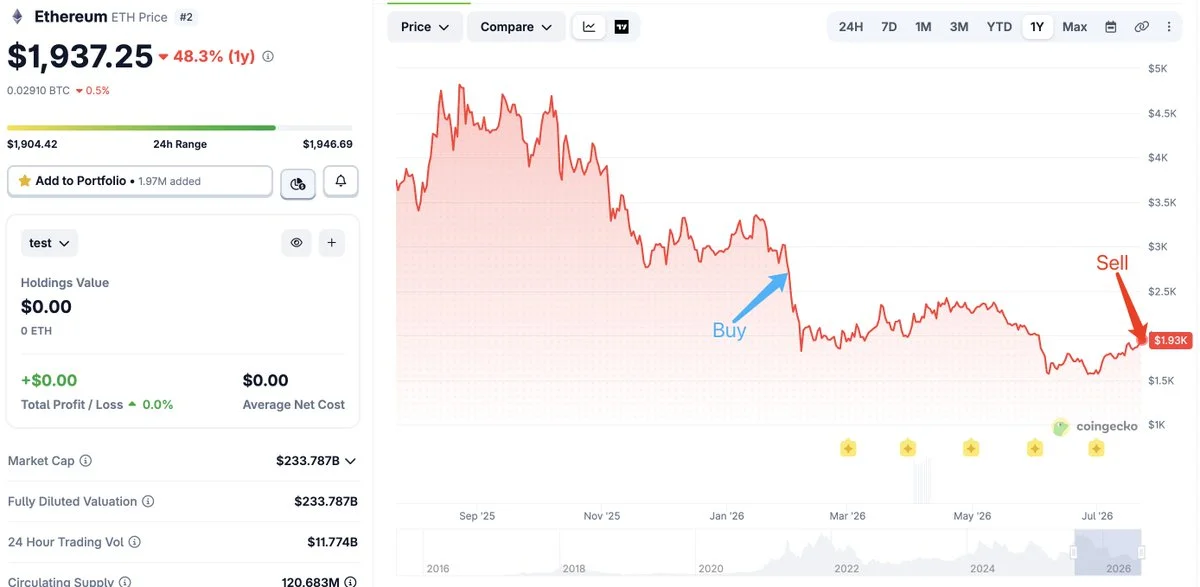
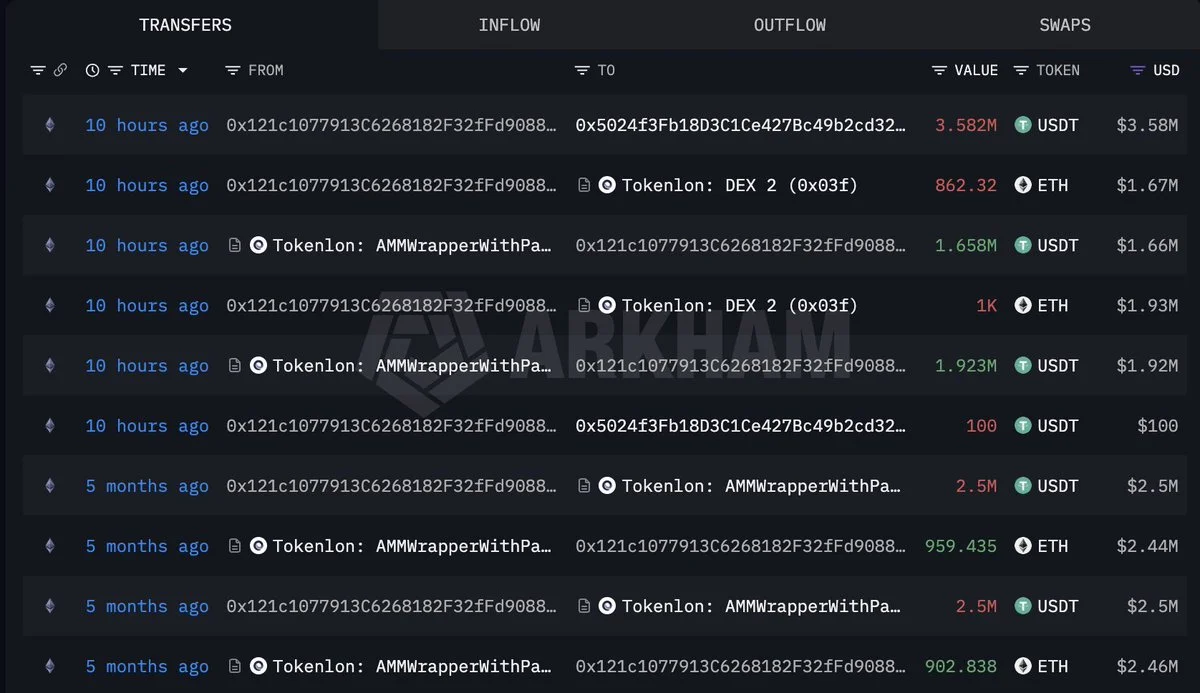
A wallet that accumulated 1,862.3 ETH at roughly $2,685 in January sold the entire position this week at around $1,923, locking in a $1.42 million loss, a 28% drawdown over five months of holding.
The transaction is one trader's exit, not a market-wide signal, but the shape is familiar. Retail addresses built positions into the January sell-off, then watched ETH drift lower for months before throwing in the towel near recent lows. Throughout that same window, larger wallets and ETF flows have leaned the opposite direction, adding exposure while smaller hands cut losses.
Why it matters
Single-wallet capitulations rarely move ETH on their own at this size, but they are useful as sentiment markers. When 28% drawdowns force five-month holders to sell at a loss, it tends to mark the kind of late-stage retail exhaustion that has, historically, preceded short-term bottoms more often than it has preceded further downside. The trade is also a reminder of how concentrated retail timing risk remains: buying the first leg of a dip in January looked like discipline until it became the entry point for a longer slide.
Market impact
ETH has continued to trade heavy against BTC even as the broader market stabilises, and stories like this one tend to surface during those grind-lower phases. Watch the ratio, the spot ETF net flow tape, and whether more January buyers start cutting losses at these levels. A cluster of similar-sized exits would be the data point that turns one trader's loss into a broader capitulation read.

Frequently asked questions
-
Who sold the 1,862 ETH?
A single on-chain wallet that accumulated 1,862.3 ETH at roughly $2,685 in January exited the entire position this week at around $1,923, taking a $1.42M loss.
-
How much did the trader lose on the ETH sale?
The wallet locked in a $1.42 million loss, a 28% drawdown on the position held for five months.
-
Why is a single-wallet ETH sale notable?
The dollar size is modest, but the pattern echoes broader retail behaviour: buying the first leg of the January dip, then capitulating near the lows while larger wallets and ETF flows add through the drawdown.
-
What does retail capitulation at a 28% loss typically signal?
Historically, late-stage retail exhaustion of this kind has preceded short-term bottoms more often than further downside, though one trade is not a market-wide signal.
-
What should traders watch after this ETH exit?
The ETH/BTC ratio, spot ETH ETF net flows, and whether other January buyers begin cutting losses at these same levels, since a cluster would turn one exit into a broader capitulation read.
 WuBlockchain
 CoinTelegraph
 CoinDesk
 Crypto News
 TheBlock
 Whale Alert