








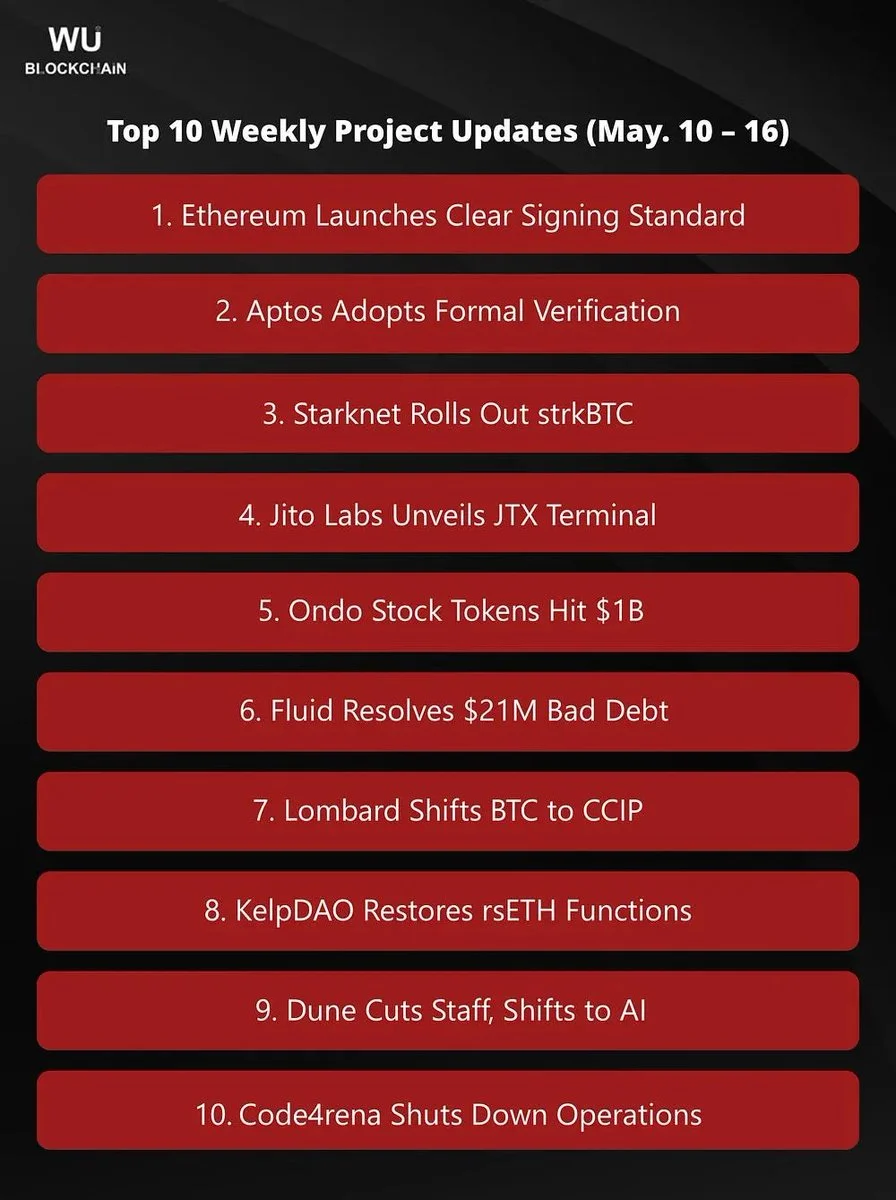

Ethereum developers rolled out new wallet-safety features this week aimed at curbing blind signing, a long-standing attack surface where users approve transactions without seeing the underlying calldata. The changes are incremental rather than a protocol-level fix, but they target the most common vector for high-value wallet drains.
Why it matters
Blind-signing exploits have been the entry point for several large-scale phishing campaigns over the past year, and any reduction in user-side ambiguity lowers the hit rate for clipboard-swappers and address-poisoning bots. It also puts quiet pressure on hardware-wallet vendors to surface richer human-readable previews.
Market impact
Elsewhere, Jito, the Solana MEV infrastructure provider, confirmed plans to launch a dedicated trading terminal — a move that would expand its stack beyond validator-side block-building into the retail-facing venue layer. Several protocols have begun distancing themselves from cross-chain messaging layer LayerZero, while analytics platform Dune announced a 25% workforce reduction, both signals of consolidation in the data and interoperability stack.
Source: [Weekly Project Updates: Ethereum New Features Reduce Blind Signing Risks, Jito to Launch Trading Terminal, Multiple Protocols Abandon LayerZero, etc — Wu Blockchain](https://wublock.substack.com/p/weekly-project-updates-ethereum-new)


Frequently asked questions
-
What is blind signing and why is it dangerous?
Blind signing is approving a transaction without seeing its underlying calldata. Attackers exploit it by crafting payloads that look routine but actually drain the wallet — Ethereum's new tools aim to surface more readable details before approval.
-
What is Jito's new trading terminal?
Jito, the Solana MEV infrastructure provider, confirmed plans to launch a dedicated trading terminal. The product would expand Jito beyond validator-side block-building into the retail-facing venue layer.
-
Why are protocols abandoning LayerZero?
Several protocols have begun distancing themselves from the cross-chain messaging layer LayerZero, according to the weekly rundown. The exact reasons were not detailed, but the trend points to consolidation across the interoperability stack.
-
Is Dune's 25% workforce cut a sign of trouble?
Dune announced a 25% reduction in headcount. The analytics platform has scaled aggressively in recent years, and the cut signals consolidation in the data-stack sector rather than an acute crisis.
-
Will these Ethereum changes reduce wallet hacks?
The changes target the most common wallet-drain vector, so the hit rate for clipboard-swappers and address-poisoning bots should fall. They are incremental wallet-side updates, not a protocol-level fix.

 TheBlock
 Crypto Rank News
 CoinDesk
 CoinTelegraph
 CryptoSlate