


 CryptoSlate


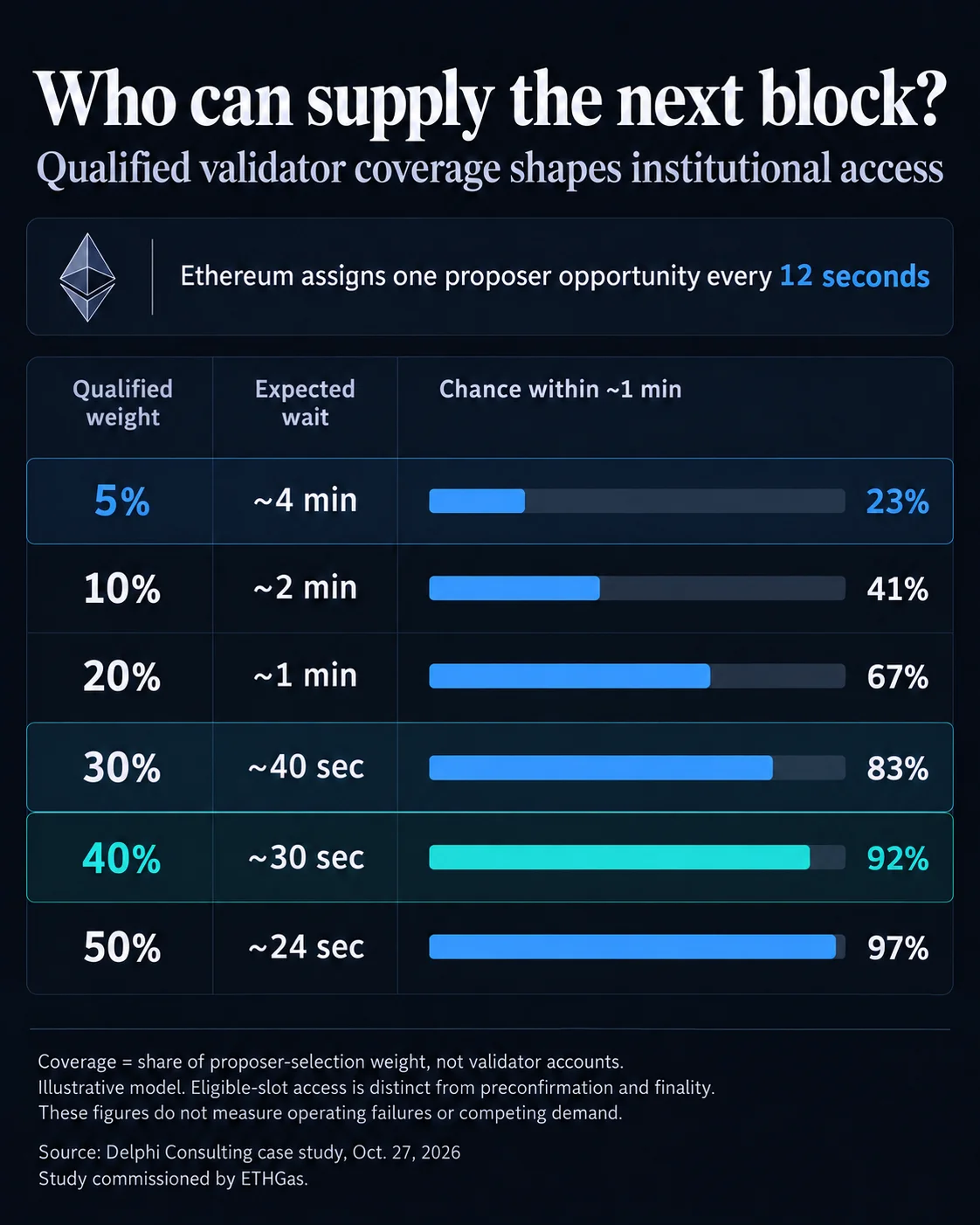

A Delphi Digital case study models a four-minute expected wait for an Ethereum block produced by an approved operator when those operators hold 5% of proposer-selection weight. In that scenario, the chance of an eligible proposer within roughly one minute is 23%. At 40% qualified weight, the expected wait falls to about 30 seconds and the one-minute probability rises to 92%.
Why it matters
The model puts a constraint on ETHGas's opt-in institutional service, which reserves blockspace through operators that meet customer requirements. Buying capacity does not let a bank choose who proposes Ethereum's next block. What matters is the effective stake eligible under that institution's identity, jurisdiction and operating rules, not the number of validators registered with a relay.
Ether.fi's April commitment, then valued at $3 billion, could provide supply. But the agreement does not establish how much active stake currently meets any particular institution's criteria. Ethereum offers one proposer opportunity every 12 seconds, and upcoming proposer schedules can help buyers plan reservations against eligible slots.
Market impact
ETHGas advertises confirmations in about 50 milliseconds, but that is a preconfirmation, not immediate access to an eligible proposer or Ethereum finality. The distinction matters for time-sensitive tasks such as collateral transfers and portfolio rebalancing.
JPMorgan's JPM Coin, ticker JPMD, went live on Ethereum mainnet for institutional clients on Oct. 19, extending beyond Base. The move brings another institutional financial workflow to the network, while highlighting the need to measure execution against defined deadlines. An Oct. 27 ETHGas dashboard showed 221,558 all-time validator registrations and 104,728 delivered payloads; those cumulative figures do not show current institution-qualified proposer weight or count institutional transactions. The more useful capacity measure is eligible active stake paired with delivery performance against customer deadlines.

Frequently asked questions
-
What does the four-minute expected wait measure?
It is the modeled average wait for a proposer that meets an institution's requirements when approved operators hold 5% of Ethereum's proposer-selection weight.
-
How does the model change when qualified proposer weight reaches 40%?
The expected wait falls to about 30 seconds, and the chance of an eligible proposer within roughly one minute rises to 92%.
-
Why don't validator registration totals show institutional blockspace capacity?
Registrations do not reveal the active effective stake that meets a particular institution's identity, jurisdiction and operating requirements.
-
Does ETHGas's 50-millisecond confirmation provide immediate block inclusion?
No. A preconfirmation is a commitment before block inclusion. It does not establish immediate access to a qualifying proposer or Ethereum finality.
-
What capacity measure would better assess ETHGas for institutions?
The useful measure is active effective stake eligible under a customer's requirements, paired with delivery performance against that customer's deadlines.
 CoinDesk
 WuBlockchain
 Lookonchain
 Crypto News
 TheBlock
 WatcherGuru