


 WuBlockchain

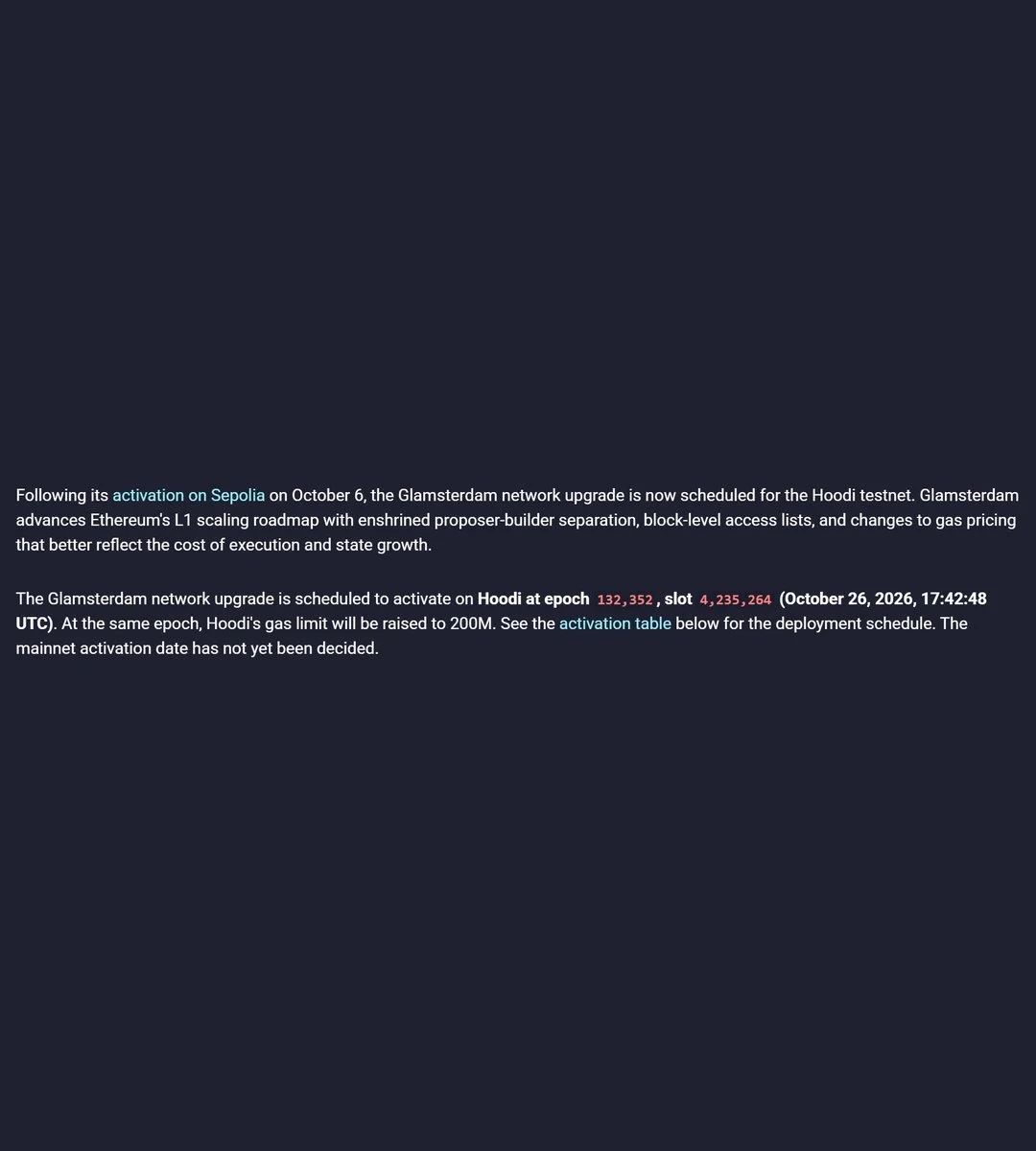
The Ethereum Foundation has scheduled the Glamsterdam upgrade for the Hoodi testnet on October 26 at 17:42 UTC, lifting the block gas limit to 200 million and matching the Sepolia testnet ceiling. The move sets the stage for a mainnet rollout that would represent Ethereum's most consequential Layer 1 throughput improvement in years.
Why it matters
Glamsterdam introduces enshrined proposer-builder separation (ePBS), which bakes the currently off-chain MEV supply chain directly into the protocol. That shift removes the trust assumptions that today's relay-based PBS architecture requires and gives Ethereum a cleaner, more censorship-resistant block production pipeline. Alongside ePBS, block-level access lists (BALs) enable parallel transaction validation, a structural change that allows nodes to process non-conflicting transactions simultaneously rather than sequentially. Revised gas pricing for state creation and data access rounds out the upgrade, rebalancing the economic incentives that govern how developers write contracts and how users interact with the chain.
Market impact
A gas limit doubling to 200 million is the most direct signal for ETH bulls: more throughput per block means lower average fees during peak demand, which historically correlates with increased on-chain activity and developer deployment rates. The Hoodi testnet activation on October 26 gives client teams roughly a month of live data before any mainnet timeline discussion. If Hoodi runs cleanly, expect a mainnet fork date to be proposed before year-end, which would put sustained ETH fee pressure and L2 settlement economics firmly back in focus.

Frequently asked questions
-
What is enshrined proposer-builder separation (ePBS) and why does it matter for Ethereum?
ePBS moves the MEV supply chain from off-chain relay infrastructure directly into the Ethereum protocol, removing the trust assumptions that today's relay-based PBS architecture requires and producing a more censorship-resistant block production pipeline.
-
What does raising the gas limit to 200 million mean for ETH users and fees?
A higher gas limit means more transactions fit into each block, increasing Layer 1 throughput and reducing average fees during peak demand, which historically correlates with increased on-chain activity and faster developer deployment rates.
-
What are block-level access lists (BALs) and how do they improve Ethereum's performance?
BALs enable parallel transaction validation, allowing Ethereum nodes to process non-conflicting transactions simultaneously rather than sequentially, which directly improves Layer 1 throughput without requiring a separate scaling layer.
-
What happens after the Hoodi testnet activation on October 26?
Client teams will use the Hoodi testnet run to collect live data on the upgrade's performance. If Hoodi activates cleanly, a mainnet fork date is expected to be proposed before the end of the year.
-
How does Glamsterdam's revised gas pricing affect Ethereum developers?
The upgrade revises gas costs for state creation and data access operations, rebalancing the economic incentives that govern how developers write smart contracts and how users interact with the Ethereum chain.
 CryptoSlate
 CoinDesk
 CoinTelegraph
 TheBlock