








 WuBlockchain

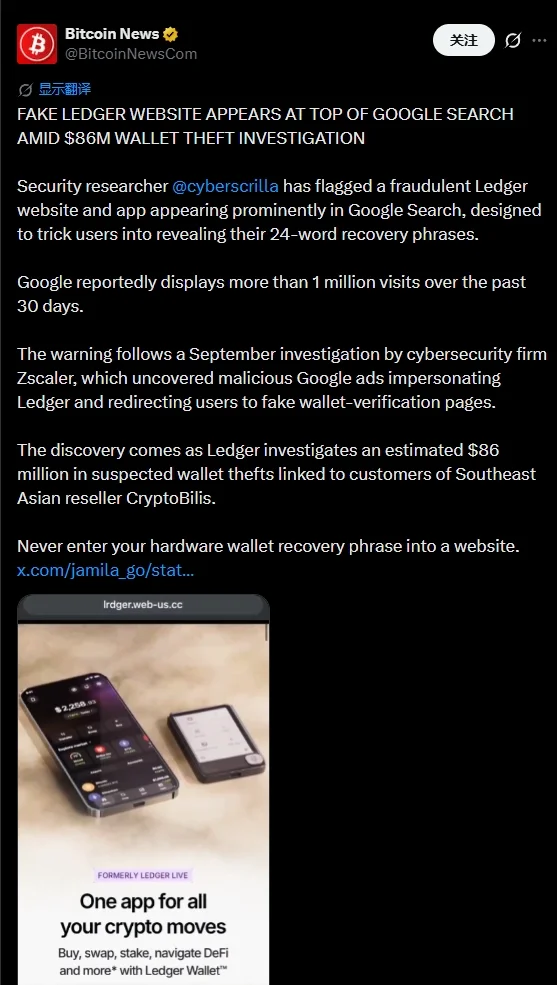
Cybersecurity researcher Cyber Scrilla discovered a fraudulent Ledger website and application appearing at the top of Google Search and designed to capture users' 24-word recovery phrases. Google reportedly displayed more than 1 million visits to the site over the past 30 days.
Why it matters
The discovery comes amid investigations into an estimated $86 million in wallet thefts linked to Southeast Asian reseller CryptoBilis. It adds search visibility to the threat model for Ledger users, who may mistake a prominent result for an official wallet-verification page.
Market impact
The campaign follows a September investigation by cybersecurity firm Zscaler, which found malicious Google ads impersonating Ledger and redirecting users to fake verification pages. The activity highlights how compromised search placement can turn seed-phrase theft into a broader wallet-security risk.
Recovery phrases give control of self-custody wallets, making requests to submit all 24 words a critical phishing warning. Ledger users should verify that they are using official channels before entering any recovery information.
Frequently asked questions
-
What is the fake Ledger site designed to steal?
The fraudulent site and application are designed to trick users into submitting their 24-word wallet recovery phrases.
-
How much traffic did Google reportedly show for the phishing site?
Google reportedly displayed more than 1 million visits to the site over the previous 30 days.
-
How is the campaign connected to CryptoBilis investigations?
The alert comes amid investigations into an estimated $86 million in wallet thefts linked to Southeast Asian reseller CryptoBilis.
-
What did Zscaler find in its September investigation?
Zscaler uncovered malicious Google ads impersonating Ledger and redirecting users to fake wallet-verification pages.
-
Why are search rankings significant in this Ledger phishing campaign?
A prominent Google result can make a fraudulent wallet-verification page appear legitimate, increasing the risk that users submit their recovery phrases.
 Lookonchain
 CryptoSlate
 CoinTelegraph
 CoinDesk
 TheBlock
 Crypto News