








 WatcherGuru

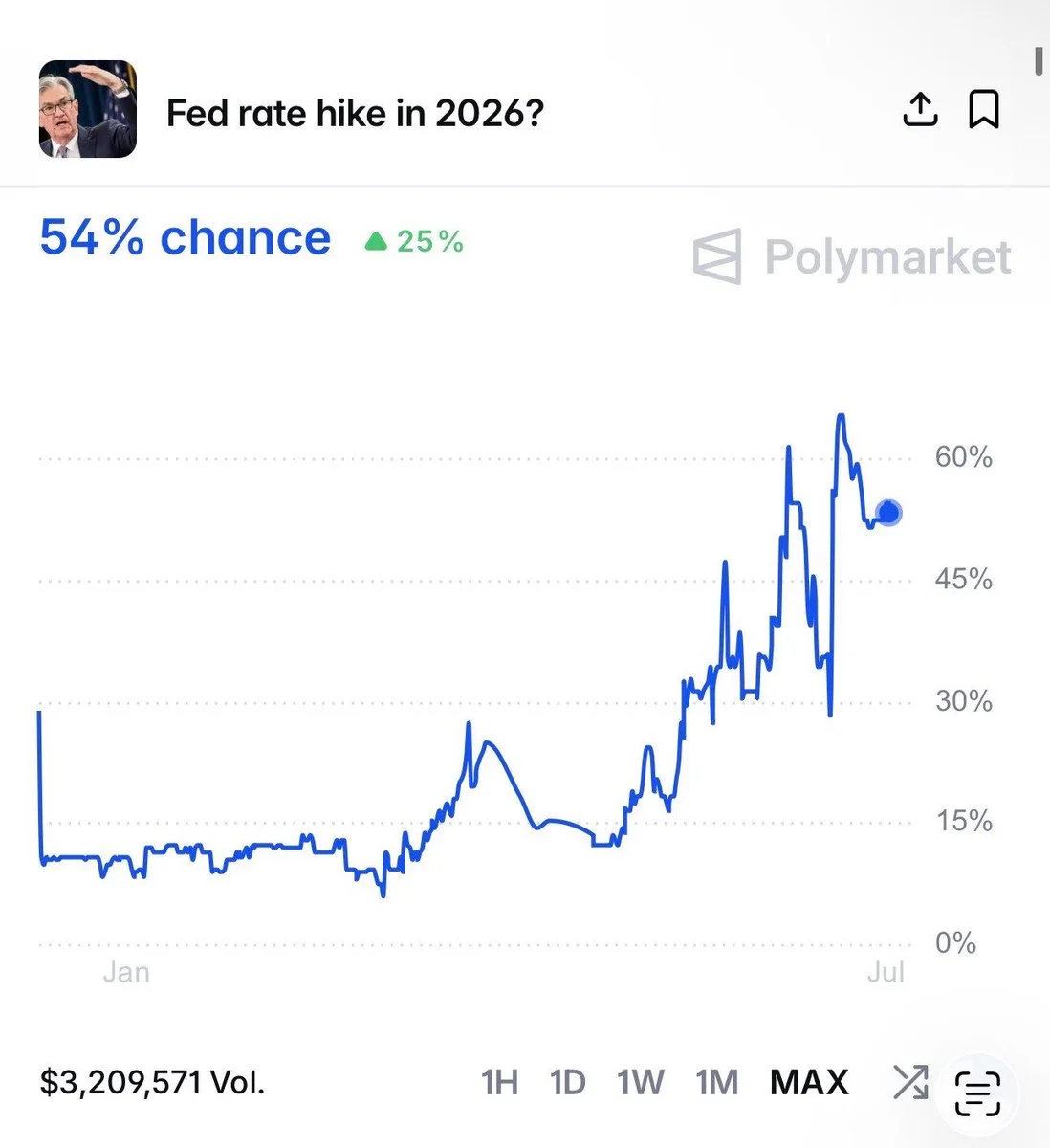
The Federal Reserve is now projected to raise interest rates this year, a sharp reversal from the rate-cut consensus that dominated the first half of the year. The shift comes as fresh inflation data has pushed policymakers and market participants to re-evaluate the path of monetary policy.
Why it matters
A hawkish repricing this late in the cycle is unusual. Markets had been pricing in two to three cuts before year-end; the new projection flips that into a hike, the kind of regime change that resets every cross-asset model in real time. The trigger is sticky services inflation running above the Fed's 2% target, with wage data refusing to cool at the pace the dot plot assumed.
Market impact
Risk assets reprice first and fastest. Spot Bitcoin and Ether ETFs, which trade as macro-beta instruments on most institutional desks, will feel the bid weaken before any on-chain signal changes. A higher discount rate compresses the forward earnings multiples that justify long-duration crypto allocations, and the dollar typically firms on a hawkish surprise, another headwind for BTC in the near term. The bigger read is what comes next: if the Fed follows through with even one hike, the market's soft-landing thesis unravels, and the second-order sell in equities pulls crypto down with it.


Frequently asked questions
-
Why is a Fed rate hike bearish for crypto?
Higher discount rates compress the forward multiples that justify long-duration crypto allocations. A firmer dollar on hawkish surprises adds another near-term headwind for BTC and ETH, and risk-off in equities pulls crypto lower with it.
-
What changed to flip the Fed from cuts to hikes?
Sticky services inflation running above the Fed's 2% target and wage data refusing to cool at the pace the dot plot assumed. Together they forced a sharp repricing of the rate path for the rest of the year.
-
How do spot Bitcoin and Ether ETFs respond to a hawkish Fed?
They trade as macro-beta instruments on most institutional desks. The bid tends to weaken before any on-chain signal changes, and ETF flows can turn negative as allocators reduce risk into a tighter policy backdrop.
-
Does a projected hike mean the Fed will actually hike?
A projection reflects market and analyst expectations based on current data, not a Fed commitment. The FOMC still drives the actual decision, but a sustained hawkish repricing raises the bar for any dovish surprise.
-
What would invalidate the bear case if the Fed does hike?
A clear and rapid drop in core services inflation, or a sharp deterioration in the labor market, would give the Fed room to pause. Absent either, even one follow-through hike is enough to break the soft-landing thesis underpinning risk assets.
 CoinTelegraph
 CryptoSlate
 TheBlock
 Crypto News