








 CoinDesk
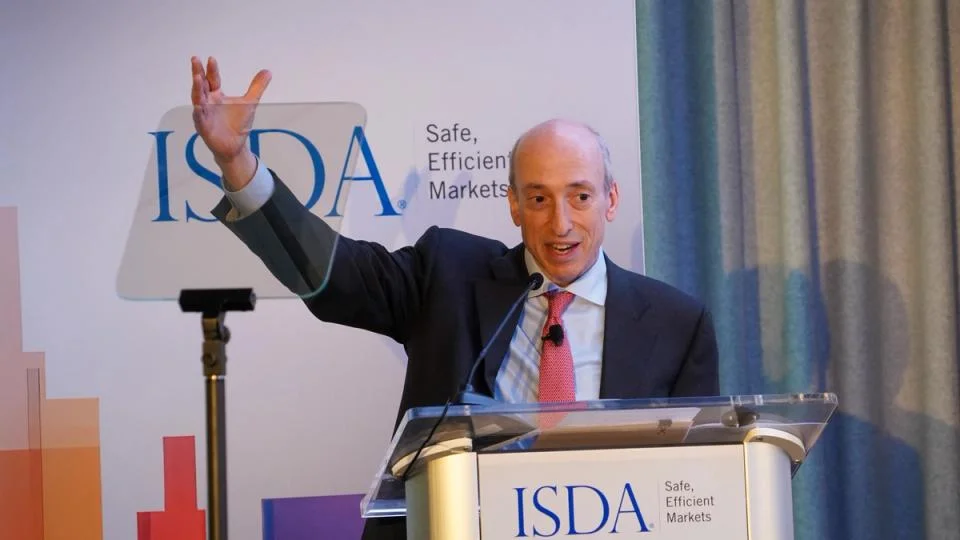



Former SEC and CFTC Chair Gary Gensler filed an amicus brief with the Sixth Circuit Court of Appeals on Thursday arguing that federal law does not give the CFTC authority to oversee sports-related prediction markets, siding with a coalition of states, tribal nations, and gaming-industry groups against KalshiEx.
Gensler, who chaired the CFTC from 2009 to 2014 and the SEC from 2021 to 2025, walked the court through the history of the Commodity Exchange Act and Dodd-Frank, arguing that Congress explicitly excluded sports betting contracts from the statutory definition of a swap. "Congress did not include sports betting contracts within the statutory Dodd-Frank definition of swap," the brief said. "Such contracts do not fit the CEA's purpose or the statutory language defining swap, which focus on hedging economic risk. Sports bets are very rarely, if ever, about hedging."
Why it matters
Gensler joined amicus filings from the Indian Gaming Association and affiliated tribal organizations, the American Gaming Association, and Better Markets — all attacking Kalshi's argument that its sports-event contracts are federally regulated swaps rather than state-regulated gambling. The Indian Gaming brief accused Kalshi of "brazenly" entering tribal lands to "conduct unregulated gaming" and "siphon away vital tribal and state governmental revenue." The AGA pointed to Kalshi's own trademark filings describing its services as "sports betting and gambling tournaments" and walked the court through parlay-style offerings on Kalshi's platform. Better Markets quoted past Kalshi filings distinguishing political-event markets from sports markets like horse races.
The filings stake out a clear position: a former regulator who wrote the modern swap framework is now telling the courts that sports-event contracts fall outside it. With Congress also poking at the question, the litigation is converging on the U.S. Supreme Court as the likely final arbiter.
Market impact
The case originates in Kalshi's preemptive suit against Ohio, where a federal judge ruled against the company in March.
Frequently asked questions
-
What is Gary Gensler arguing in his Kalshi amicus brief?
Gensler told the Sixth Circuit that Congress never placed sports betting contracts inside the Dodd-Frank definition of a swap, so the CFTC lacks authority to oversee KalshiEx's sports-related prediction markets. He contends such contracts do not hedge economic risk and therefore fall outside the CEA's swap framework.
-
Who else filed amicus briefs against Kalshi in this case?
The Indian Gaming Association and affiliated tribal organizations, the American Gaming Association, and Better Markets all filed friend-of-the-court briefs. They argued sports prediction markets infringe on tribal sovereignty, mirror sportsbooks, and do not function as economic hedges.
-
What is the underlying lawsuit between Kalshi and Ohio?
Kalshi preemptively sued Ohio to block the state from suing it. A federal judge ruled against Kalshi in March, and Kalshi appealed to the Sixth Circuit, where the amicus briefs were filed.
-
How have other appeals courts ruled on prediction markets?
Courts are split. The Third Circuit ruled in April that New Jersey cannot shut down prediction markets, while a Ninth Circuit panel appeared more inclined to side with the states. The Sixth Circuit case, and likely the U.S. Supreme Court, will be decisive.
-
What happens if the states ultimately win the prediction-market fight?
Prediction-market operators would need to register and comply with regulations in every state where they operate, and could face criminal penalties in jurisdictions like Arizona and Minnesota for running unregistered platforms. They would also lose the federal preemption argument Kalshi has used to expand nationwide.
 WuBlockchain
 CoinTelegraph
 Crypto News