


 CryptoSlate
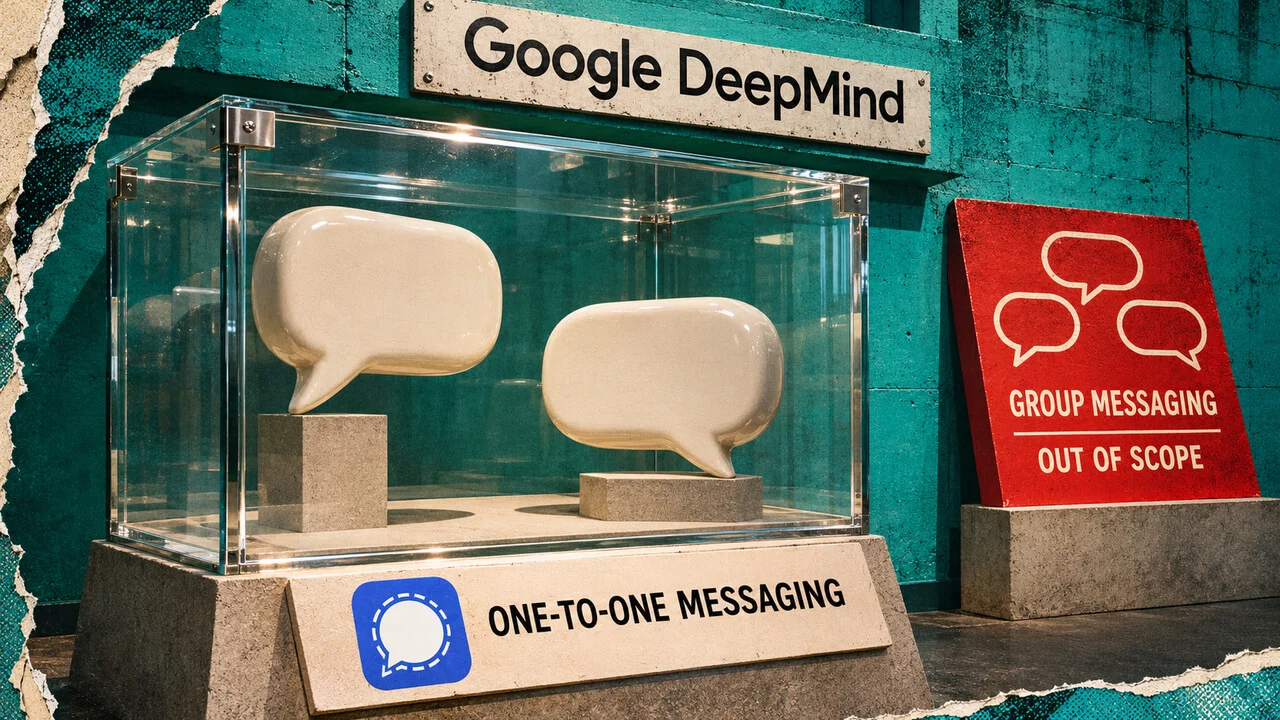
Google DeepMind researchers say AI agents generated about 6.5 million lines of machine-checked Lean proof code connecting selected security properties to a compiled build of Signal's libsignal. The Nov. 10 AlphaProof Code report covers session initialization, sending and receiving under explicit cryptographic and environmental assumptions. Five people worked for four weeks, choosing reference models and reviewing the specifications while the agents produced the proofs.
Why it matters
The work provides a concrete way for outside researchers to inspect the relationship between Signal's security requirements and executable code. The verified target was an AArch64 Linux executable using libsignal-protocol v0.105.4 and SPQR v1.6.0. Public instructions allow researchers to rebuild the pinned binary, compare trusted statements and replay the proofs in a fresh Lean kernel.
The guarantees remain conditional. The symbolic model relies on idealized cryptographic operations and collision-free executions, while the computational model bounds classical attackers under stated assumptions. Key generation, group messaging, quantum attackers and multi-device state are outside the verified scope. Results also depend on the specifications reviewed by researchers, the AArch64 Linux model and the trust placed in Lean's checking kernel.
A Nov. 11 project update added machine-code verification for 10 more libsignal routines, reducing trusted routine hooks from 37 to 27. The same libsignal version remained in use, but the pinned executable changed.
Market impact
The immediate significance is reputational rather than a direct market catalyst. Formal verification strengthens the technical case for Signal's messaging security while showing how AI systems can assist with demanding software assurance work. It does not establish that the application is free from flaws outside the selected theorems.
For crypto users, the milestone raises the evidentiary standard for security claims across wallets, bridges and privacy protocols.
Frequently asked questions
-
What Signal build did DeepMind verify?
The target was an AArch64 Linux executable using libsignal-protocol v0.105.4 and SPQR v1.6.0 inside a small command-line harness.
-
Which messaging operations were included in the proofs?
The theorems covered session initialization, sending a message and receiving one. Key generation was outside the verified scope.
-
How large was the proof effort and how much human work was involved?
The project produced about 6.5 million lines of Lean proof code. Five people worked for four weeks, selecting models and reviewing the specifications.
-
What security limitations remained in the verification models?
The symbolic model assumed idealized cryptography and collision-free execution, while the computational model covered classical attackers. Quantum attacks, group messaging and multi-device state were excluded.
-
What changed in the Nov. 11 Signal proof update?
Ten additional libsignal routines were verified through machine code, reducing trusted routine hooks from 37 to 27. The project retained libsignal v0.105.4 but changed the pinned executable.
 WatcherGuru
 Crypto News
 Crypto Rank News
 CoinDesk
 CoinTelegraph
 TheBlock