








 CoinDesk


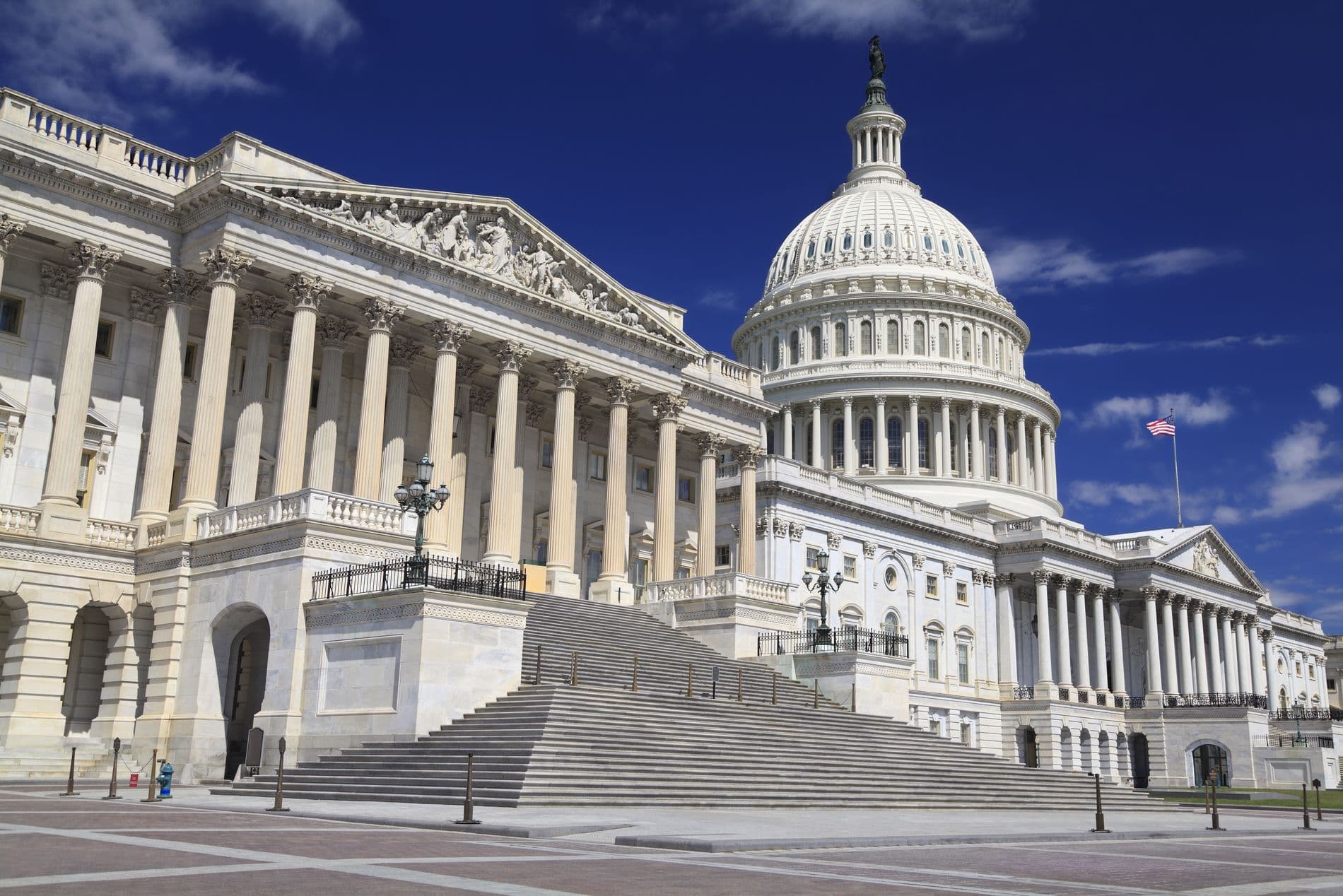

House Majority Whip Tom Emmer dismissed law enforcement objections to crypto developer protections in the Clarity Act as a "red herring," telling CoinDesk's Policy Protocol that the broader market-structure bill still has bipartisan legs in both chambers.
Emmer pointed to the Senate Banking Committee's 15-9 vote advancing the legislation as evidence that support extends beyond the GOP. He described CLARITY as the fifth or sixth iteration of a House-led effort to write clear distinctions between digital assets regulated as securities, commodities, or cash equivalents — and predicted Congress would ultimately send the bill to President Trump's desk.
The flashpoint is the Blockchain Regulatory Certainty Act (BRCA) provision, which would shield noncustodial software developers from money transmitter rules. Law enforcement groups have warned the language could weaken oversight of decentralized finance tools; Emmer countered that developers who don't custody customer funds shouldn't be treated as money transmitters, and that inconsistent state-by-state treatment is now creating legal uncertainty for US-based innovators.
Why it matters
Emmer used the appearance to recast crypto policy as bipartisan terrain rather than a partisan fight, noting that "Republicans and Democrats agree on this stuff" even as Senate negotiations drag on. He argued some senators are leveraging the bill to extract concessions on unrelated issues, a familiar Washington pattern that has stalled prior digital-asset efforts. His framing matters because the BRCA carve-out has become the single most contested piece of the package — without it, much of the developer community withholds support; with it intact, law enforcement and some state regulators threaten to oppose the broader bill.
Market impact
For crypto builders, the practical stake is jurisdictional: today, a noncustodial developer can face money-transmitter licensing demands in 50 different state regimes simultaneously.
Frequently asked questions
-
What is the Blockchain Regulatory Certainty Act (BRCA)?
BRCA is a provision inside the broader Clarity Act that would shield noncustodial software developers from being classified as money transmitters, since they do not custody customer funds.
-
Why are law enforcement groups opposing the BRCA provision?
Law enforcement groups have warned the developer-shield language could weaken oversight or hamper investigations involving decentralized finance tools — a concern Tom Emmer publicly dismissed as a "red herring."
-
What did the Senate Banking Committee's 15-9 vote on the Clarity Act signal?
The 15-9 vote to advance the bill showed support extending well beyond Republicans, which Emmer cited as evidence the legislation still has bipartisan momentum despite Washington uncertainty.
-
How would the Clarity Act change SEC vs CFTC oversight of crypto?
Emmer said the bill is designed to draw clearer distinctions between digital assets regulated as securities by the SEC and those treated as commodities by the CFTC, ending the registration-by-enforcement approach of the prior SEC.
-
What does the Clarity Act mean for crypto companies operating in the US?
Emmer argued it would create federal preemption over a patchwork of state money-transmitter regimes and encourage more companies to build and operate inside the US regulatory framework rather than routing activity offshore.
 CryptoSlate
 WatcherGuru
 CoinTelegraph
 TheBlock
 WuBlockchain