








 CoinDesk

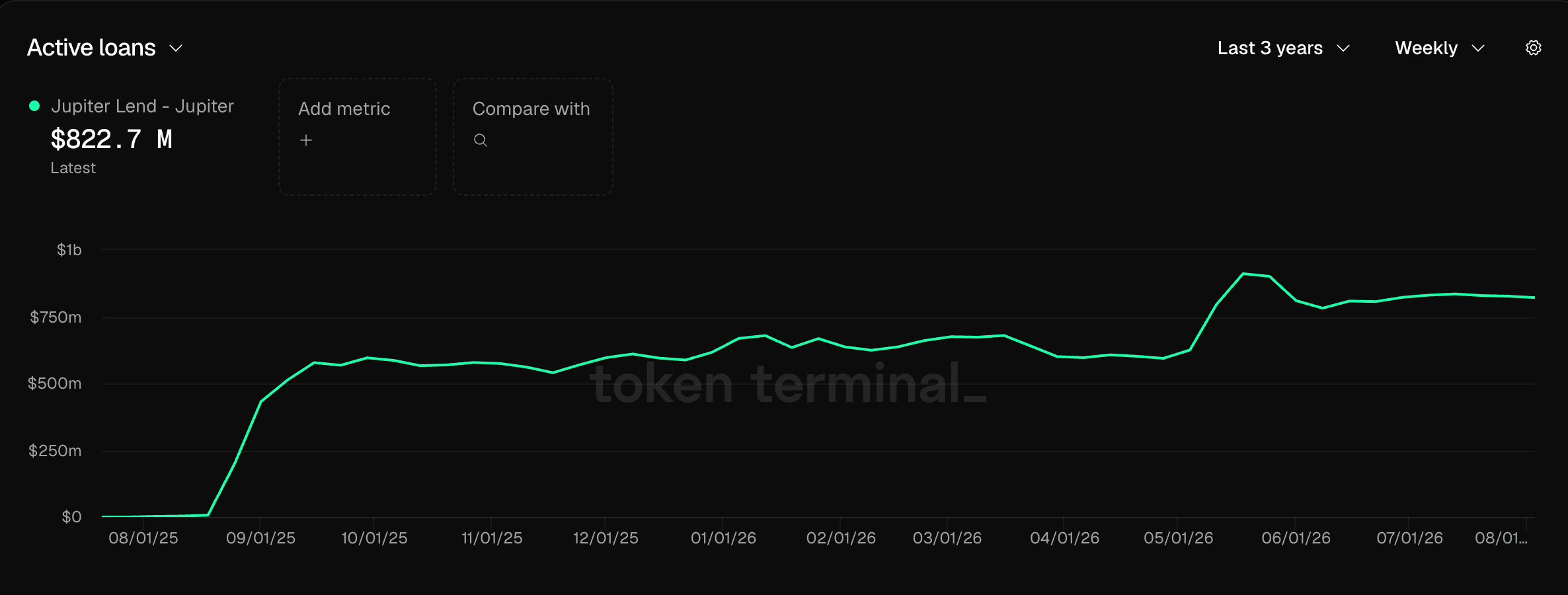


Jupiter Lend holds about $1.9 billion in deposits and $822.7 million in active loans. Introduced Monday, Lend v2 lets deposited and borrowed assets also provide trading liquidity, so one position can earn lending interest and a share of swap fees. Optional Smart Collateral and Smart Debt automate pairings in correlated pools, but extra returns depend on traders routing swaps through them.
Why it matters
Jupiter is combining two on-chain income streams that have usually been separate: lending and liquidity provision. Smart Collateral can pair USDC, USDT, SOL or JupSOL in correlated pools, adding swap fees and, where applicable, staking rewards to lending yield. Smart Debt applies the design to borrowed assets, allowing fees to offset loan costs, while users can keep ordinary lending.
The model turns Jupiter's router into a demand test. It runs Solana's largest swap router, which finds the best price across venues, and says it does not favor its own vaults. Without swap flow, the second yield stream does not exist.
Market impact
Jupiter Lend generated $1.6 million in fees over the past 30 days, roughly 1% a year on capital before any protocol split. Deposits and loans slipped over the past month, and active loans have ranged from $600 million to $900 million since September. The loan book has not grown in a year.
Depeg risk is asymmetric. Borrowers in correlated pools are protected as the pool rebalances toward the asset that holds its value, but collateral suppliers bear losses on both assets if either breaks. That is why Jupiter limits the design to stablecoin pairs and SOL against its staked versions. The next 30 days of active loans will show whether added yield can restart growth.




Frequently asked questions
-
How does Smart Collateral change a Jupiter Lend deposit?
It automatically pairs USDC, USDT, SOL or JupSOL in a correlated pool, letting one position earn lending yield plus swap fees and, where applicable, staking rewards.
-
How can Smart Debt reduce borrowing costs?
It puts borrowed assets into correlated pools so generated swap fees can offset loan costs. Users can ignore the feature and keep ordinary lending.
-
What determines whether Lend v2's extra yield is paid?
Traders must route swaps through the new vaults. Jupiter says its router sends trades wherever pricing is best rather than favoring its own pools.
-
What happens to collateral if a correlated stablecoin depegs?
Borrowers are protected as the pool rebalances toward the asset that holds its value, but collateral suppliers bear losses on both assets if either breaks.
-
How large is Jupiter Lend's current loan book?
Jupiter Lend has about $1.9B in deposits and $822.7M in active loans. Active loans have ranged from $600M to $900M since September, while the loan book has not grown in a year.
 CryptoSlate
 Crypto News
 TheBlock
 WuBlockchain