








 CoinDesk
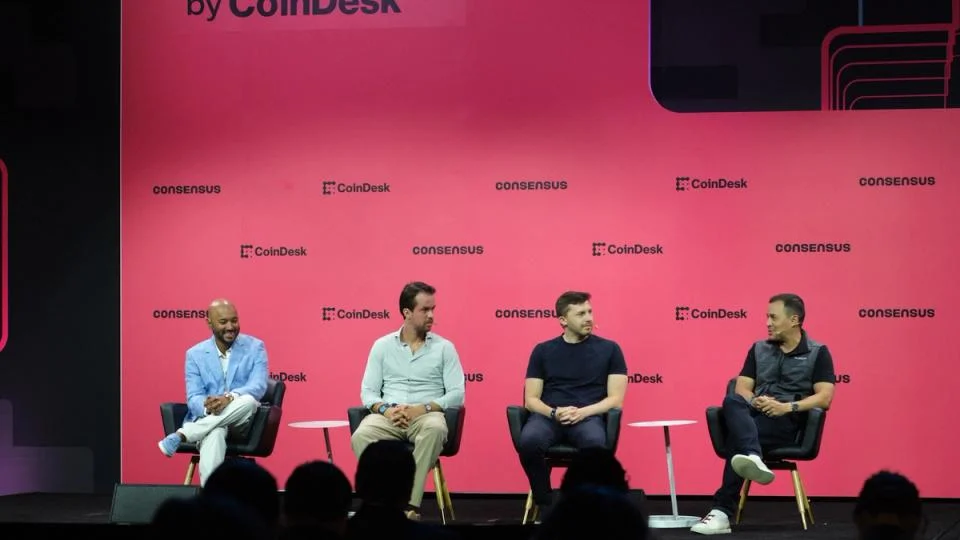


Institutional investors have continued to sit out perpetual-focused decentralized exchanges, with Consensus Miami panelists citing repeated exploits — including a recent multi-million-dollar hack on Drift — and a structural mismatch between DeFi's permissionless design and institutional KYC/compliance obligations as the core barriers to adoption. The session, titled "Perp DEX Explosion: Bullish Volumes & Bear Market Resilience," featured Wizard of SoHo, a veteran trader and family office manager; Michaël van de Poppe of MN Fund & MN Capital; and Michael Anderson of Canary Labs, moderated by Jason Atkins of liquidity provider Auros.
Why it matters
Anderson said he is reluctant to use DeFi at all, despite having explored parts of the ecosystem. "I'm scared to use DeFi right now," he said. "It does feel like a bit of a minefield, and you're just waiting for the next headline each day." Wizard of SoHo framed the security track record as the gating issue for institutional onboarding: "How do you convince the big institutional players to go on the perp DEXs? I think that's going to be the biggest challenge, especially given the exploit on Drift."
The compliance gap runs deeper than exploits. "Crypto wants to be more non-KYC," Anderson added, "but to bring on institutional [players] you need to have some form of KYC at the larger size." Panelists also flagged product innovation gaps: centralized venues are increasingly integrating bot-driven trading tools into futures markets, while DEXs have not matched that pace.
Market impact
The bearish read for the perp DEX sector is that even with surging volumes, the institutional bid is unlikely to arrive through a single fix. AI-driven trading tools, framed by van de Poppe as "the next level algorithmic trading," are already reshaping execution — but he cautioned that poorly configured AI agents build "a bad trader" rather than a better one, and that human oversight is being phased out whether the industry is ready or not. For perp DEXs, the next competitive battleground, in Wizard of SoHo's framing, is whether any venue can safely onboard institutional capital at all.


Frequently asked questions
-
Why are institutions staying away from perp DEXs?
Consensus Miami panelists cited repeated security exploits — including a recent multi-million-dollar hack on Drift — and a structural mismatch between DeFi's permissionless design and institutional KYC/compliance obligations as the core barriers.
-
What did panelists say about the Drift exploit?
Wizard of SoHo called the Drift hack a gating issue for institutional onboarding, arguing that convincing large players to use perp DEXs is the biggest challenge for the sector given the recent exploit record.
-
How big is the KYC gap between DeFi and institutions?
Anderson framed it as structural: "Crypto wants to be more non-KYC, but to bring on institutional [players] you need to have some form of KYC at the larger size." Institutions operate under strict identity and compliance obligations that permissionless protocols are not designed to satisfy.
-
Are centralized exchanges pulling ahead in product features?
Panelists said yes — centralized venues are increasingly integrating bot-driven trading tools into futures markets, while perp DEXs have not matched that pace of product development, widening the gap for institutional users.
-
What did panelists say about AI agents in trading?
Michaël van de Poppe called AI agents "the next level algorithmic trading," a natural evolution rather than a fundamentally new concept — but warned that misconfigured AI protocols or LLMs can build "a bad trader" for inexperienced users.
 CryptoSlate
 Lookonchain
 Crypto News
 TheBlock
 Glassnode