








 CoinDesk
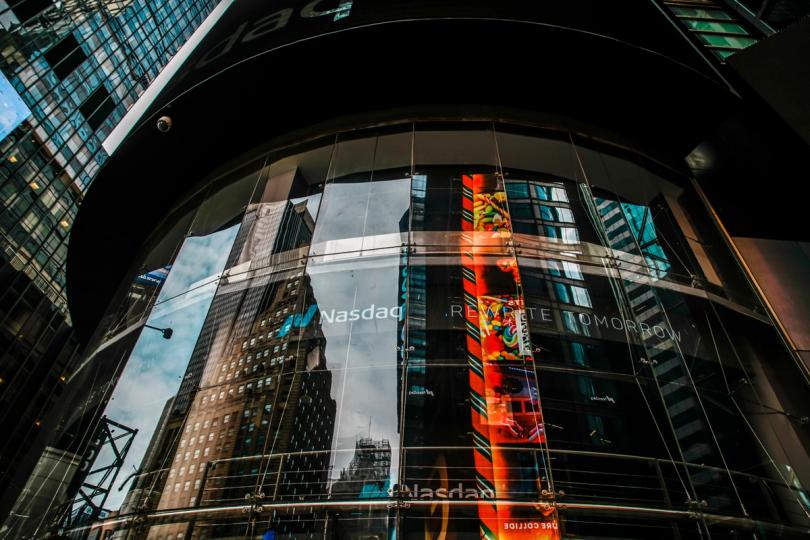


Nasdaq is publishing its flagship TotalView full depth-of-book equity market data through the Pyth Data Marketplace, giving developers and institutional users a programmable interface to one of the exchange operator's core data products rather than relying on traditional terminals and dedicated feeds.
TotalView exposes every resting buy and sell order at each price level across Nasdaq-, NYSE- and regional-listed stocks, and bundles Nasdaq's Net Order Imbalance Indicator, a real-time read on auction-time buy and sell imbalances ahead of the open and close. Surfacing that feed on Pyth means the same book that drives execution on Wall Street becomes readable by on-chain applications building settlement, lending and tokenization products.
Why it matters
The distribution deal is less about raw access, which already existed via Nasdaq's traditional feeds, and more about who can now build on top of it. Pyth's marketplace counts Tradeweb, SGX, OTC Markets, Kalshi and the U.S. Department of Commerce among its contributors, so Nasdaq joins a roster that already spans fixed-income, prediction markets and government statistics. With TotalView on chain, the same institutional datasets that price tokenized Treasuries and equities can sit beside them in the same application layer, removing a long-standing friction for on-chain market structure.
Market impact
For Nasdaq, the move widens how its market data reaches customers as financial infrastructure drifts from terminals and dedicated feeds toward cloud and blockchain rails, an incremental but defensible revenue line at a moment when exchanges are racing to monetize data rather than trading volume. For Pyth, anchoring another Tier-1 TradFi publisher reinforces its pitch as the default oracle for serious market microstructure data. Watch whether tokenized-equity and RWA protocols begin citing TotalView-sourced prints in their on-chain reference pricing, the clearest early signal that the integration is doing real work rather than sitting as a press release.

Frequently asked questions
-
What exactly is Nasdaq putting on Pyth?
Its TotalView feed, the full depth-of-book equity data product that shows every resting buy and sell order at each price level for Nasdaq-, NYSE- and regional-listed stocks, plus the Net Order Imbalance Indicator used around the open and close auctions.
-
Who else already publishes market data on the Pyth marketplace?
Tradeweb, SGX, OTC Markets, Kalshi and the U.S. Department of Commerce are listed as Pyth contributors, spanning fixed-income, prediction markets and government statistics alongside Nasdaq's equities feed.
-
Why does TotalView on chain matter for tokenized assets?
Tokenized-equity, RWA lending and on-chain settlement protocols need a reliable, real-time read on underlying cash-market depth to price and risk-manage their products. Hosting that feed on Pyth lets those applications pull the same institutional data Wall Street uses, without bolting on a separate market-data…
-
Does this give retail traders new access to TotalView?
Not directly. TotalView remains a licensed, paid product. What changes is the delivery layer, so developers building blockchain-based applications can license the feed through Pyth instead of wiring up dedicated market-data infrastructure on their own.
-
What is the signal for the broader market-data industry?
It is the latest datapoint that exchanges are racing to monetize data rather than trading volume, and that institutional-grade feeds are increasingly expected to ship on programmable rails. Watch whether other Tier-1 venues follow Nasdaq onto Pyth or onto competing oracle networks.
 CryptoSlate
 Crypto News
 CoinTelegraph
 TheBlock
 WatcherGuru