








 CoinDesk
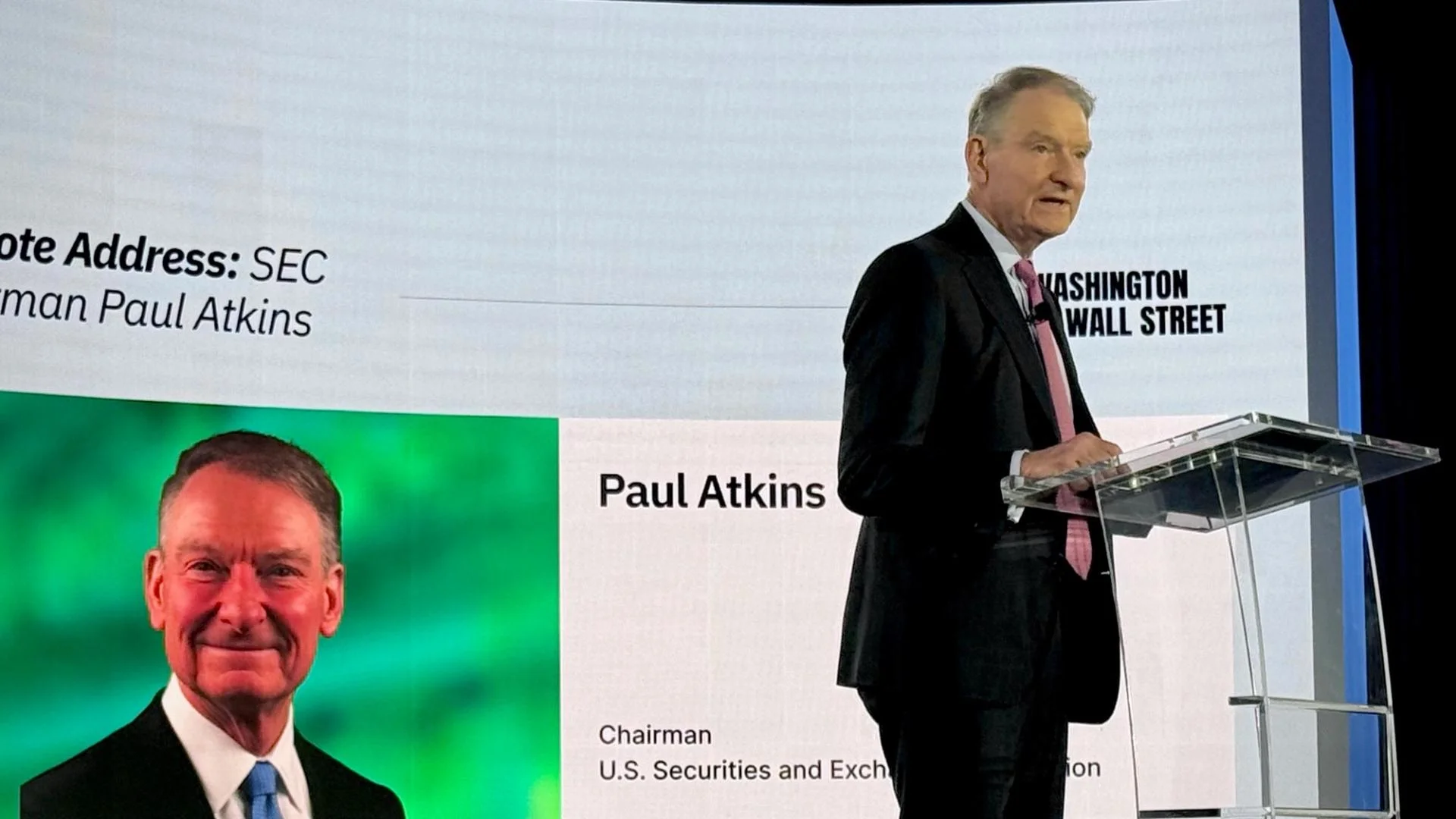



The SEC on Thursday unveiled its long-awaited "innovation exemption," a five-year conditional waiver that lets tokenized securities venues list and trade tokenized stocks without registering as exchanges under U.S. securities law. The order, signed by Chairman Paul Atkins, lets TSVs run automated market makers and liquidity pools for tokenized stocks that confer real ownership, including dividends and voting rights. Synthetic derivative tokens are explicitly excluded. The exemption landed two days after the Digital Asset Market Clarity Act stalled in the Senate with only 49 of the 60 votes needed to proceed.
Why it matters
Atkins is using the commission's exemption authority to open the onchain door without waiting for Congress. He signaled as much a day before the order, posting on X that the agency would "act decisively within the SEC's statutory authority to deliver certainty for American investors and for the entrepreneurs shaping our technological future" after the CLARITY Act failed. The mechanism is light-touch: any venue that meets the SEC's definition needs only to give notice before opening, and securities issuers retain a 30-day right to object before a third party tokenizes their stock. The five-year shelf life is a deliberate hedge. Durable rulemaking still has to follow, and any policy built on exemption authority alone could be reversed by a future commission.
Market impact
The exemption lands at the center of Wall Street's biggest blockchain bet. Global asset managers, banks and market infrastructure firms have been pouring capital into tokenization, betting that 24/7 settlement, faster collateral mobility and lower distribution costs will reshape how stocks, bonds and funds move. Citi analysts have estimated the tokenized asset market could reach $5.5 trillion by 2030, and this is the first U.S. framework that lets onchain venues tap that pipeline without first registering as exchanges. For crypto venues already running AMMs and liquidity pools, the new rules read as an invitation to onboard U.S. stock tokenization. For offshore synthetic products like Robinhood's tokenized equities, the explicit exclusion is a hard boundary.
Frequently asked questions
-
What does the SEC's 'innovation exemption' actually allow?
It gives tokenized securities venues a five-year waiver from registering as exchanges under U.S. securities law. Venues can list and trade tokenized stocks via AMMs and liquidity pools, as long as the tokens carry real ownership rights including dividends and voting.
-
Are synthetic tokenized stocks like Robinhood's covered?
No. The SEC explicitly excluded synthetic security tokens that derive value from the underlying share without representing ownership. Only tokens that grant holders the same rights as traditional securities, including dividends and voting, qualify.
-
Why did the SEC roll this out now?
The exemption landed two days after the Digital Asset Market Clarity Act stalled in the U.S. Senate with only 49 of the 60 votes needed to proceed. Chairman Atkins had signaled on X that the agency would act within its statutory authority if Congress did not.
-
How big is the tokenization opportunity?
Citi analysts have estimated the tokenized asset market could reach $5.5 trillion by 2030, spanning tokenized stocks, bonds, funds and other instruments. The SEC's exemption is the first U.S. framework letting onchain venues tap that pipeline without registering as exchanges.
-
What happens when the five-year exemption expires?
Atkins framed the five-year window as a permissioned sandbox, with durable rulemaking still required. Any policies built solely on SEC exemption authority could be reversed by a future commission, though the framework gives the industry five years to develop into a durable market.
 WatcherGuru
 CryptoSlate
 TheBlock
 WuBlockchain
 CoinTelegraph
 Altcoin Daily