








 CoinDesk

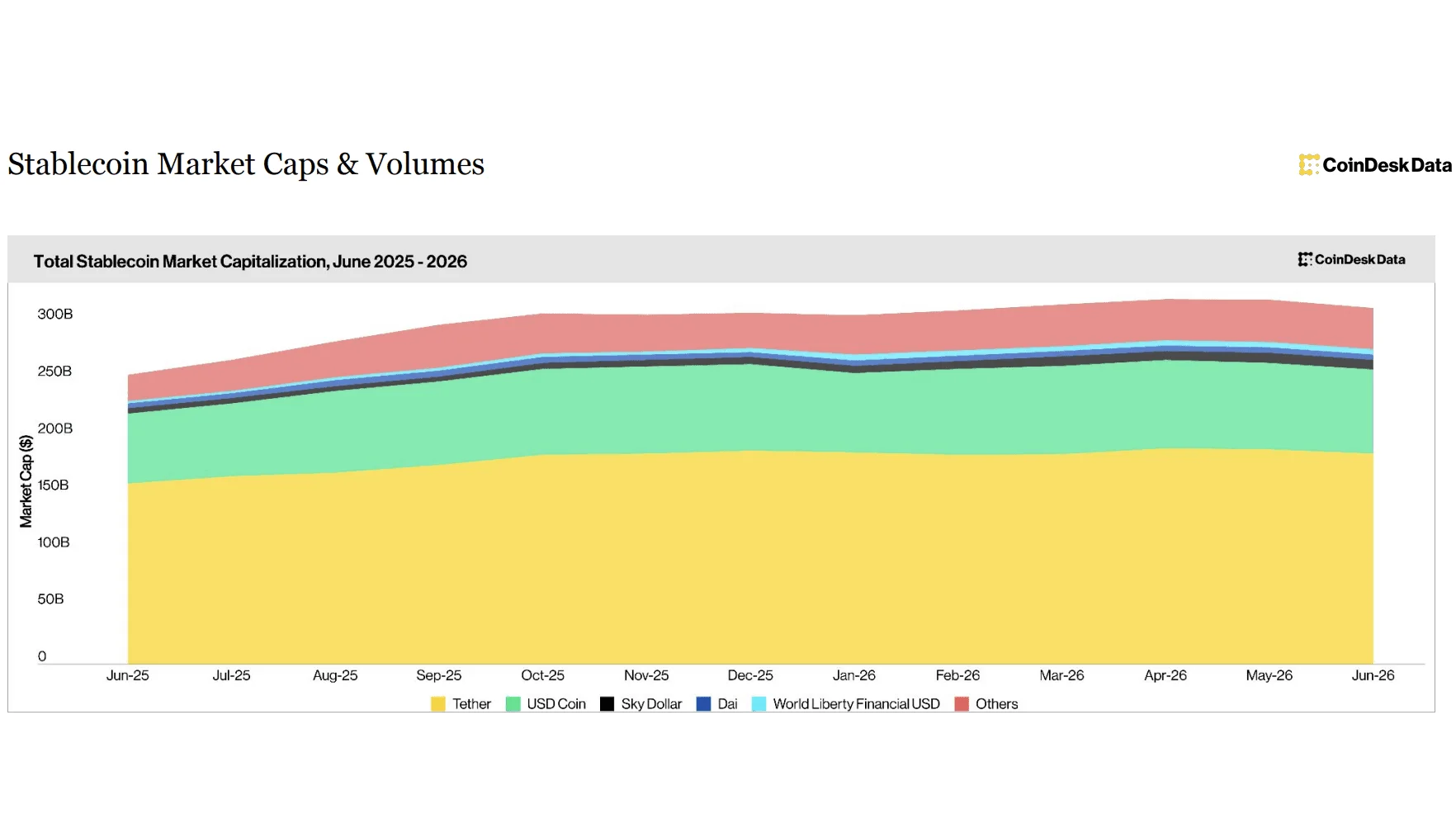


The stablecoin market shed roughly $10 billion from its May peak through June, including a $7.7 billion decline last month, the largest single-month dollar contraction since May 2022's Terra-Luna collapse. Total supply has stalled around $300 billion since October, a plateau that took shape as bitcoin hit its $126,000 record.
The pullback has been led by the two dominant issuers. Tether's USDT has slipped to about $184 billion from $190 billion in May, a roughly $6 billion trim. Circle's USDC has fallen to around $73 billion from its March 2026 peak just shy of $80 billion, shedding about $7 billion. Both have given up ground even as newer regulated issuers begin to bite into their dominance.
Why it matters
Onchain liquidity is the dial most crypto traders read first, and stablecoin supply is its cleanest proxy. A shrinking aggregate removes the bid sitting on exchanges and DeFi venues, making it harder for rallies to sustain without fresh inflow. The decline runs counter to the bullish projections from Wall Street banks: Citi now forecasts $1.9 trillion in stablecoin supply by 2030 in its base case and $4 trillion bull case, while Standard Chartered projects $2 trillion by 2028.
Yet the framing matters. Wincent senior director Paul Howard called the move "a relatively small pullback in what we believe is a long-term growth market," noting that short-term liquidity swings are normal and do not change the structural thesis. Newer issuers like Paxos-issued Global Dollar (USDG), now past $3.2 billion, and Anchorage's USDGO, near $900 million, show the market is broadening rather than just shrinking.
Market impact
The June drawdown is the largest by dollars since Terra-Luna, but by percentage it is a 3% move, modest next to the 26% collapse of the 2022 bear market, when combined major stablecoin supply fell from about $166 billion to $122 billion. A December 2025 to February 2026 pullback of roughly $9 billion preceded a sharp bitcoin correction from around $95,000 to $60,000, then snapped back to a new record.


Frequently asked questions
-
How much has the stablecoin market cap fallen since May?
Aggregate stablecoin supply has shed roughly $10 billion from its May peak through June, including a $7.7 billion drop in June alone, the largest single-month dollar contraction since May 2022.
-
Which stablecoins drove the decline?
Tether's USDT slipped to about $184 billion from $190 billion in May, while Circle's USDC fell to roughly $73 billion from its March 2026 peak near $80 billion, each giving up $6 to $7 billion.
-
Is this decline comparable to the 2022 crypto winter?
By dollars the June drop is the largest since the Terra-Luna collapse, but by percentage it is a 3% move, modest against the 26% combined stablecoin contraction seen during the 2022 bear market.
-
Why does stablecoin supply matter for crypto prices?
Stablecoins function as the dominant quote currency for crypto trading and increasingly for payments, so their aggregate supply is a closely watched gauge of onchain liquidity available to bid into digital assets.
-
What is the analyst view on the stablecoin outlook?
Wincent senior director Paul Howard called the move a relatively small pullback in a long-term growth market, while Citi projects $1.9 trillion in stablecoin supply by 2030 in its base case and $4 trillion bull case.
 WuBlockchain
 CoinTelegraph
 Lookonchain
 CryptoSlate
 TheBlock