


 CryptoSlate


Tether announced commitments from 15 industry participants on October 24 to build and maintain integrations with its Mining Development Kit, an open-source framework connecting Bitcoin mining equipment, pools and applications. The list includes BITMAIN, MicroBT, Canaan, Bitdeer, Foundry Digital, Luxor Technology, F2Pool, OCEAN and Stratum V2.
Under the arrangement, each participant builds Workers: software that translates its existing hardware or pool interface into MDK's common language, so applications can control different systems through one interface. Tether says its QVAC mining agent already operates on MDK as an early demonstration.
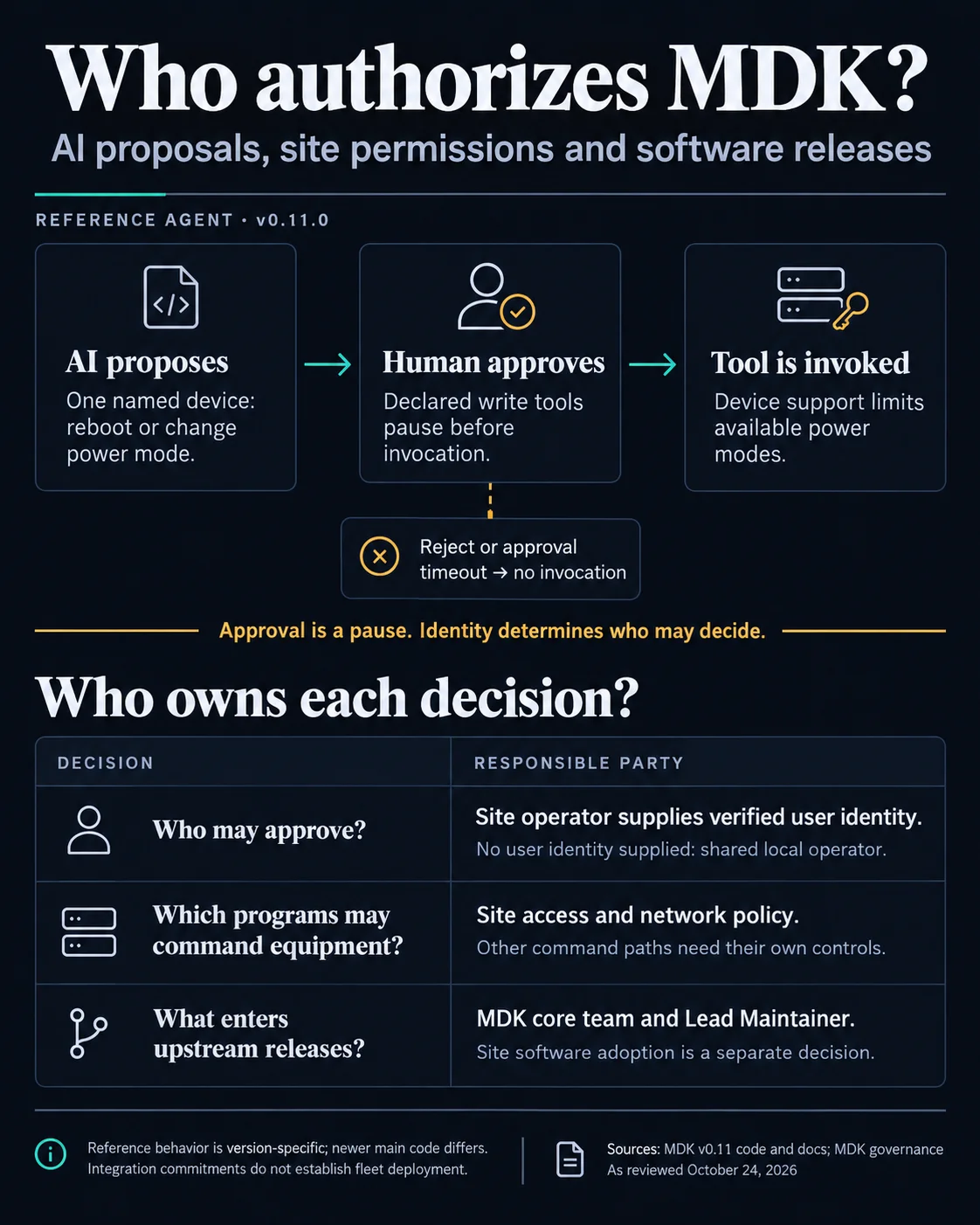
The human-in-the-loop question sits at the center of the design. The v0.11 reference agent pauses write actions, such as rebooting a device or changing its power mode, for human approval, with a default two-minute window before unanswered requests resolve to rejection. But v0.11 does not distinguish one approver from another unless the site supplies its own identity checks, and direct command routes carry no Kernel-side permission check. Newer main-branch code adds caller-key restrictions on Workers, while the published security guide still describes Workers without caller allowlists, so operators must match the guide to their deployed version.
Why it matters
The announcement extends Tether's push, led by CEO Paolo Ardoino, to put AI agents in control of physical mining infrastructure. A common interface across manufacturers removes the one-integration-per-vendor burden and makes agent-driven operations technically feasible at fleet scale. The catch is governance: release authority stays with MDK's core team and Lead Maintainer, not with the 15 participants, so every mine adopting the kit inherits upstream security decisions it must review itself.
Market impact
The announcement gives no participating-fleet capacity, share of Bitcoin hashrate or measured savings, so the near-term market effect is hard to quantify.

Frequently asked questions
-
What is Tether's Mining Development Kit?
MDK is Tether's open-source framework that connects Bitcoin mining equipment, pools and applications through a common interface, so software can reach different manufacturers' systems without separate integrations.
-
Which companies committed to MDK integrations?
Tether named 15 participants on October 24, including BITMAIN, MicroBT, Canaan, Bitdeer, Foundry Digital, Luxor Technology, ACME Swisstech, Elektron Energy, EMCD, F2Pool, Heatbit, OCEAN, Proto, SpiderPool and Stratum V2.
-
How does Tether's QVAC AI agent control mining hardware?
The v0.11 reference agent pauses write actions like device reboots and power-mode changes for human approval, with unanswered requests resolving to rejection after a two-minute window.
-
Who approves AI actions in a Bitcoin mine running MDK?
That is left to each site. The v0.11 release binds approvals to a shared local operator unless the mine connects its own identity checks, so permission to approve equipment changes must be established by the operator.
-
Who controls MDK's software releases?
MDK's core team holds final project authority, the Lead Maintainer has final technical authority over merges and releases, and the Community Manager owns strategic direction, per the project's governance document.
 WatcherGuru
 CoinTelegraph
 WuBlockchain
 Crypto News
 TheBlock
 CoinDesk