


 CryptoSlate


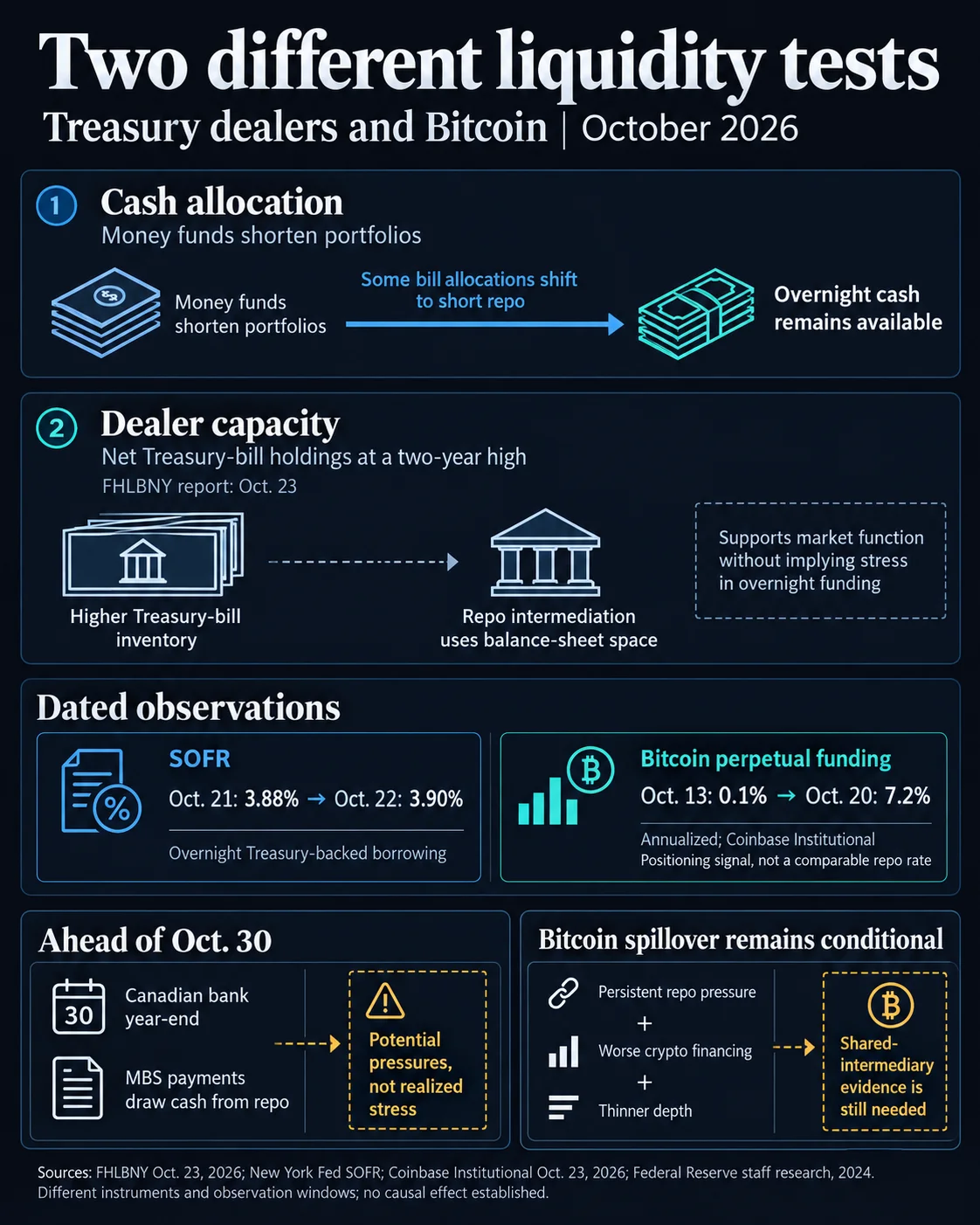

Treasury dealers’ net holdings of short-term U.S. government debt reached a two-year high in the Federal Home Loan Bank of New York’s October 23 update. The buildup comes as money funds redirect some cash from Treasury bills into short-term repo, while SOFR held near the Federal Reserve’s 3.9% interest rate on reserve balances. FHLBNY flagged October 30, when Canadian banks reach year-end, as a potential funding pressure point.
Why it matters
The key distinction is between cash being available and dealers having capacity to pass it through the market. Heavy bill issuance and uncertainty over Federal Reserve policy have widened bill spreads, while shorter money-fund portfolios have shifted some liquidity toward overnight and short-term repurchase agreements.
A 2024 Federal Reserve staff study found that moving repo cash from money funds to leveraged borrowers expands dealer balance sheets. Tighter intermediary constraints can therefore raise the compensation dealers demand, even when overnight funding appears orderly.
Market impact
SOFR rose to 3.9% for October 22 from 3.88% on October 21, but FHLBNY said it stayed at or below the 3.9% rate on reserve balances during the week. Calmer Thursday bill auctions offered a counterweight to the risks from Canadian bank year-end and cash leaving repo to pay mortgage-backed-security holders.
Bitcoin leverage is rebuilding, with Coinbase Institutional reporting perpetual funding rising from 0.1% annualized on October 13 to 7.2% one week later. That measures the cost of leveraged positions, not repo borrowing. A Treasury-to-Bitcoin transmission case would require persistent repo pressure alongside worsening crypto borrowing or rollover terms and thinner market depth. The evidence that constrained dealers reduced Bitcoin financing remains unestablished.


Frequently asked questions
-
Why are Treasury dealers holding more bills than usual?
FHLBNY linked wider bill spreads partly to heavy issuance and money funds shortening their portfolios amid uncertainty over Federal Reserve policy.
-
What funding pressure is expected on October 30?
FHLBNY flagged Canadian bank year-end and cash leaving repo to pay mortgage-backed-security holders as potential pressures that could make SOFR test 3.9% more steadily.
-
What does the 3.9% SOFR reading indicate?
SOFR reached 3.9% for October 22, up from 3.88% on October 21, but remained at or below the Federal Reserve’s 3.9% interest rate on reserve balances during the reported week.
-
Is Bitcoin leverage rising alongside Treasury funding pressure?
Yes, Coinbase Institutional reported perpetual funding rising from 0.1% annualized on October 13 to 7.2% one week later. That measures the cost of leveraged positions, not repo borrowing.
-
What evidence would confirm Treasury stress is reaching Bitcoin markets?
The case would strengthen if repo pressure persisted while comparable crypto borrowing or rollover terms worsened and market depth thinned. The current data do not establish that constrained dealers reduced Bitcoin financing.
 CoinTelegraph
 CoinDesk
 WatcherGuru