








 CoinDesk
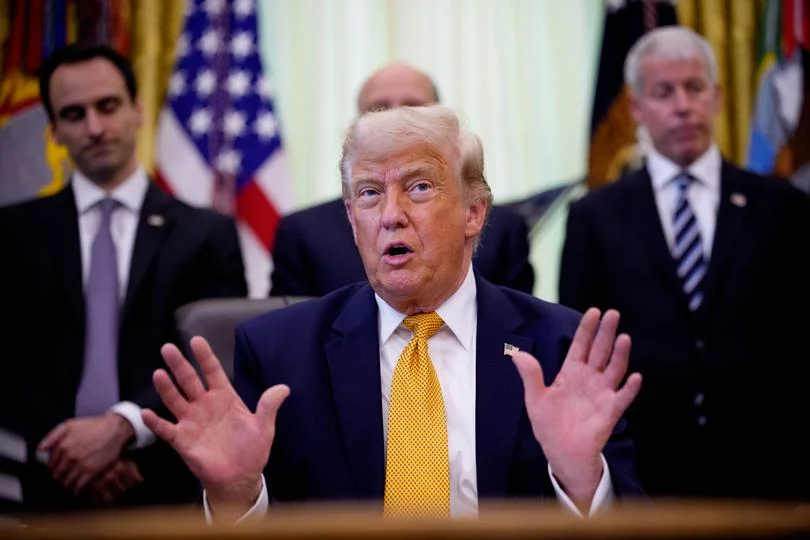



President Donald Trump has refused to sign a bipartisan housing bill that includes a four-year ban on a Federal Reserve-issued central bank digital currency, conditioning the signing on Congress first passing the SAVE America Act, a contentious voter-ID and citizenship-proof measure. The Wednesday signing ceremony was abruptly cancelled, with Trump posting on Truth Social that it is "hereby cancelled until such time as we pass the desperately needed SAVE AMERICA ACT, which I consider to be a National Emergency."
The housing legislation, which had drawn rare bipartisan support, carried the CBDC prohibition as a provision extending through the end of 2030. House Speaker Mike Johnson told reporters the bill "has been stuck in the Senate" and will need to be folded into another budget vehicle, a process that puts both the housing package and the CBDC ban on indefinite hold.
Why it matters
The four-year CBDC moratorium was a key win for the crypto industry, which has lobbied aggressively to prevent the Federal Reserve from issuing a digital dollar. Critics on the right, including Trump himself, have argued a Fed-managed CBDC could enable financial surveillance. Trump reinforced that stance last year with an executive order banning U.S. moves toward a CBDC on the grounds it would "threaten the stability of the financial system, individual privacy, and the sovereignty of the United States."
Losing the four-year prohibition, even temporarily, removes a hard legislative backstop the industry had counted on. The U.S. was not on track to issue a CBDC soon, but the ban would have foreclosed the option for the duration of Trump's term and well into the next administration.
Market impact
The bigger structural risk sits next door: the Digital Asset Market Clarity Act, the crypto market-structure bill the industry has spent two years pushing, has roughly five weeks left on the Senate calendar before the August recess. Any congressional friction Trump introduces over the SAVE America Act reduces the runway for ironing out remaining disputes and getting the Clarity Act to a floor vote in 2026.
Frequently asked questions
-
What did Trump refuse to sign?
A bipartisan housing affordability bill that included a four-year ban on any Federal Reserve-issued central bank digital currency, extending the prohibition through the end of 2030.
-
What does Trump want Congress to pass first?
The SAVE America Act, a federal voting measure that would require proof of citizenship and identification from voters, which Trump has called a National Emergency.
-
How does this affect the Clarity Act?
The Digital Asset Market Clarity Act, the crypto industry's top market-structure priority, has roughly five weeks left on the Senate calendar before the August recess. Any delay Trump introduces over the SAVE America Act shrinks the window to get Clarity to a floor vote in 2026.
-
Why does the crypto industry oppose a U.S. CBDC?
Critics argue a Federal Reserve-managed digital dollar could enable financial surveillance of citizens. Trump cited those same privacy and sovereignty concerns when he signed an executive order banning U.S. moves toward a CBDC last year.
-
What happens to the housing bill now?
House Speaker Mike Johnson said the bill is stuck in the Senate and will need to be folded into another budget vehicle, putting both the housing package and the CBDC ban on indefinite hold until the SAVE America Act dispute is resolved.
 CoinTelegraph
 WatcherGuru
 CryptoSlate
 WuBlockchain
 Altcoin Daily