








 CoinDesk
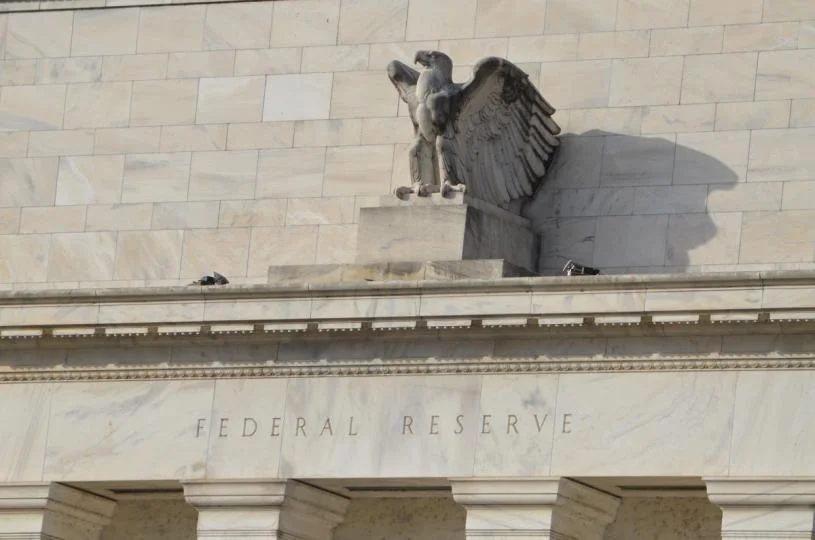


The Federal Reserve published an updated proposal this week for a "skinny" master account, refining the framework it first floated in December 2025 for granting crypto and fintech firms access to its payment rails without requiring a full OCC bank charter. The same week, President Donald Trump signed two executive orders — one directing federal regulators to update rules so digital assets integrate cleanly into existing payment networks, the other pushing the Treasury Department and regulators to tighten Bank Secrecy Act enforcement around shell companies, unregistered money services businesses, and peer-to-peer platforms used to evade reporting thresholds.
The BSA order did not name crypto or DeFi directly, but Cato Institute research fellow Nicholas Anthony warned the eventual Treasury guidance could sweep them in. "Right now it's in the hands of the Treasury, and the Treasury is able to apply it not only however it sees fit, but also to whoever it sees fit, because of the broader power that the Treasury has under the Bank Secrecy Act," he said.
Why it matters
The skinny master account is the structural prize the industry has been waiting on: a path to Fed payment rails that does not force crypto firms through a full bank charter. The Fed's own authority is limited — Congress may need to pass legislation specifying which entities qualify — so the proposal is a first move, not the finish line. The executive order on payment integration gives the Fed and other regulators a mandate to audit their own rulebooks for barriers to fintech-bank partnerships and to reconsider how uninsured depository institutions get account access, including whether Federal Reserve member banks can grant those accounts on their own.
Market impact
The legislative window for the Clarity Act just narrowed. The Senate left for Memorial Day recess without voting on a reconciliation package, and the floor schedule in June (19 working days), July (15), and August (5) is already crowded with FISA renewal and other must-pass items.


Frequently asked questions
-
What is the Fed's skinny master account proposal?
It is a framework — first published in December 2025 and updated this week — for letting crypto and fintech firms access Federal Reserve payment rails without holding a full Office of the Comptroller of the Currency bank charter. The Fed's authority is limited, so Congress may need to pass legislation specifying which…
-
What did Trump's two executive orders on crypto do?
One directed federal regulators to review existing rules and remove barriers to integrating digital assets into payment systems and to fintech-bank partnerships. The other directed the Treasury Department and regulators to tighten Bank Secrecy Act enforcement around shell companies, unregistered money services…
-
Could the Bank Secrecy Act order affect crypto or DeFi?
The order did not name crypto or DeFi directly, but Cato Institute research fellow Nicholas Anthony warned the eventual Treasury guidance could sweep them in, given the broad discretion Treasury holds under the BSA.
-
What is the status of the Clarity Act?
The Senate Banking Committee advanced it last week, but the full Senate left for Memorial Day recess without voting on a reconciliation package. The June–August floor calendar is already crowded with FISA renewal and other must-pass items, and the White House has not yet signaled which ethics provisions in the…
-
Why does the skinny master account matter for crypto markets?
It is the closest thing to a structural on-ramp between crypto firms and the Federal Reserve's payment system without forcing them to become full chartered banks. Widespread access would lower counterparty and settlement risk for regulated crypto venues and could pull more institutional flow onto Fed-rail…
 CoinTelegraph
 WatcherGuru
 WuBlockchain
 CryptoSlate
 Crypto News