








 CryptoSlate
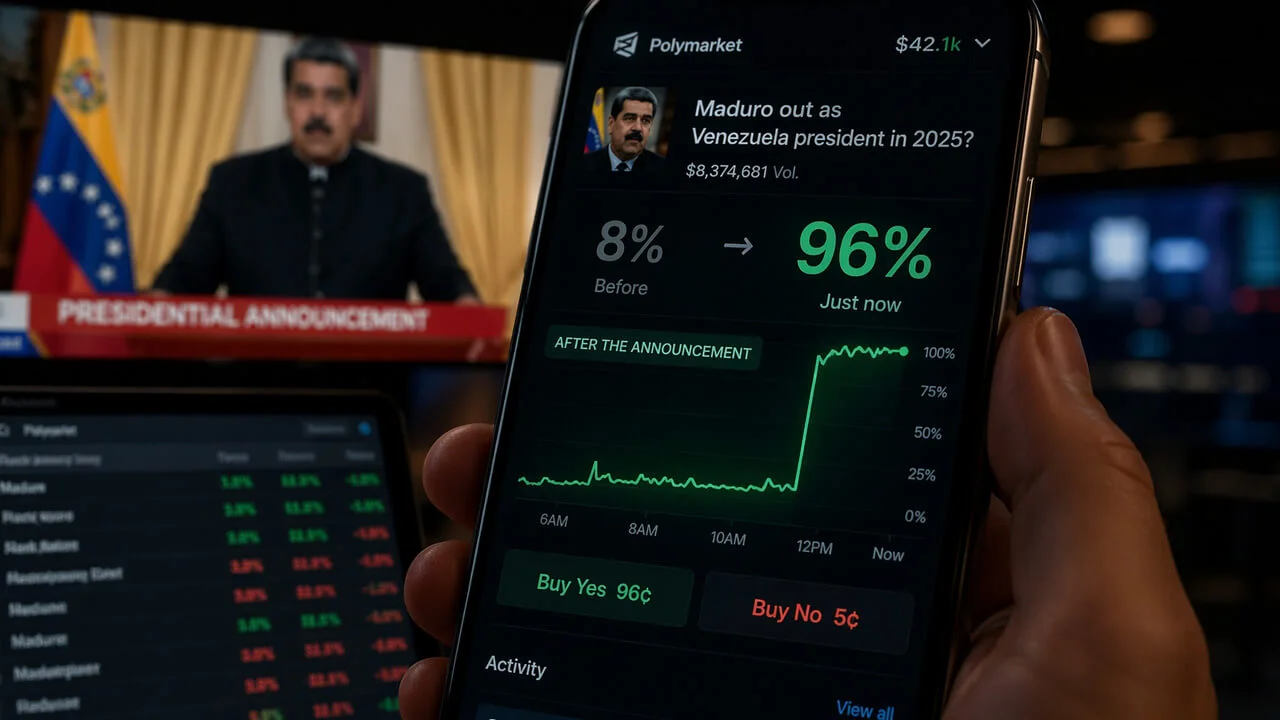


Federal prosecutors have charged Gannon Ken Van Dyke, an active-duty U.S. Army Special Forces master sergeant, with allegedly using classified details of Operation Absolute Resolve — the U.S. operation to capture Nicolás Maduro and Cilia Flores — to make more than $404,000 trading Polymarket event contracts. The indictment alleges Van Dyke created a Polymarket account on or about Dec. 26, 2025, used a VPN, and bought roughly $33,934 of Yes shares across 13 Maduro- and Venezuela-related transactions between Dec. 27 and Jan. 2. The CFTC complaint says the Yes price stayed below $0.13 from 10 a.m. ET on Dec. 29 through 1:15 a.m. ET on Jan. 3, then rocketed from $0.375 to $0.955 in four minutes after Trump's public announcement — almost exactly the window the alleged insider needed to convert classified access into settled profit.
Why it matters
This is the CFTC's first insider-trading case involving event contracts and its first use of the so-called Eddie Murphy Rule to charge misuse of government information. The agency is telling the prediction-market industry that event contracts fall inside its antifraud perimeter when confidential government information is misappropriated, regardless of how the platforms brand themselves. Polymarket says it identified the suspicious user, referred the matter to DOJ, and cooperated with investigators — a defensible surveillance answer that still doesn't answer the harder question of whether detection arrived in time to protect price formation.
Market impact
Trump told reporters he was "not happy" with prediction markets and called the world "somewhat of a casino," stopping short of endorsing the trades but doing little to quiet the legitimacy debate. Sen. Chris Murphy has publicly argued successful geopolitical bets on the platform look like they came from the White House or from people with inside knowledge; the White House has denied any staff wrongdoing. The political overhang lands on a market-structure problem: event contracts increasingly influence news coverage, political narratives, and investor sentiment, so a distorted price becomes a distorted signal. The next test belongs to platform design — restricted-person lists, real-time anomaly detection, settlement-source controls — because a market that finds the trail after the payout still hasn't proven it can defend the price.
Frequently asked questions
-
Who is Gannon Ken Van Dyke and what is he charged with?
Van Dyke is an active-duty U.S. Army Special Forces master sergeant indicted in the Southern District of New York on charges including unlawful use of confidential government information for personal gain, theft of nonpublic government information, commodities fraud, wire fraud, and an unlawful monetary transaction.
-
How much profit did the alleged Polymarket insider reportedly make?
The CFTC complaint alleges Van Dyke accumulated more than 436,000 Yes shares in the "Maduro out by January 31, 2026?" contract at an average price of about $0.074, and realized more than $404,000 in profit when the contract resolved Yes.
-
What is the Eddie Murphy Rule and how is it being used?
The Eddie Murphy Rule refers to CFTC antifraud authority over the misappropriation of confidential information in breach of a duty of trust or confidence. The Van Dyke complaint is the agency's first case using that authority, and its first insider-trading case involving event contracts.
-
What did Polymarket say about the case?
Polymarket said it identified a user trading on classified government information, referred the matter to the Justice Department, and cooperated with investigators. The platform's market-integrity materials describe real-time surveillance, investigations of unusual activity, and referrals to regulators or law…
-
What did President Trump say about prediction markets?
Trump told reporters he was "not happy" with prediction markets and described the world as having "somewhat of a casino." His comments stop short of endorsing any specific trades but do not address the broader legitimacy concerns raised by the case.
 WuBlockchain
 TheBlock
 CoinDesk