








 CryptoSlate
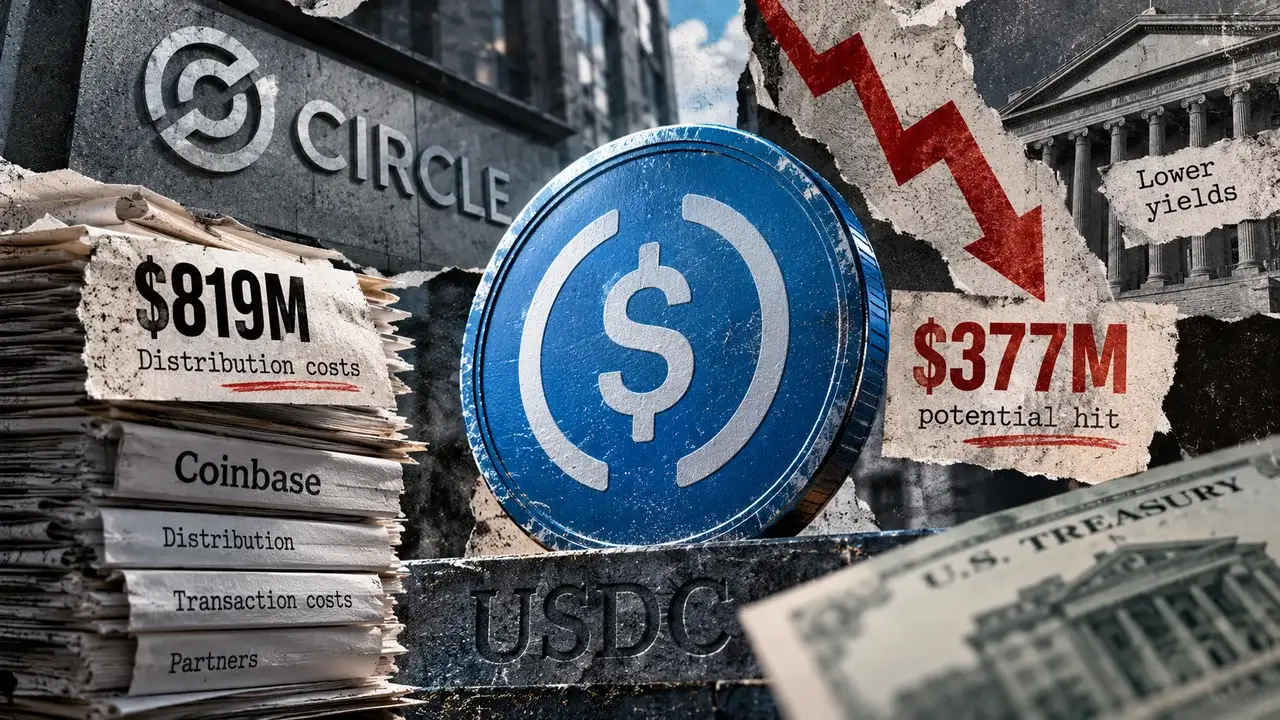

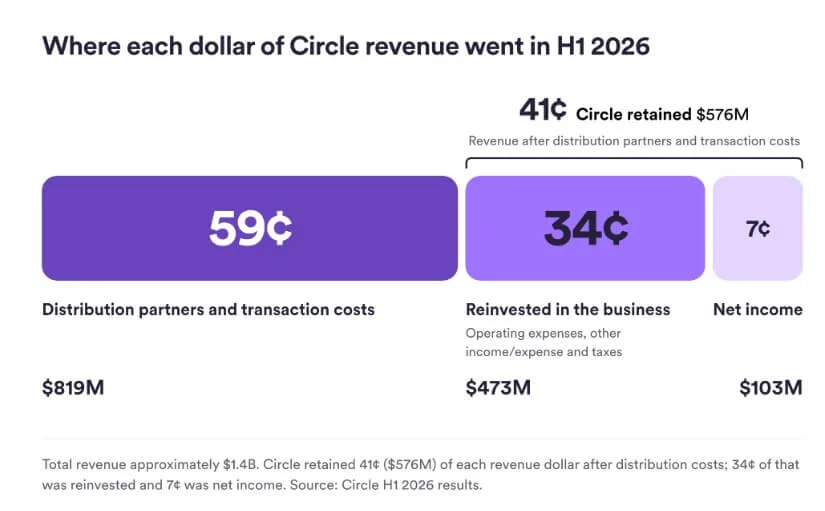

USDC processed more than $36 trillion in on-chain transactions during the first half of 2026, while Circle generated about $1.4 billion in revenue. The issuer spent $819 million on distribution and transaction costs and another $473 million on operations and network investment, leaving roughly $103 million in net profit.
Why it matters
Circle's economics show the tradeoff behind USDC's expansion. The stablecoin captured approximately 77% of global stablecoin transaction volume in June, up from 60% a year earlier, but distribution partners absorb much of the income generated by USDC reserves. Circle says those payments help exchanges, wallets and payment firms promote the stablecoin and maintain user balances.
Coinbase remains Circle's largest distribution partner, with average USDC holdings across its products reaching $20 billion in the second quarter, up 44% from a year earlier. Binance also signed a five-year commercial agreement and invested $100 million in Circle, while more than 150 other partners hold an economic interest in USDC's growth.
Market impact
Circle is defending its retention rate against newer issuers offering distributors a larger share of reserve earnings. The company argues that banking access, liquidity, compliance and faster redemption infrastructure justify the cost. USDC recorded more than $315 billion in combined issuance and redemptions during the six-month period, while second-quarter minting and redemptions rose 105% year over year to $170 billion.
Circle supports USDC through more than 55 licenses and registrations, over 25 banking partners and deployments across more than 35 blockchains. Its next test comes with third-quarter results scheduled for Nov. 4, when investors can assess whether expanding distribution is improving or compressing the business's economics.

Frequently asked questions
-
How much transaction volume did USDC process in the first half of 2026?
USDC processed more than $36 trillion in on-chain transactions during the first half of 2026.
-
What share of June stablecoin volume did USDC capture?
USDC accounted for approximately 77% of global stablecoin transaction volume in June, up from 60% a year earlier.
-
Why did Circle spend so much of its revenue?
Circle spent $819 million on distribution and transaction costs and $473 million on operations and network investment. The company says these costs support liquidity, banking access, compliance and settlement infrastructure.
-
How important is Coinbase to Circle's USDC distribution?
Coinbase remains Circle's largest distribution partner. Average USDC held across Coinbase products reached $20 billion in the second quarter, up 44% from a year earlier.
-
What is the main commercial challenge facing Circle?
Circle must expand USDC balances and distribution while preserving enough revenue to fund its infrastructure. Rival stablecoin issuers are offering partners a larger share of reserve earnings.
 TheBlock
 WuBlockchain
 WatcherGuru
 Crypto News
 Crypto Rank News