








 Lookonchain
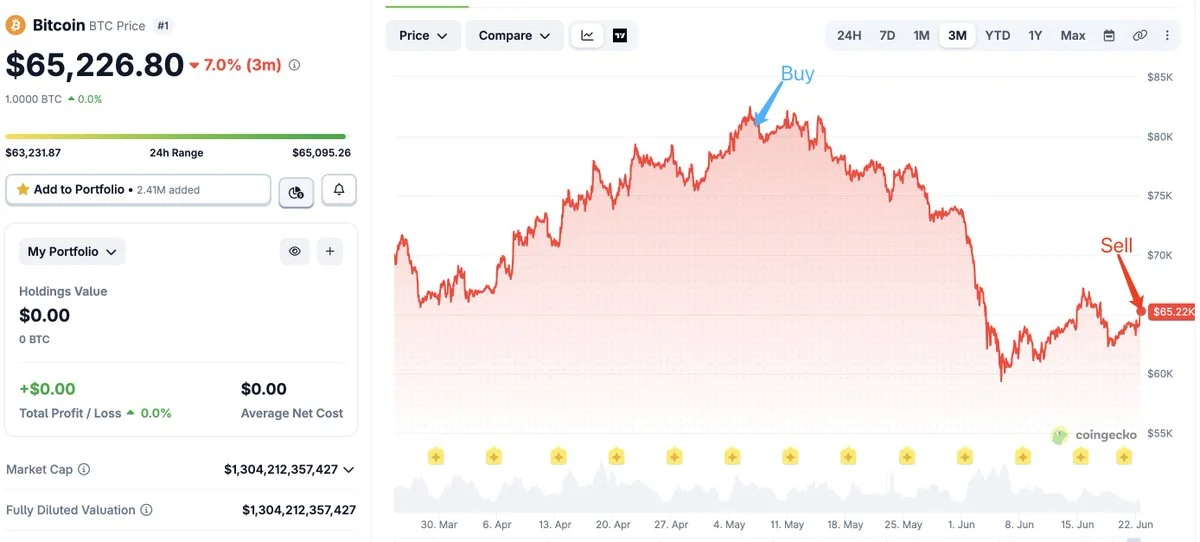
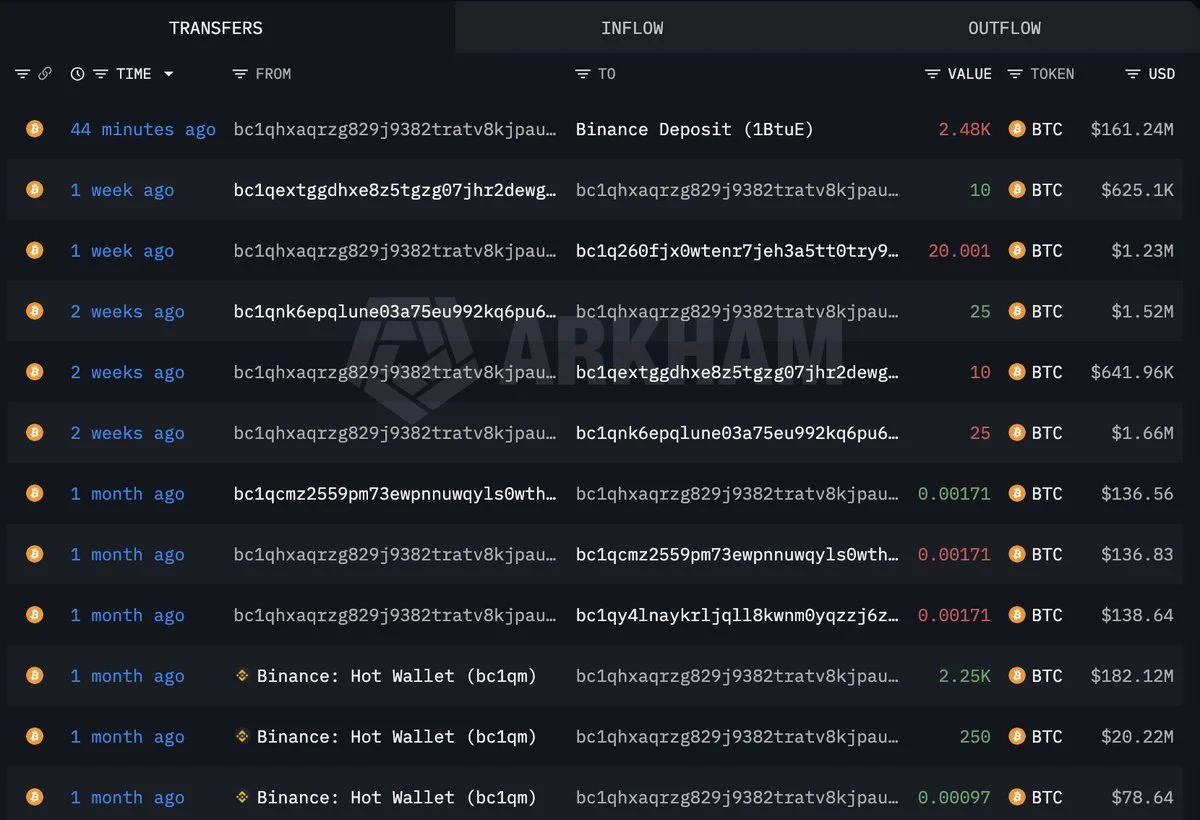
On-chain tracker Lookonchain flagged wallet bc1qhx for depositing the remaining 2,480 BTC, worth roughly $161 million, into Binance on Tuesday. The same wallet had accumulated 2,500 BTC, about $202 million, at an average entry of $80,936 just one month earlier, leaving the depositor sitting on a realized loss of more than $39 million.
Why it matters
Whale-to-exchange deposits of this size, executed at a loss, rarely read as profit-taking. The pattern, buying a large spot stack, holding through a drawdown, then moving the remainder to a venue while underwater, looks more like a forced exit than a strategic rebalance. Single-wallet capitulations have historically clustered near local lows, when the marginal holder is no longer able to carry the position.
Market impact
The deposit lands the same day Bitcoin trades back toward the mid-$60,000s, well below the wallet's $80,936 cost basis. Even at a 2,480 BTC scale, the flow itself is small relative to daily Binance volume, but the signal is in the PnL: a seven-figure realized loss on a one-month hold is the kind of event other underwater whales watch when deciding whether to hold or fold.

Frequently asked questions
-
Who is wallet bc1qhx and what did it do?
On-chain trackers flagged wallet bc1qhx for depositing 2,480 BTC, roughly $161 million, into Binance on Tuesday. The wallet had originally accumulated 2,500 BTC, about $202 million, at an average entry of $80,936 one month earlier.
-
How much did the whale lose on the Bitcoin trade?
The realized loss on the deposit was more than $39 million, calculated against the $80,936 average entry versus the sale price implied by the current mid-$60,000s BTC market.
-
Is a whale depositing BTC to Binance bullish or bearish?
Large whale-to-exchange deposits executed at a loss are generally read as bearish in the short term, because they increase immediate sell-side supply on the venue and signal a forced exit rather than strategic rebalancing.
-
Does this deposit meaningfully affect BTC liquidity on Binance?
At roughly $161 million, the deposit is small relative to Binance's daily BTC trading volume, so the direct market impact is limited. The signal is in the realized loss and the capitulation pattern, not the raw size.
-
Why do traders watch single-wallet capitulations?
Single-wallet capitulations, where a large holder sells at a loss, have historically clustered near local BTC lows. They mark the point at which the marginal underwater holder stops being able to carry the position.
 WuBlockchain
 CryptoSlate
 Whale Alert
 WatcherGuru
 CoinDesk