


 CryptoSlate
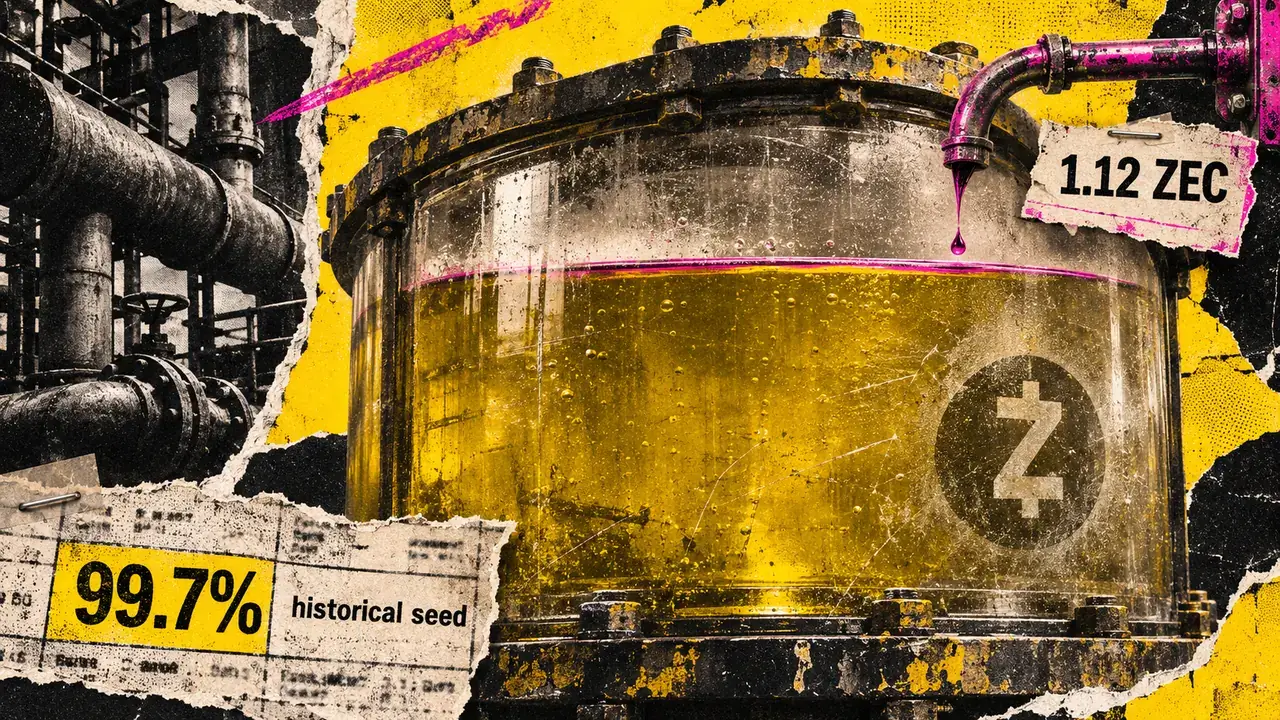
An early post-NU7 snapshot shows Zcash's new Network Sustainability Mechanism is almost entirely inherited value. On November 7, 2026 at 05:08:38 UTC, the mainnet API for Zakura's NU7 dashboard reported an NSM balance of 369.7 ZEC at block 3,547,068. ZIP 237 sets the historical seed at 368.58445520 ZEC, meaning just 1.11895065 ZEC, roughly 0.3% of the total, has accumulated under the new fee-contribution rules.
Why it matters
The NSM is Zcash's mechanism for recycling transaction fees into future block subsidies, established at NU7. Under ZIP 235, 60% of each block's aggregate fees flow into the reserve, rounded down to whole zatoshi, with miners keeping the remainder. The historical seed itself comes from subsidy and fees miners left unclaimed in coinbase transactions before NU6, which gives the fund a positive starting balance before any new contribution arrives.
The distinction matters because the reserve's headline balance can obscure how much is genuinely new. Reissuance begins at block 8,939,664, well beyond the NU7 activation block of 3,543,405, and no additional NSM subsidy accrues before that height. Until then, the fee-funded portion only grows if fee-paying activity continues. Elapsed time alone supplies no funding.
Market impact
The opening snapshot cannot establish a sustainable funding rate or show whether eventual support will be sufficient for network security. Those questions depend on fee demand over the long accumulation period and on the balance available when gradual reissuance starts.
ZIP 237 illustrates the payout scale: a hypothetical 100,000 ZEC reserve would initially contribute 0.01375 ZEC per block under the post-NU7 formula, with the existing halving schedule unchanged. The useful measure going forward is the amount added beyond the fixed historical seed over dated intervals, since a growing total otherwise hides how much of the reserve is still old money.

Frequently asked questions
-
What is Zcash's Network Sustainability Mechanism?
The NSM is a reserve established at NU7 under ZIP 237 that recycles transaction fees into future block subsidies. ZIP 235 directs 60% of each block's aggregate fees into the reserve, with miners receiving the remainder.
-
Why is 99.7% of the NSM reserve called old money?
ZIP 237 sets a fixed historical seed of 368.58445520 ZEC drawn from subsidy and fees miners left unclaimed before NU6. Of the 369.7 ZEC observed on November 7, only about 1.12 ZEC had accumulated under the new fee rules.
-
When does the NSM start paying out block subsidies?
Reissuance begins at block 8,939,664, per ZIP 259. NU7 activated at block 3,543,405, and the additional NSM subsidy is set to zero before the later reissuance height.
-
How does the fee contribution work block by block?
ZIP 235 routes 60% of each block's aggregate transaction fees into the NSM, rounded down once per block to whole zatoshi. Miners receive the remaining 40% plus the rounding difference.
-
How much would a 100,000 ZEC reserve pay out per block?
Under ZIP 237's illustrative formula, a 100,000 ZEC reserve would initially contribute 0.01375 ZEC per block once reissuance starts. The actual payout depends on the reserve accumulated by then, and the existing halving schedule stays in place.
 WuBlockchain
 Lookonchain
 TheBlock
 CoinDesk
 Crypto News
 Crypto Capital Venture
 CoinTelegraph