The smart-contract showdown
Once you move past Bitcoin, the most important comparison in crypto is between platforms that let developers build applications. Ethereum pioneered this category, and Solana became one of its most prominent challengers. They are frequently pitted against each other, and unlike the Bitcoin vs Ethereum comparison — where the two serve genuinely different purposes — Solana and Ethereum actually do compete for similar ground. That makes the comparison more meaningful, and the trade-offs sharper.
The fundamental philosophical difference
Everything else flows from one core disagreement about priorities.
Ethereum prioritizes decentralization and security above raw performance. Its base layer is intentionally limited in speed so that a vast, globally distributed set of participants can verify everything, and it scales by building Layer 2 blockchains on top.
Solana prioritizes raw performance — speed and low cost — by running everything through a single, highly optimized chain with powerful hardware requirements for validators. It bets that a fast base layer is the better path.
Neither philosophy is wrong; they are different answers to the same hard question of how to scale a blockchain.
Speed and cost
This is Solana's home turf. Solana processes far more transactions per second at the base layer and confirms them in well under a second, with fees that are typically fractions of a cent. The experience is genuinely fast.
Ethereum's base layer is slower and historically more expensive, especially when the network is busy. However, transactions on Ethereum Layer 2 networks have become fast and cheap too — so comparing "Ethereum base layer" to "Solana" is not quite apples to apples. The honest comparison includes Ethereum's L2 ecosystem.
Decentralization and resilience
This is Ethereum's home turf. Ethereum has an enormous, widely distributed validator set, making it extremely resilient and hard to disrupt. It has never suffered a network-wide halt.
Solana's high performance comes partly from demanding hardware, which concentrates validation among fewer, more powerful operators. Solana has also experienced network outages where block production stalled — a real mark against its resilience, though the team has worked to improve stability. If uninterrupted reliability is your top priority, this difference matters.
Ecosystem and maturity
Ethereum has the largest, most mature ecosystem in crypto — the deepest pool of developers, the most DeFi activity and total value locked, the most tooling, and the longest security track record. When something is built in crypto, it is often built on Ethereum first.
Solana's ecosystem is younger but vibrant and fast-growing, with particular strength in high-speed trading, consumer apps, payments, and NFTs, where its low fees shine.
Side-by-side summary
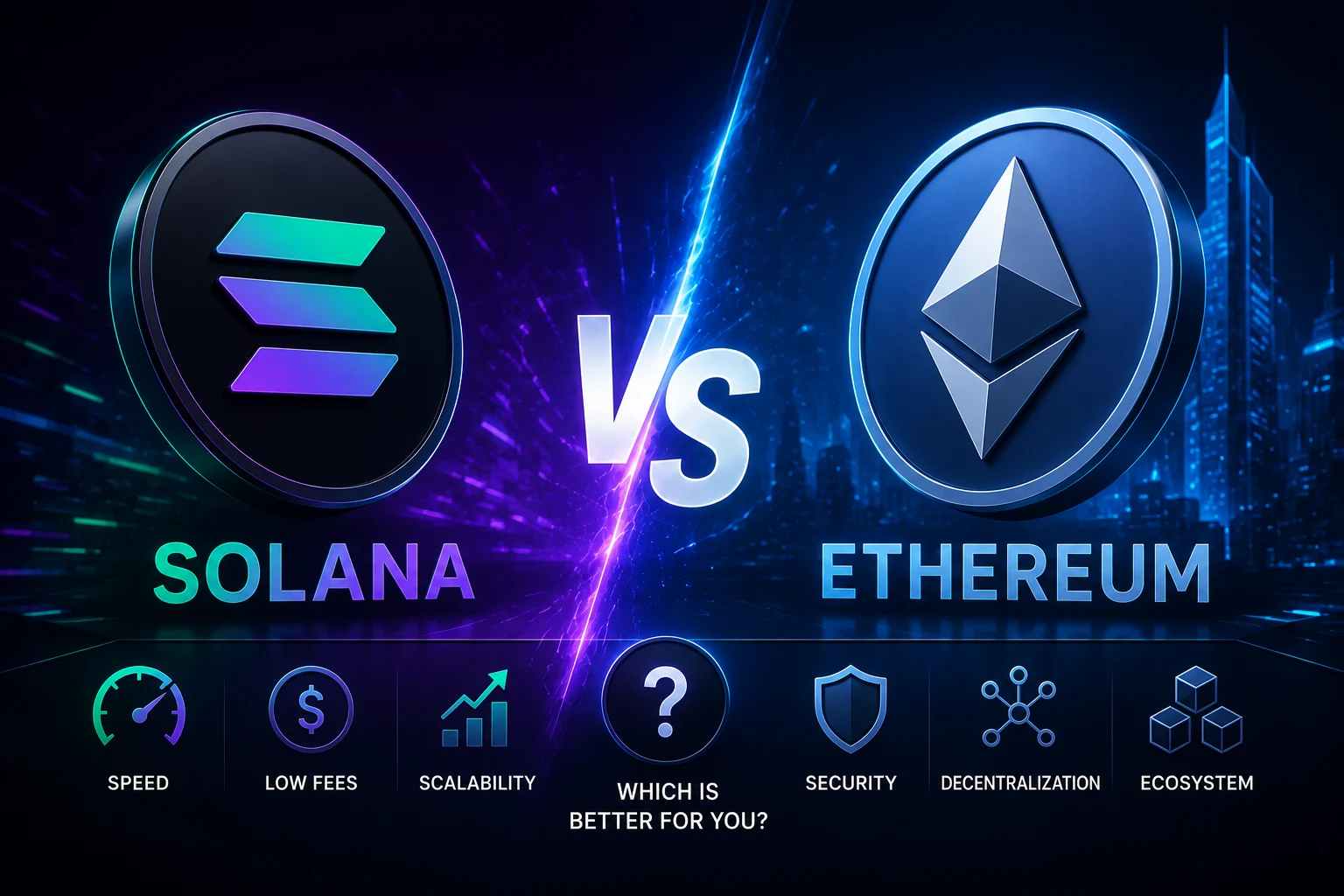
- Speed/fees: Solana wins at the base layer; Ethereum L2s narrow the gap.
- Decentralization/resilience: Ethereum wins clearly.
- Ecosystem maturity: Ethereum is larger and more battle-tested.
- Consumer/high-volume apps: Solana's low fees are a strong fit.
- Track record: Ethereum has never halted; Solana has had outages.
Which is better for you?
There is no universal winner, and this is not investment advice. If you prioritize maximum decentralization, security, and a proven ecosystem, Ethereum's case is strong. If you prioritize speed, low cost, and consumer-facing performance — and can accept a more concentrated, younger network — Solana is compelling. Many people in crypto use and hold both, treating them as different bets on how the future of blockchains plays out.
The most important thing is to understand *why* each makes the trade-offs it does, so you can judge developments on each network with a clear head.
Track both ecosystems
Both networks evolve rapidly — upgrades, outages, ecosystem launches, and ETF speculation can shift sentiment fast and in opposite directions. Zippfeed tracks Solana and Ethereum headlines with sentiment and importance scoring, so you can follow each ecosystem's real momentum and risks separately, instead of relying on tribal hype that tends to dominate the comparison online.


 CryptoSlate
 TheBlock
 CoinDesk