Tokens that come with a voice
In the traditional world, having a say in how an organization is run usually means owning shares and voting at meetings most people never attend. Crypto reimagined this with the governance token — a way to give a project's community direct, on-chain power over its direction. Understanding governance tokens is essential to understanding how decentralized projects actually make decisions.
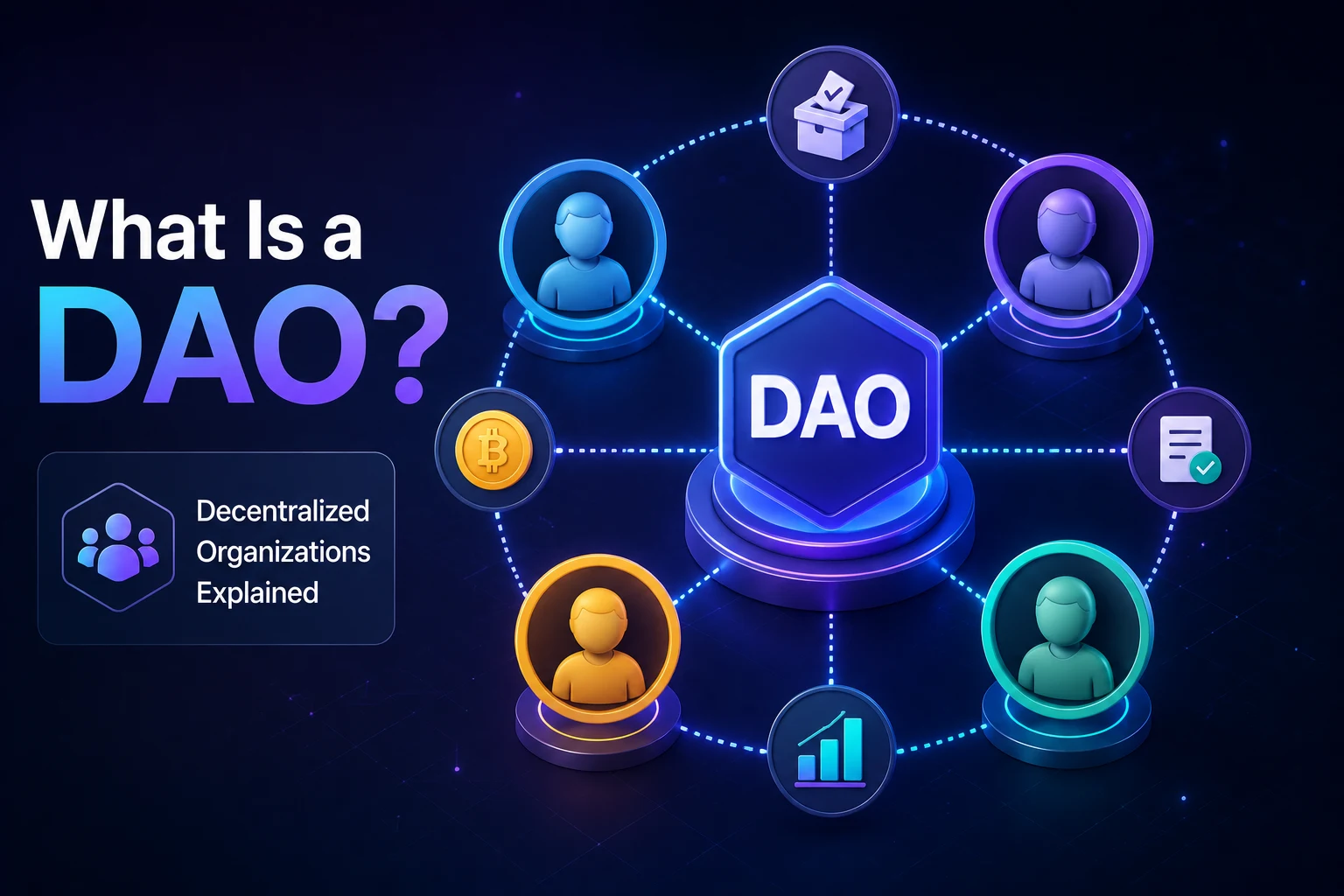
A governance token is a cryptocurrency that grants its holders voting rights over a project, protocol, or DAO. If you hold the token, you can participate in deciding the project's future — what changes get made, how money is spent, which direction it takes. The token is, in essence, a vote.
How governance tokens work
The mechanics are straightforward in principle:
- Proposals. Members of the community put forward proposals — for example, changing a fee, funding an initiative, upgrading the protocol, or allocating treasury funds.
- Voting. Governance token holders vote on these proposals. In most systems, voting power is proportional to how many tokens you hold: more tokens, more votes.
- Execution. If a proposal passes according to the rules encoded in smart contracts, it is carried out — often automatically. This connects governance directly to action.
This is the engine behind DAOs and the governance of many DeFi protocols, letting users — rather than a hidden management team — steer the project.
What governance tokens control
The scope of what holders can vote on varies widely, but commonly includes:
- Protocol parameters — fees, interest rates, supported assets, and other settings.
- Treasury spending — how a project's shared funds are allocated.
- Upgrades and changes — modifications to how the protocol works.
- Strategic direction — partnerships, new features, and priorities.
The more meaningful the decisions a token controls, the more genuine the governance.
Where their value comes from
A governance token's value is tied to the value of having influence over the project — and the value of the project itself. If a protocol controls a large treasury or significant economic activity, the right to help govern it can be valuable. Some governance tokens also carry additional utility token functions or a claim on protocol revenue, which can strengthen their value case.
But — and this is important — many governance tokens have weak or unclear value beyond the abstract right to vote, especially when participation is low. The price often reflects speculation more than the practical worth of governance rights. None of this is investment advice.
The central tension of token voting
Here is the honest problem at the heart of governance tokens, and it is worth thinking about carefully.
Token-based voting means voting power follows wealth. Whoever holds the most tokens has the most votes. This creates a genuine tension with the ideal of decentralization:
- Whales dominate. Large holders can have outsized or even controlling influence, recreating the centralized power structures crypto aims to escape.
- Voter apathy. In practice, most token holders do not vote, leaving decisions to a small, active (and often wealthy) minority.
- Governance attacks. In some cases, attackers have acquired enough voting power to push through proposals that benefit themselves at the protocol's expense.
- Plutocracy risk. "One token, one vote" can drift toward "richest decides," which is not what most people imagine when they hear "decentralized governance."
The crypto community actively experiments with solutions — delegation, quadratic voting, reputation-based systems — but the tension is real and unresolved.
Watch governance unfold
Governance decisions are public and consequential — votes on fees, treasuries, and upgrades can directly affect a protocol's value and your holdings. Zippfeed tracks DeFi and governance headlines with sentiment and importance scoring, so if you hold governance tokens, you can stay aware of major proposals, contentious votes, and governance attacks as they happen rather than discovering the outcome too late.