The problem it solves
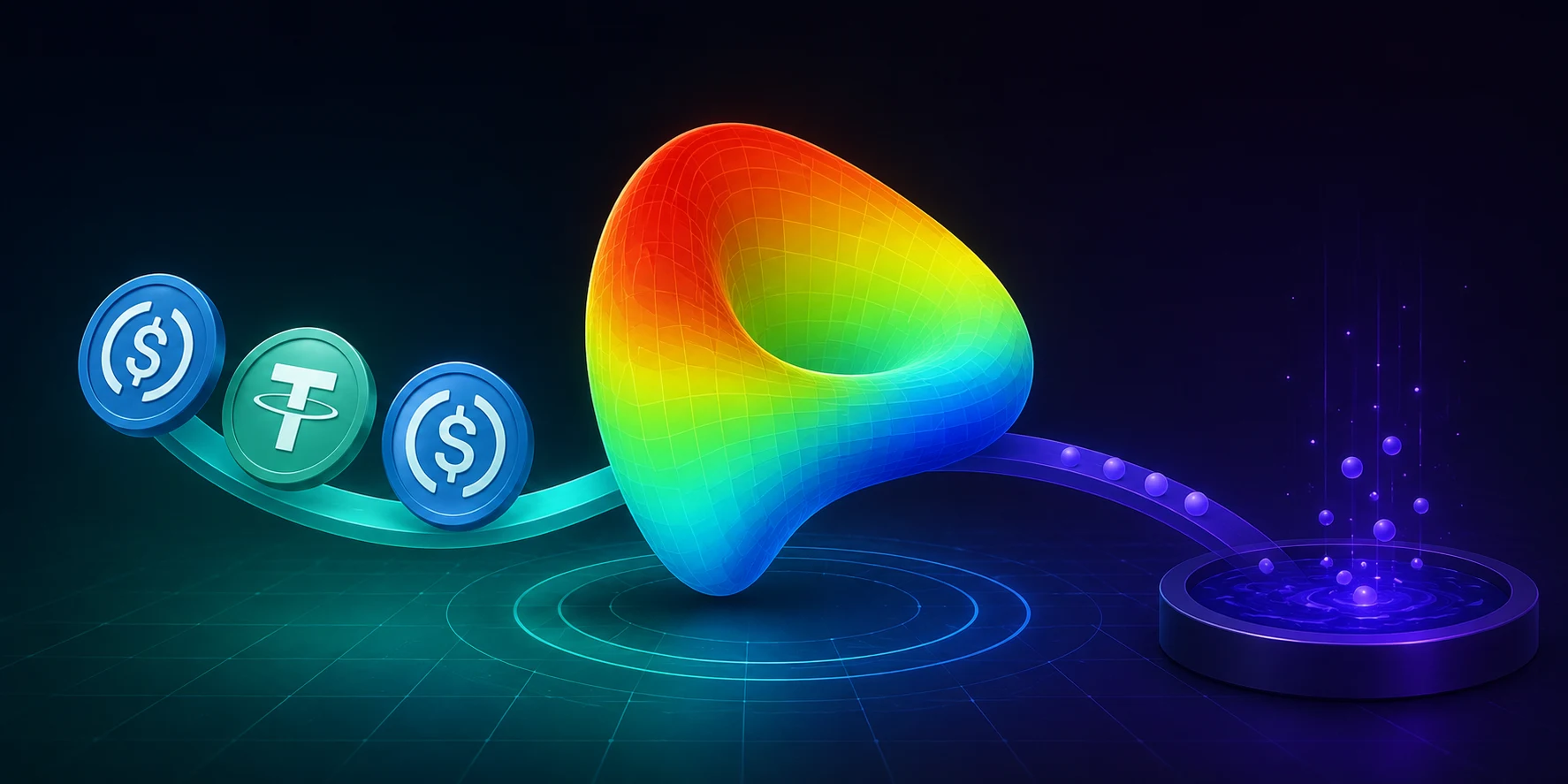
Uniswap's classic formula treats every swap the same, which is fine for volatile pairs like ETH/USDC. For two stablecoins that should both be worth a dollar, the same formula creates wasteful slippage — even tiny price moves cost real money. Curve was built so traders moving large amounts of stablecoins or pegged assets could swap at near-zero slippage as long as prices stayed close.
That niche turned out to be enormous. Whenever a treasury, a market-maker, or a protocol needs to rebalance between USDC and USDT — or convert ETH into a liquid-staked ETH derivative — Curve is often the cheapest venue.
How it works
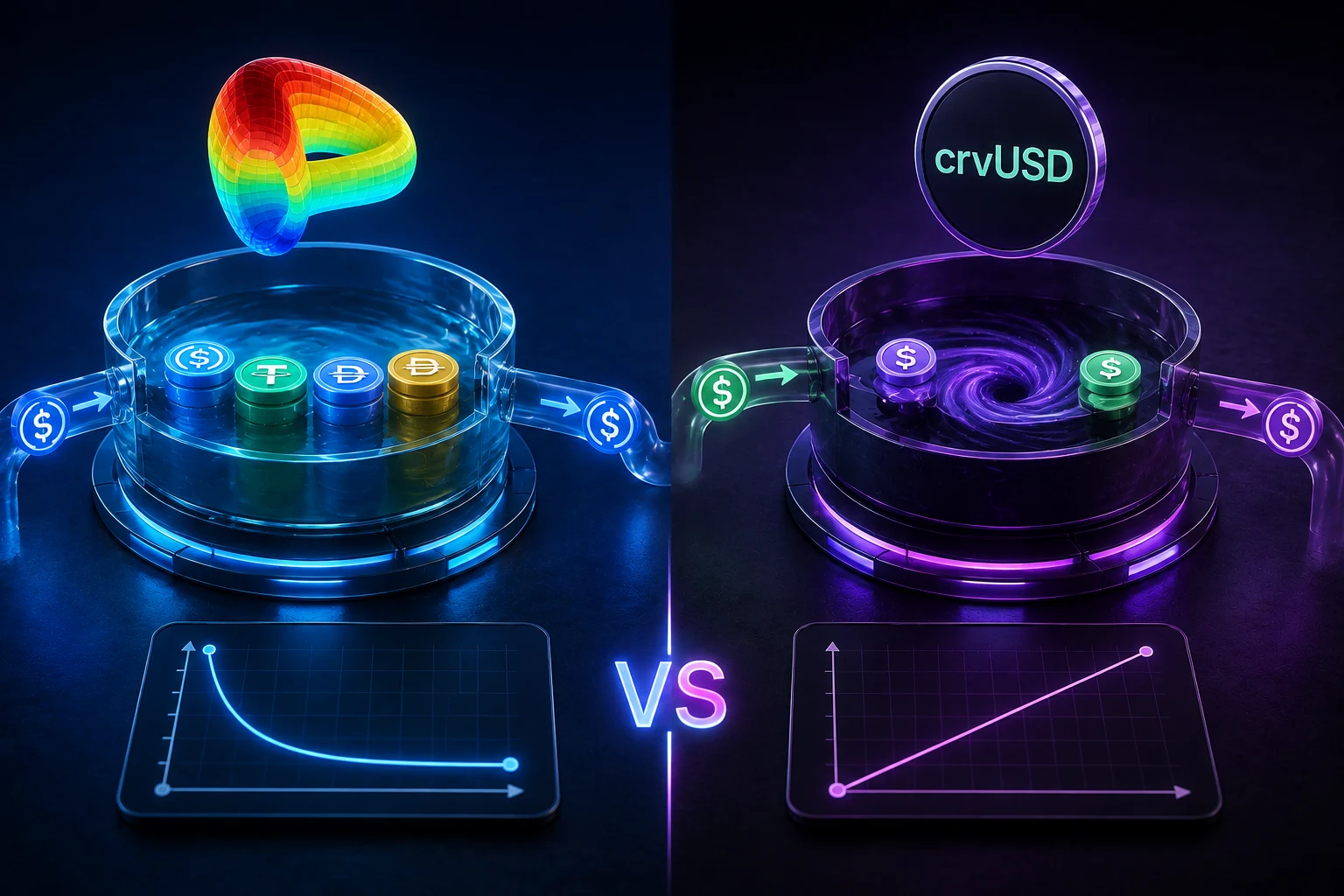
Curve introduced the stableswap invariant, a pricing formula that looks like Uniswap's constant-product formula far from the peg but flattens out near the peg. The practical effect: when prices are tight, you can do enormous swaps with barely any slippage. As prices drift away from each other, the formula starts behaving like a normal AMM, pushing slippage up sharply.
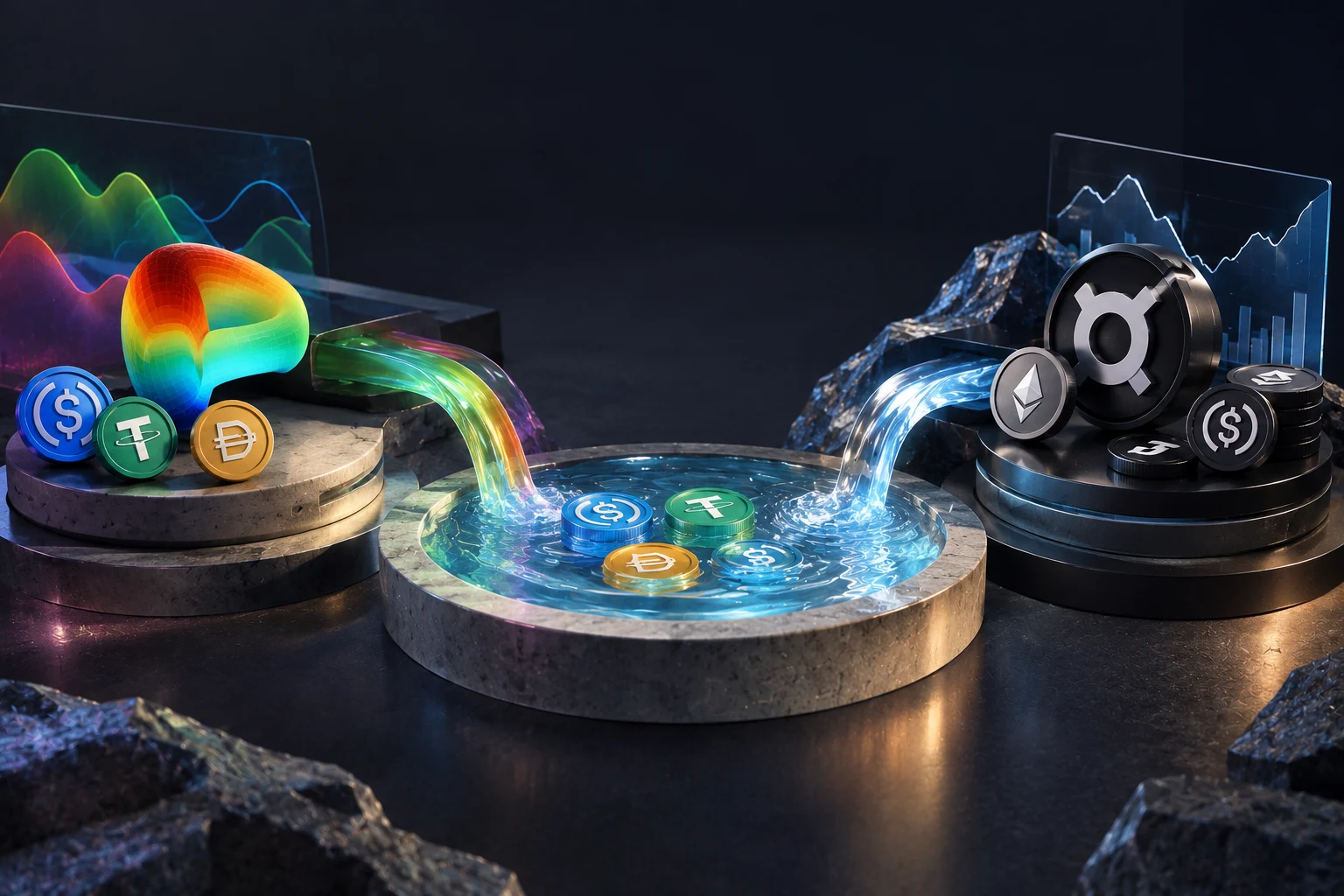
Each pool holds two or more correlated assets — for example USDC, USDT, and DAI together, or stETH, frxETH, and ETH together. LPs deposit a basket and earn fees from every swap, plus CRV emissions allocated to that pool by governance.
Curve v2 extended the model to volatile assets with a different formula. The pegged-asset specialty remains the dominant use case.
The CRV token and veCRV
CRV is the governance and reward token. Its real superpower is the vote-escrow model: lock your CRV for up to four years and receive veCRV, which:
- Earns a share of all trading fees on the protocol.
- Lets you vote on which pools get CRV emissions each week.
- Boosts your own LP rewards in the pools you supply.
This created the famous "Curve Wars" — protocols, DAOs, and market participants buying and locking CRV to direct emissions toward their preferred pools, often paying bribes to other veCRV holders. The result was a deep market for governance, with platforms like Convex emerging to aggregate veCRV positions and split the rewards.
This is education, not financial advice — locked CRV cannot be withdrawn until the lock expires, so the model concentrates long-term aligned voters but also concentrates risk.
Real use cases
- Large stablecoin swaps. Treasuries, market-makers, and protocols use Curve to move between USDC, USDT, DAI, and other stables with minimal slippage.
- Liquid-staking ETH conversion. Pools like stETH/ETH let users move in and out of liquid-staking derivatives without going through a withdrawal queue.
- Stablecoin yield farming. LP a basket of stables, earn trading fees and CRV emissions — historically one of the most popular sources of stablecoin yield in DeFi.
- Governance bribery markets. Platforms built around veCRV (Convex, others) let users earn yield by delegating their voting power.
Risks worth knowing
- De-pegging risk. The whole model depends on the assets in a pool staying close in price. A real depeg — USDC's brief deviation in March 2023, or any stablecoin failure — leaves LPs holding the loser disproportionately.
- Smart-contract risk. Curve has been audited many times and is one of the oldest live DeFi protocols, but no codebase is unhackable. The protocol experienced a serious incident in July 2023 affecting multiple pools through a separate Vyper compiler bug.
- Listing-specific risk. Each pool has its own risk surface — exotic pairings (a new stablecoin, a yield-bearing wrapper) carry more risk than blue-chip pools like 3pool.
- Governance / bribery cycle risk. Emissions are voted on; if a pool you supply loses bribery momentum, your boosted rewards can drop quickly.
- Liquidity-locking risk. CRV locked for veCRV is illiquid until the lock expires, even if conditions change dramatically.
None of this is financial advice — it is the context you need before you commit funds to a Curve pool or lock CRV.
Following Curve with the right lens
Curve's headlines move on three things: stablecoin events (especially de-pegs), governance and Curve War dynamics, and protocol-level smart-contract incidents on adjacent pools. Each one matters differently for an LP, a swap user, and a veCRV holder. Zippfeed surfaces Curve-related headlines with sentiment and importance scoring across sources, so you can tell whether a stablecoin tremor is genuine or noise, and whether a new emissions vote is the kind to move pool weights. This is education, not financial advice — but LPs who manage de-peg risk calmly are the ones reading stablecoin news, not just the chart.
 CoinDesk