


 CryptoSlate
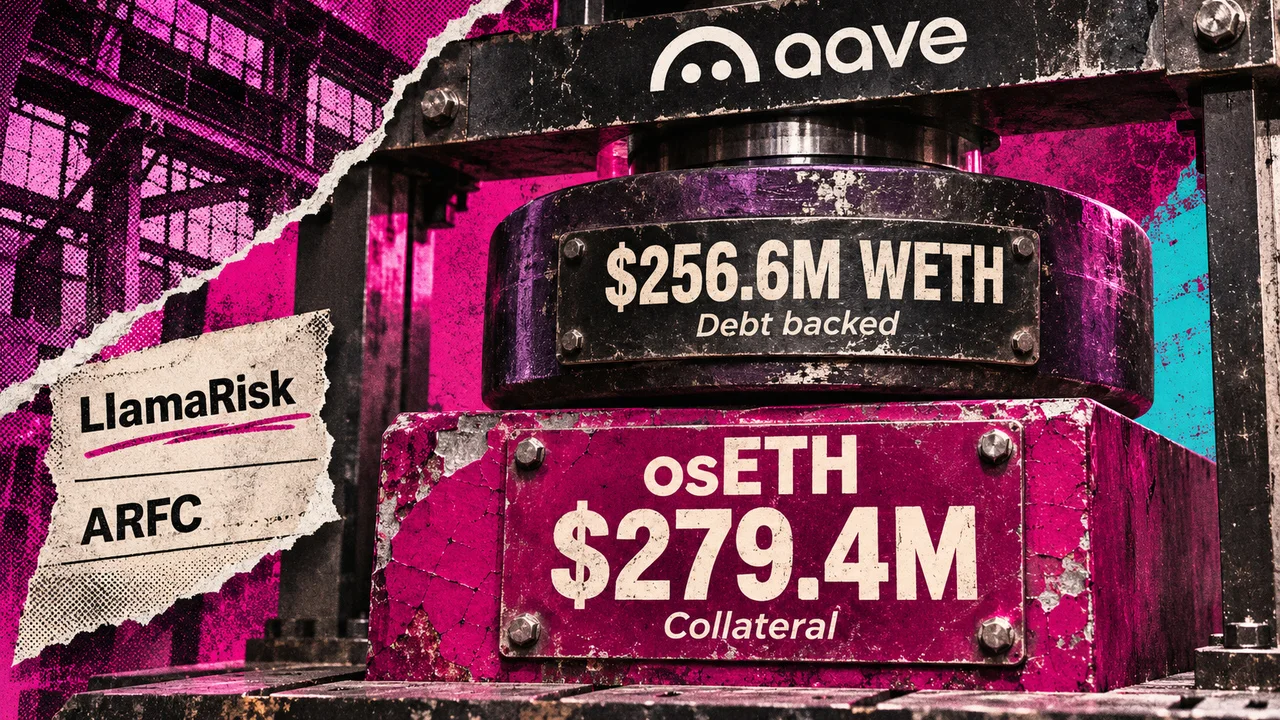

StakeWise founder Dmitri has asked Aave governance to vote separately on a proposed freeze of osETH, challenging its inclusion in a broader collateral overhaul. Risk adviser LlamaRisk estimated that $279.4 million in osETH collateral backed $256.6 million in WETH debt on Aave. Its plan would halt new osETH supply and borrowing against the token while leaving existing positions open.
Why it matters
LlamaRisk argues that Aave V3's shared lending pool exposes WETH and stablecoin suppliers to collateral risks at a pooled borrowing rate, while leveraged staking borrowers collect the additional spread. Its Nov. 9 analysis estimated leverage of around 14 times in the ETH-correlated E-Mode, where osETH had a 93% loan-to-value limit. The 10 largest positions accounted for 66% of attributed debt.
Dmitri said StakeWise had experienced no hacks or validator slashings since January 2021. He requested a separate assessment and time to address governance concerns.
Market impact
Under the proposal, existing borrowers could repay or migrate, subject to position constraints. LlamaRisk identified wstETH, weETH, cbETH and WETH as collateral alternatives within the same E-Mode, allowing swaps without first repaying all WETH debt.
The adviser favors issuer engagement and natural unwinding, with monthly progress reports. If exposure fails to decline, it proposes a WETH base-borrow-rate increase of up to 1% as a last resort, with rebates for borrowers holding neither rsETH nor osETH.
Aave V4 uses collateral-sensitive borrowing premiums, but the proposal specifies neither an osETH destination nor a numeric premium. Governance's decision will shape the transition for borrowers and the risk left with lenders.



Frequently asked questions
-
What would the proposed osETH freeze change for Aave users?
It would stop new osETH supply and borrowing against the token on Aave V3 Core. Existing positions would remain open, and borrowers could repay or migrate subject to position constraints.
-
How concentrated is the WETH debt attributed to osETH collateral?
LlamaRisk estimated that the 10 largest positions accounted for 66% of attributed debt. Its analysis put total attributed WETH debt at $256.6 million.
-
Why does StakeWise want a separate governance assessment?
Founder Dmitri challenged osETH's inclusion in the broader collateral overhaul and requested time to address governance concerns. He said StakeWise had experienced no hacks or validator slashings since January 2021.
-
Which assets could borrowers use to replace osETH collateral?
LlamaRisk identified wstETH, weETH, cbETH and WETH as alternatives within the same E-Mode. The proposal says borrowers can swap collateral without first repaying all WETH debt.
-
What happens if osETH exposure does not decline through migration?
LlamaRisk proposes a WETH base-borrow-rate increase of up to 1% as a last resort. Proposed rebates would offset the increase for borrowers holding neither rsETH nor osETH.
 CoinDesk
 Glassnode
 Crypto News
 TheBlock
 CoinTelegraph
 WatcherGuru