


 WuBlockchain
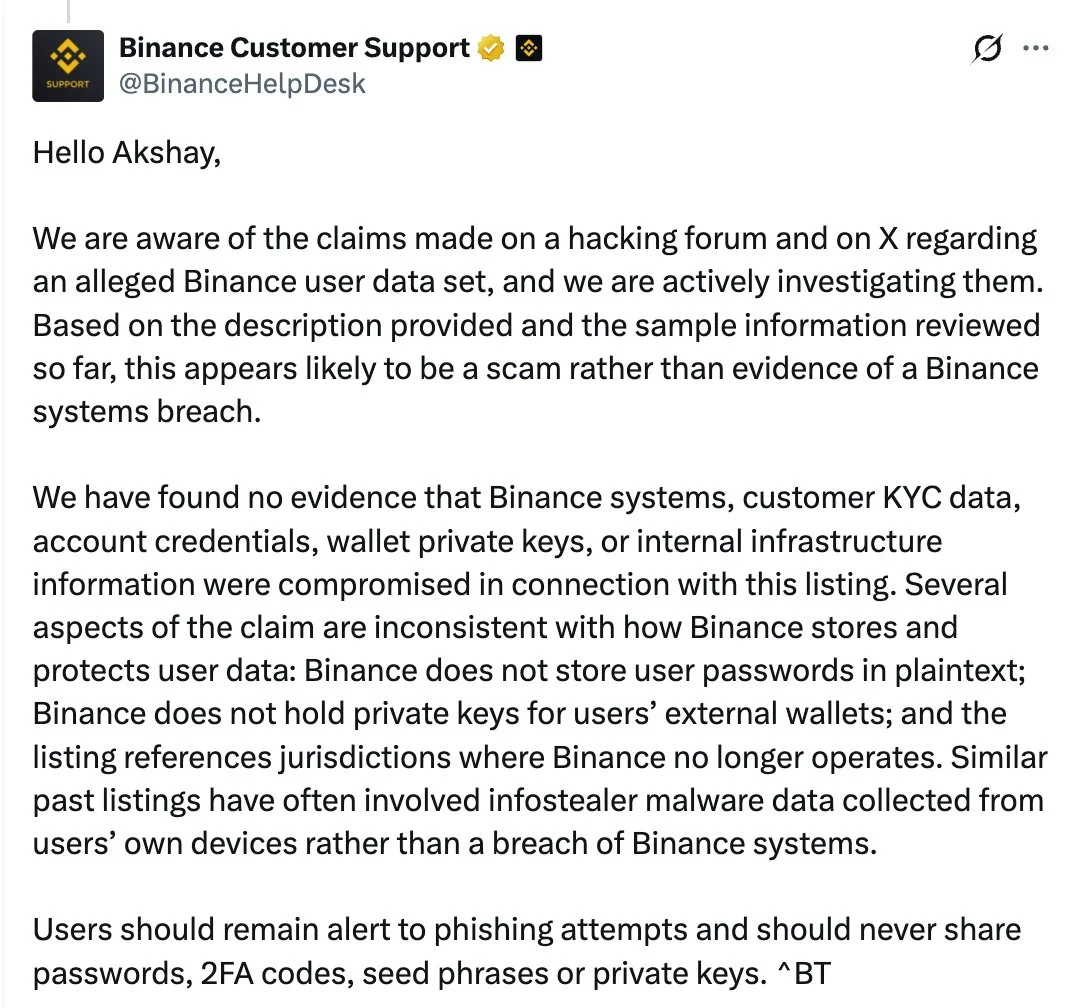

Binance says an alleged leak of data on 335 million users, claimed by the threat actor ShinyHunters with a $900,000 ransom demand, is likely a scam. Its security team, posting from the @BinanceHelpDesk account, said it is investigating the claims but has found no evidence that the exchange's systems, KYC data, account credentials or wallet private keys were compromised.
Why it matters
The exchange pointed to inconsistencies between the leaked listing and how Binance actually stores user data, and suggested the dataset may instead be infostealer logs harvested from users' own devices rather than from the platform itself. That distinction shifts the risk profile: a platform-side breach would expose every Binance customer, while infostealer data only affects users who previously had credentials or data harvested from infected personal machines.
For a sector still sensitive after years of high-profile exchange breaches, an unverified 335 million-user claim carries obvious panic potential. Binance moving quickly to publicly rebut it, with specifics on what was and was not compromised, is an attempt to contain that before it hits sentiment or flows.
Market impact
The immediate read is containment rather than damage. No confirmed breach means no direct on-platform exposure, and the claims so far come from the seller of the dataset, not from verified Binance data.
What to watch next: whether independent researchers can validate any portion of the 335 million-user dataset, and whether the infostealer angle pushes Binance toward renewed warnings about user-side device security and phishing hygiene.
Frequently asked questions
-
Did hackers actually breach Binance's systems?
Binance says it found no evidence that its systems, KYC data, account credentials or wallet private keys were compromised. The exchange treats the alleged 335 million-user dataset as inconsistent with how it stores user data.
-
Who claimed the Binance data leak and for how much?
The threat actor ShinyHunters claimed to have stolen data on 335 million Binance users and demanded $900,000, according to the exchange's statement.
-
What does Binance think the leaked data actually is?
Binance says the dataset may instead involve infostealer data taken from users' own devices, meaning credentials or information harvested from infected personal machines rather than from Binance itself.
-
Were Binance users' wallet private keys exposed in the leak?
No. Binance explicitly stated it found no evidence that wallet private keys were compromised, alongside KYC data and account credentials.
-
What should Binance users watch for after this claim?
Users should watch for independent validation of the dataset, since the claims currently come from the seller of the data. The infostealer angle also puts the spotlight on personal device security and phishing hygiene.
 TheBlock
 CryptoSlate
 Lookonchain