


 CryptoSlate
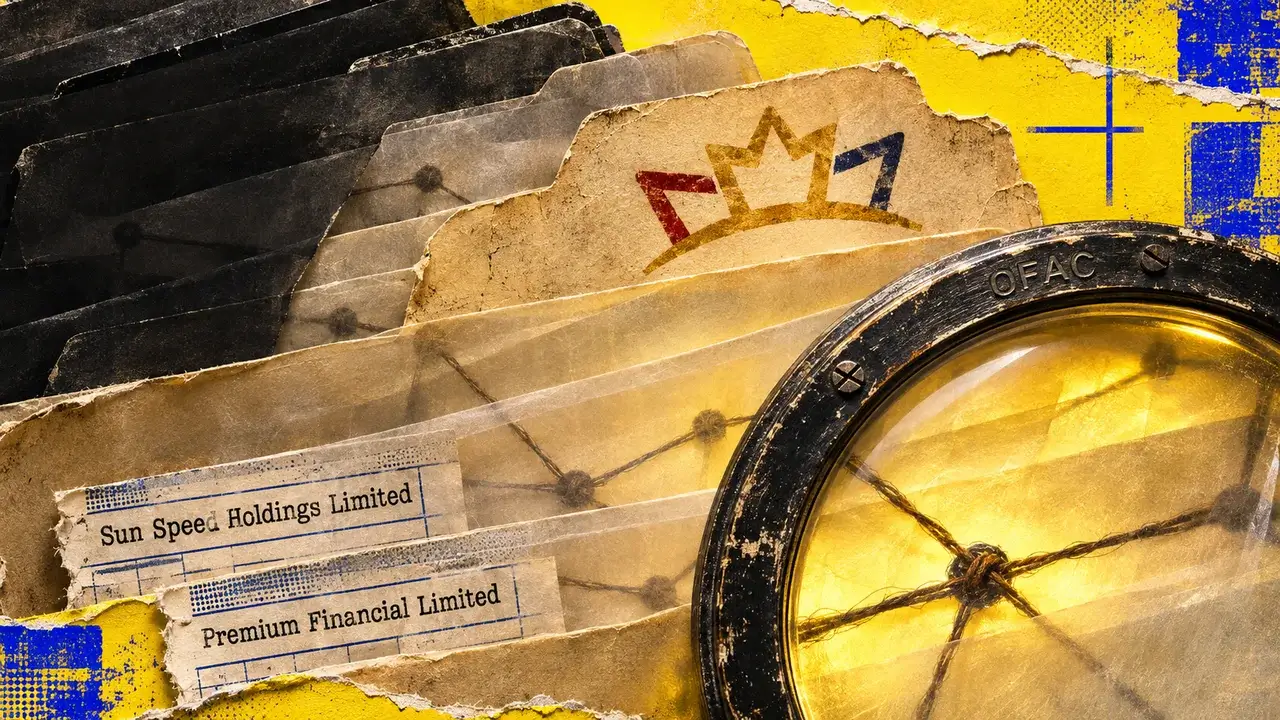

OFAC sanctioned four individuals and 41 entities on November 5, targeting the corporate web Treasury says kept Prince Group's transnational criminal operation alive after earlier sanctions. The designations block all US-linked property and interests of the named parties, and OFAC's standing ownership rule extends that freeze to any entity owned 50% or more, directly or indirectly, by blocked persons.
Treasury links the group's affiliates to digital asset investment scams, romance scams and other online fraud, many run out of Southeast Asian compounds staffed by trafficked and coerced workers. The newly sanctioned individuals are Qiu Yong, Zhao Mengyao, He Yujing and Visal Pang. One exposed chain runs from Qiu through BVI-registered Sun Speed Holdings to Hong Kong money lender Premium Financial Limited, which Treasury says Qiu ultimately owns. He Yujing, wife of Prince Group executive Chen Bo, allegedly received ownership of a Tokyo mansion transferred after Chen's October 2025 designation. Pang controls 11 Cambodian companies, several co-directed with Chen.
Why it matters
This is the third round of Prince Group sanctions, following actions in October 2025 and June 2026. Treasury is explicitly targeting the plumbing: offshore holding structures, nominee directors, family members and service companies used to conceal beneficial ownership and keep commerce moving after the core network was blacklisted. The message to compliance teams is that sanction-evasion infrastructure itself is now a designation target.
Market impact
The action carries strict-liability civil penalty exposure for US persons who transact with blocked entities, and OFAC guidance calls for ownership due diligence on counterparties. Companies and accounts touching the named BVI, Hong Kong, Singapore and Cambodian entities face frozen US exposure, and the aggregated-ownership rule means entities not named on the list can still be blocked. Expect banks and exchanges to cut exposure across the named corporate chains as screening tools update.
Frequently asked questions
-
What did OFAC sanction on November 5?
OFAC designated four individuals and 41 entities for supporting Prince Group's business network, which Treasury links to digital asset investment scams, romance scams and other online fraud run with trafficked and coerced labor.
-
Who are the newly sanctioned individuals in the Prince Group action?
Qiu Yong, Zhao Mengyao, He Yujing and Visal Pang. Treasury says Qiu controls a BVI-to-Hong Kong lending chain, He is the wife of sanctioned executive Chen Bo, and Pang controls 11 Cambodian companies.
-
How far does the sanctions blocking reach?
Beyond the named parties, OFAC's ownership rule blocks any entity owned 50% or more, directly or indirectly and individually or in aggregate, by blocked persons. Property and interests in the US must be frozen and reported to OFAC.
-
What happens if a US person transacts with a blocked entity?
Transactions are generally prohibited unless a specific or general OFAC license applies. Violations can bring civil or criminal penalties, and civil penalties can be imposed on a strict liability basis.
-
How many prior Prince Group sanction rounds were there?
This is the third major action, following designations on October 14, 2025 and June 23, 2026. The November round targets the offshore structures and service companies that kept operations running after those earlier rounds.
 CoinDesk
 Crypto Capital Venture
 WuBlockchain
 WatcherGuru
 CoinTelegraph
 TheBlock