








 CoinDesk

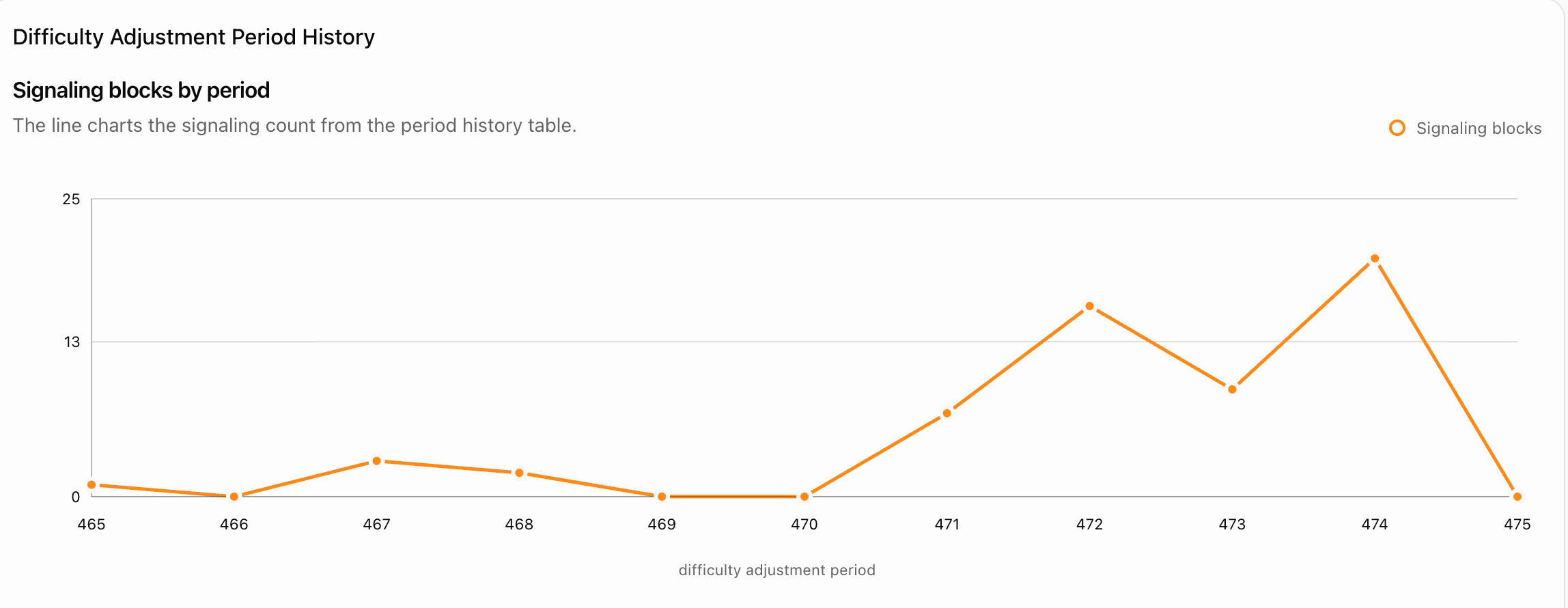


Bitcoin's BIP 110 proposal is approaching its voluntary lock-in deadline at block 961,542, expected in early August, with miner signaling stuck at zero and node adoption still in the low single digits. The measure would cap OP_RETURN and block most arbitrary data chunks above 256 bytes for one year, a temporary tightening supporters argue refocuses Bitcoin on payments while critics frame as a censorship rule that invalidates fee-paying transactions.
Backing is absent even at the proposal's lower bar. BIP 110 uses a user-activated soft fork that activates at 55% miner signaling rather than the traditional 95%, but the BIP 110 signaling monitor shows hashpower support has never risen above about 1% in any period and currently reads zero, with no major mining pool behind it. Among full nodes, adoption sits in the low single digits and is carried almost entirely by Bitcoin Knots rather than the dominant Bitcoin Core client.
The proposal has drawn unusually public opposition. Strategy founder Michael Saylor posted on Saturday that "there are 110 things more dangerous to Bitcoin than spam," arguing the change "turns a spam dispute into a consensus change that would invalidate some currently valid, fee-paying transactions." Blockstream co-founder Adam Back made a similar case addressed to newer users backing the plan, writing that "bitcoin won't be joining it" and that the real recourse is to fork away rather than override the network.
Why it matters
BIP 110 is a stress test of how Bitcoin absorbs policy fights. The underlying concern, that non-financial data has crowded block space since the October change, is widely shared, but the proposal turns that policy disagreement into a consensus rule, and the network's response so far is to refuse. The split is structural: a rule enforced by a few percent of nodes and almost no miners does not change Bitcoin for everyone but would carve off a minority chain.
The activation threshold is the soft fork's most unusual feature. Dropping from 95% to 55% miner signaling lets a smaller coalition force activation in theory, but the actual hashpower support is zero.

Frequently asked questions
-
What is BIP 110 and what would it change about Bitcoin?
BIP 110, formally the Reduced Data Temporary Soft Fork, would cap OP_RETURN and block most arbitrary data chunks above 256 bytes for one year, restricting non-financial data storage on the Bitcoin blockchain.
-
How much miner support does BIP 110 actually have?
Miner signaling has never risen above about 1% in any period and currently stands at zero, with no major mining pool behind it, according to the BIP 110 signaling monitor.
-
Why does BIP 110 use a 55% threshold instead of the usual 95%?
BIP 110 is structured as a user-activated soft fork, which lets nodes enforce a rule without overwhelming miner agreement, and it sets a 55% miner-signaling activation bar rather than the traditional 95%.
-
Who is publicly opposing BIP 110 and why?
Strategy founder Michael Saylor and Blockstream co-founder Adam Back have both come out against the proposal, arguing it turns a spam dispute into a consensus change that invalidates valid, fee-paying transactions and sets a dangerous precedent.
-
What happens if BIP 110 misses the August deadline?
If BIP 110 nodes begin rejecting non-signaling blocks near the September activation window, the result would be a small minority chain, while main-chain Bitcoin rules remain unchanged because miners are not enforcing the new rule.
 CoinTelegraph
 CryptoSlate
 WatcherGuru
 WuBlockchain
 TheBlock