








 CoinDesk
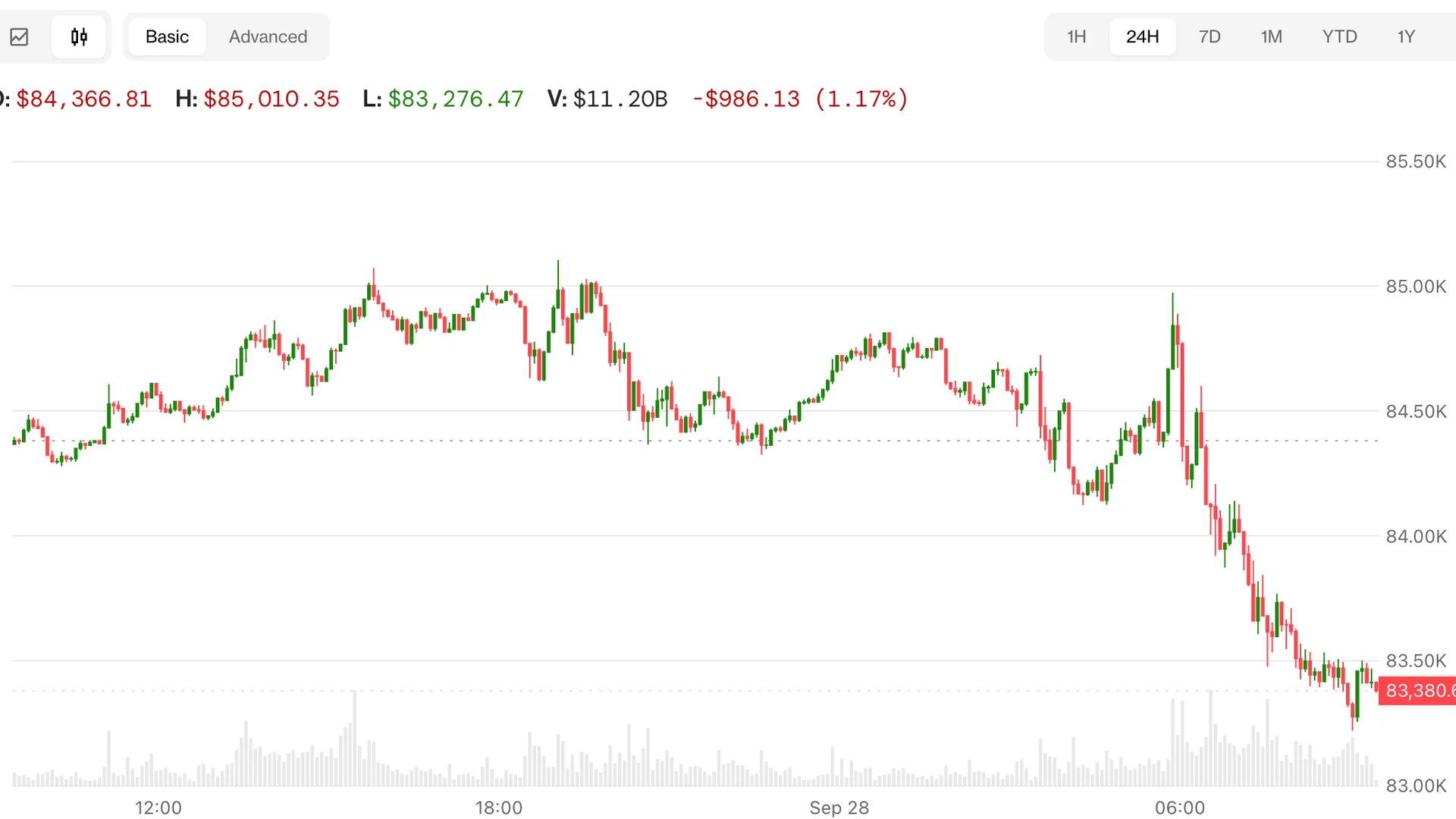



Bitcoin fell 1.3% to $83,324 by 03:30 UTC as President Donald Trump declined to rule out additional U.S. strikes on Iran, dragging risk appetite lower across markets. Nasdaq futures also slipped, while WTI crude rose nearly 1% to $93.28 alongside similar gains in Brent. The 10-year Treasury yield, up 127 basis points since the war began in early March, now sits at 5.20%, its highest level since 2007.
Why it matters
Trump said Sunday he expected the war with Iran to end "very soon", but when asked whether military action could resume before the midterm elections, he told Fox News it was "possible." Iran's Foreign Minister Abbas Araghchi responded that the nation is "fully prepared" for a renewed conflict, warning it could stand even a potential "doomsday war."
At the United Nations General Assembly, Iran proposed a seven-day reopening of the Strait of Hormuz, the oil chokepoint disrupted by the war, plus a pause in fighting ahead of broader negotiations. Trump rejected the offer, saying Iran was seeking a deal under heavy pressure, and stressed on Truth Social that Iran "cannot have a nuclear weapon." Lingering war-driven inflation fears, Fed rate-hike bets and debt concerns have all conspired to push yields to levels not seen in nearly two decades.
Market impact
The geopolitics have so far failed to break Bitcoin's quarter: prices are up 42% in three months, outperforming every major asset including Nasdaq and gold. The question is whether that resilience survives a week stacked with catalysts.
Vikram Subburaj, CEO of India-based Giottus exchange, flagged the 83,800-84,000 zone as key near-term support for Bitcoin, with 85,000-85,800 as immediate resistance, and advised against chasing the rally at current levels. He recommended limited leverage and staggered entries while the market digests ETF flows, Treasury yields and incoming U.S. data. PCE inflation, ISM manufacturing and nonfarm payrolls are all due this week and could move Fed rate-hike bets, with BTC's tape caught between risk-off headlines and a macro calendar that offers little room for complacency.


Frequently asked questions
-
Why did Bitcoin fall below $84,000?
Bitcoin dropped 1.3% to $83,324 after President Trump declined to rule out renewed U.S. strikes on Iran before the midterms, keeping risk-off pressure on markets alongside falling Nasdaq futures and rising crude prices.
-
What did Trump say about striking Iran again?
Trump told Fox News that further military action was "possible" but said he did not want to commit, while adding that he expected the war with Iran to end "very soon" through both military and economic pressure.
-
How high is the 10-year Treasury yield and why does it matter?
The 10-year yield has risen 127 basis points since the war began in early March to 5.20%, the highest since 2007, driven by inflation fears, Fed rate-hike bets and debt concerns. Elevated yields pressure risk assets like Bitcoin.
-
What is Iran's Strait of Hormuz proposal?
At the UN General Assembly, Iran proposed reopening the Strait of Hormuz, a major oil chokepoint disrupted by the war, for a seven-day period with a pause in fighting, followed by broader negotiations. Trump rejected the proposal.
-
What Bitcoin levels are traders watching now?
Giottus CEO Vikram Subburaj flagged 83,800-84,000 as important near-term support and 85,000-85,800 as immediate resistance. This week's PCE inflation, ISM manufacturing and nonfarm payrolls data could drive the next move.
 CoinTelegraph
 CryptoSlate
 WatcherGuru
 Altcoin Daily