








 Glassnode
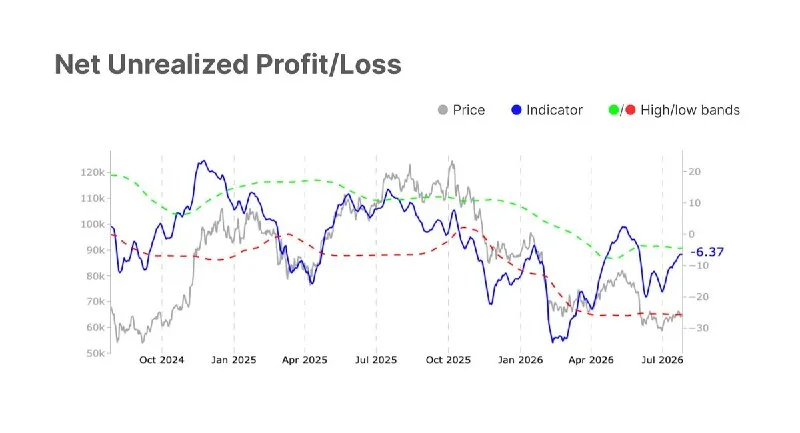
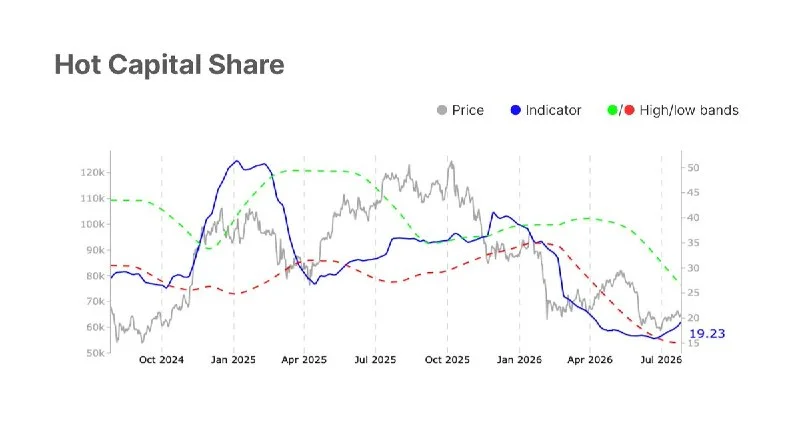
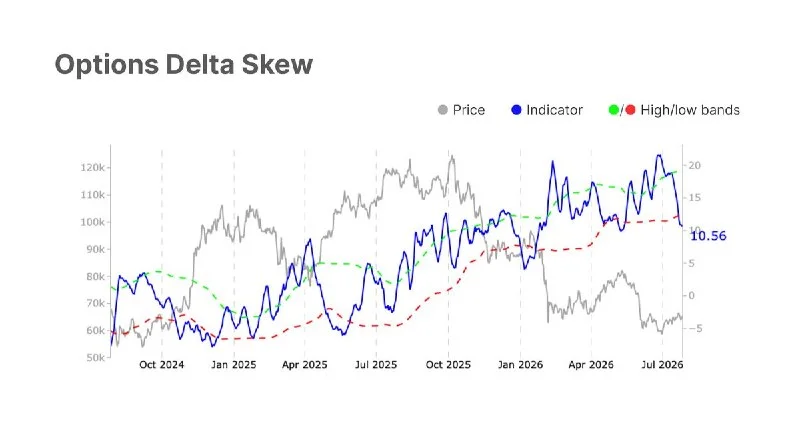
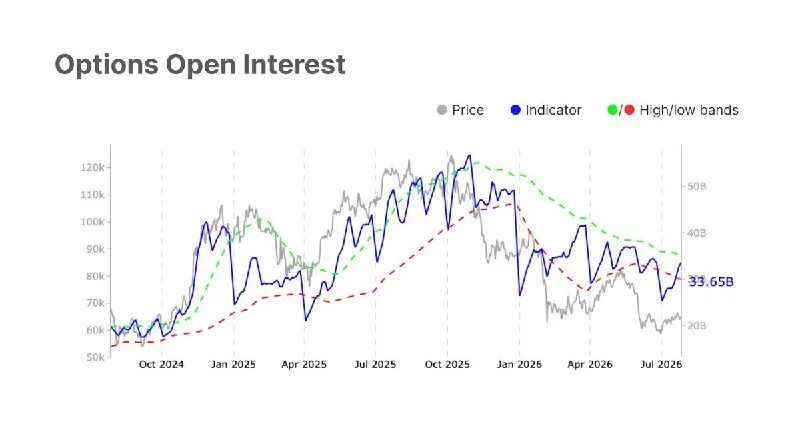
Bitcoin has spent Week 31 pinned between roughly $64K and $66.7K, rebounding to around $65.1K after a local high that failed to hold. Glassnode's latest market pulse frames the tape as a textbook consolidation regime: spot contained within statistical bands, exchange liquidity contracting, and aggressive sell pressure easing only moderately rather than reversing.
Why it matters
Four independent signals are pointing the same direction, which is what makes the pulse useful rather than noisy. Perpetual futures show declining buy-side aggression even as aggregate open interest ticked up, with long-side funding payments cooling sharply. Options open interest keeps expanding alongside a widening volatility spread, meaning traders are paying up for future uncertainty relative to recent realised price swings. Regulated investment products have flipped back into net outflows on a noticeable drop in weekly trading volume, and on-chain settlement volume is restrained even as active addresses hold steady. The shared read is cautious participation across spot, derivatives, and institutional channels.
Market impact
The one offsetting force remains the holder base. Long-term holders continue to demonstrate conviction, and aggregate unrealised losses have eased modestly while realised losses have begun to subside, suggesting the worst of the corrective selling pressure is fading. Aggregate institutional positions are still modestly profitable with valuation thresholds holding stable. That leaves the market in a quiet transitional phase: range-bound price action, thinner leverage, cooling ETF demand, but a resilient cohort refusing to distribute, the setup that historically precedes either a renewed directional leg or an extended basing pattern once one side of the range finally breaks.
Source: [BTC Market Pulse: Week 31 — Glassnode Research – Digital Asset Market Intelligence](https://research.glassnode.com/btc-market-pulse-week-31-2026/)

Frequently asked questions
-
What price range has Bitcoin been stuck in during Week 31?
Bitcoin has traded between roughly $64K and $66.7K, rebounding to around $65.1K after a local high that failed to hold, leaving spot contained within statistical bands.
-
Why are spot Bitcoin ETFs back in net outflows?
Regulated investment products shifted into net outflows alongside a notable decline in weekly trading volume, signalling cooling institutional demand even though aggregate institutional positions remain modestly profitable.
-
What does the derivatives market signal about Bitcoin's near-term direction?
Perpetual futures show declining buy-side aggression and softer speculative conviction, with long-side funding payments cooling sharply. A widening options volatility spread suggests traders are pricing greater future uncertainty.
-
Are long-term Bitcoin holders still selling into this consolidation?
No. Glassnode notes long-term holders continue to demonstrate conviction, preserving a resilient underlying holder base while unrealised and realised losses have eased modestly.
-
What would break Bitcoin's current consolidation range?
Either a sustained reversal in spot ETF flows, a rebuild in leveraged long positioning, or a pickup in on-chain settlement volume could tip price out of the band. Until one of those turns, Glassnode frames the tape as a quiet transitional phase.
 CryptoSlate
 Crypto News
 Crypto Rank News
 Whale Alert
 Lookonchain
 WuBlockchain
 Crypto Capital Venture
 TheBlock
 Benjamin Cowen
 CoinDesk